CARTEL VIOLENCE AT OUR DOORSTEP: How Border Chaos Became America’s Problem

The Spillover Is Real
When a U.S. senator says cartel violence is “spilling over” and killing Americans, that’s not rhetoric. That’s recognition of a hard truth.
For years, Americans—especially in border states—were told:
- The border is secure.
- The surge is manageable.
- The violence is contained.
Now?

- A cartel kingpin eliminated.
- Retaliatory violence erupting in parts of Mexico.
- Americans in Mexico warned by the U.S. Embassy to shelter in place.
- U.S. intelligence support and special forces training operating in coordination with Mexican forces.
Let’s be precise: the shelter-in-place warning applied to Americans currently in Mexico, not to Americans on U.S. soil. But that distinction doesn’t make the moment insignificant.
It makes it sobering.
Because instability just across our border can affect American citizens, American travelers, American businesses, and American security interests.
That’s not abstract. That’s proximity.
El Mencho’s Death: A Strategic Shockwave
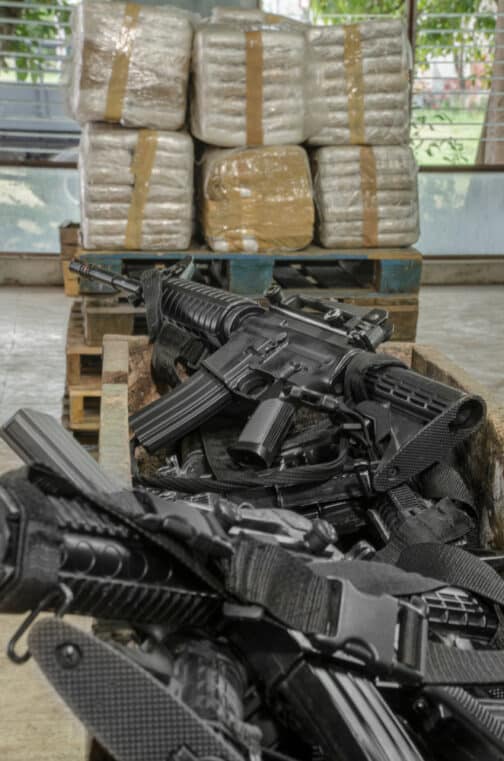
Nemesio Ruben Oseguera Cervantes—“El Mencho”—led one of the most powerful criminal organizations in the hemisphere. The Jalisco New Generation cartel (CJNG) built a vast trafficking network moving:
- Cocaine
- Heroin
- Methamphetamine
- Fentanyl
His death during a Mexican government operation, reportedly aided by U.S. intelligence, is a major development.
But removing a kingpin doesn’t end a cartel. It can fracture it. It can ignite succession battles. It can trigger retaliatory violence.
And that’s exactly what we’re seeing—road blockades, security alerts, and heightened tensions in multiple regions.
When Americans traveling or living in Mexico are told to shelter in place because of cartel fallout, that tells you how serious the situation has become.
Texas Feels It First
Texas is not a bystander in this story.
Border states absorb the consequences first:
- Increased trafficking pressure
- Strain on law enforcement
- Economic disruptions
- Public safety concerns
Governor Greg Abbott’s directive to boost public safety and homeland security operations isn’t symbolic. It’s preventive.
Because when violence destabilizes regions south of the border, criminal networks don’t stop at an invisible line in the dirt.
They exploit instability.
Texans understand that reality better than anyone in Washington.
Sovereignty and Cooperation
Sen. John Cornyn’s remarks highlighted a sensitive balance.
Mexico values its sovereignty. That’s understandable.
But when cartel activity fuels drug deaths in American cities and destabilizes border regions, cooperation becomes essential.
The United States providing Intelligence, Surveillance, and Reconnaissance (ISR) support—and training elite Mexican forces—marks a deeper level of engagement.
That signals seriousness.
It also requires transparency.
Americans deserve to know:
- What authorities are being used
- What oversight exists
- How long this level of involvement may continue
Strong action and constitutional accountability must move together.
The Terror Designation Changes the Game
Designating major cartels as foreign terrorist organizations altered the framework.
That designation expands tools for:
- Asset seizures
- Intelligence coordination
- International enforcement
- Financial tracking
This isn’t just a law enforcement matter anymore. It’s a national security issue.
But expanded power should never mean unchecked power.
Americans can support decisive action against criminal organizations while still insisting on clear legal guardrails.
Security and liberty are not opposing values. They reinforce each other when handled properly.
Follow the Money
Cartels are not just violent organizations. They are financial enterprises.
Billions of dollars move through global systems tied to trafficking networks.
Law enforcement agencies work aggressively to disrupt money laundering operations. Asset seizures and financial tracking are essential tools. But the scale of cartel wealth raises an important point:
Criminal empires survive on cash flow.
If policymakers are serious about dismantling cartels, enforcement must target:
- Distribution networks
- Smuggling corridors
- Financial pipelines
You cannot weaken a cartel without attacking its revenue streams.
That’s not ideology. That’s strategy.
Media Narratives vs. Border Reality
For years, concerns about cartel expansion and border instability were often downplayed.
Now the language has shifted:
- Cartels labeled terrorists
- U.S. ISR involvement acknowledged
- High-level coordination praised
- Public safety warnings issued
The facts on the ground didn’t suddenly change.
The consequences became impossible to ignore.
Border communities didn’t need a press release to understand the threat. They’ve been living alongside it.
This Is a Long Fight
The death of a cartel leader is significant. But CJNG is structured to survive leadership losses.
Cartels adapt.
They decentralize.
They recruit.
They compete.
That means the United States and Mexico face a sustained challenge—not a one-week headline.
Americans deserve leaders who are honest about that reality instead of treating each operation as a final victory.
What This Means for the South
The South values:
- Law and order
- Sovereignty
- Community stability
- Personal responsibility
Border instability touches all four.
When Americans in Mexico are warned to shelter in place because of cartel violence, it’s a reminder that proximity matters.
Texas families, business owners, and law enforcement officers understand that regional security is interconnected.
This is not about panic.
It’s about preparation and seriousness.
America First Must Mean Security First
If “America First” is more than a slogan, it must include:
- Secured borders
- Aggressive trafficking enforcement
- Financial disruption of criminal enterprises
- Transparent federal action
Not spin.
Not minimization.
Action.
Because Americans deserve safety without sacrificing constitutional principles.
We deserve truth without political varnish.
And we deserve leaders who recognize that border security is national security.
The Bottom Line
Cartel violence erupting after the death of a kingpin is not unexpected.
What matters is this:
The United States is now directly involved in intelligence support.
Americans in Mexico were warned to shelter in place.
Texas has increased security operations in response.
This is not a distant problem.
It’s a regional security test.
The question is whether Washington sustains focused, lawful pressure—or drifts back into complacency once headlines cool.
The South will be watching.
Join the Inner Circle
If you want clear, direct analysis on border security, financial disruption strategies, and the political forces shaping the South, you need to be inside the conversation.
Join the Inner Circle today for exclusive briefings and deeper insights the mainstream outlets won’t prioritize.
Special rate: $19.95 per month.