Hallucination Economics: The Bubble Is Training Itself for Collapse

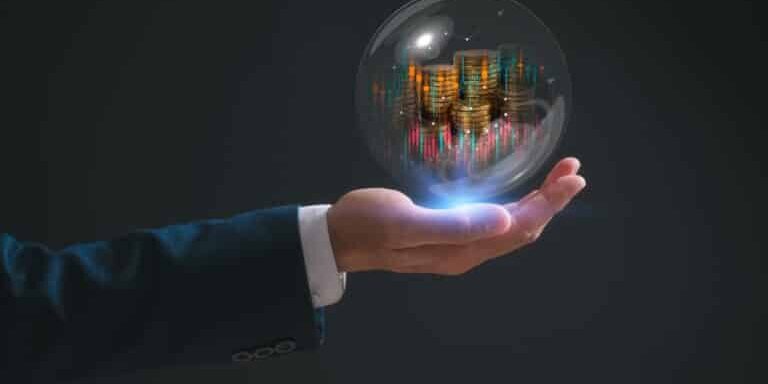
Rising Asset Prices Are Not a Sign of Economic Strength — They’re a Symptom of Systemic Delusion
In today’s Bubble Economy, the financial elite aren’t growing wealth through innovation or productivity — they’re simply leveraging inflated collateral in a system designed to reward ownership, not creation.
The playbook is simple:
- Inflate asset values through cheap credit
- Use those inflated assets as collateral
- Borrow more to acquire more assets
- Repeat until the bubble becomes its own self-justifying narrative
This endless loop of artificial wealth creation benefits the top 10% — who already own the majority of these inflating assets — and leaves the bottom 90% bidding against leveraged capital with stagnant wages and rising debt.

The central banks keep the music playing by pumping liquidity into the system, which pushes asset prices higher, which gives the illusion of a strong economy. But strip away the stimulus, and there’s no underlying productivity, no new utility — just speculative leverage masquerading as growth.
Financial Models Are Eating Their Own Tails
What’s happening now isn’t just reckless — it’s systemic cognitive collapse.
The financial system is “training” itself on its own artificial outputs. Think of it like an AI model learning exclusively from AI-generated content — it starts to hallucinate, lose coherence, and spit out nonsense while insisting it’s correct.
That’s what’s happening to our central banks, our markets, and our analysts. They’re looking at asset prices — inflated by the very stimulus they created — and declaring victory. It’s the economic equivalent of a dog chasing its tail and calling it progress.
Charles Hugh Smith calls this phenomenon Model Collapse — and he’s right. When systems stop referencing the raw, messy, unfiltered reality and start recycling processed, curated, “clean” data, they lose touch with the truth. And once that happens, the hallucinations begin.
We’re Living in an Ultra-Processed Economy — and It's Coming Apart
Let’s pull back and look at the broader picture.
Our economy is no longer built on authentic experience or real data. It’s built on:
- Curated digital environments
- Massaged economic statistics
- Media spin and manufactured narratives
- Endless monetary stimulus and manipulated credit markets
We’ve replaced raw reality with convenience and appearance. The result is a world where people genuinely believe the economy is booming because the S&P is up — even as productivity stagnates, savings collapse, and real wages get devoured by inflation.
This isn't just bad economics — it's a full-blown societal hallucination.
Model Collapse Isn’t Just for Machines — It’s Happening to Us
The concept of Model Collapse goes far beyond finance. It applies to culture, cognition, and even basic survival instincts.
When humans — especially those in urbanized, artificial environments — spend their lives immersed in curated reality, they begin to train their brains on false inputs. Over time, they lose the ability to interpret, navigate, or survive in the real world.
That’s not metaphorical. It’s literal.
A generation raised on algorithmic feeds, climate-controlled environments, and hyper-processed food is increasingly unable to cope with unfiltered reality. Like AI models that forget rare edge cases, humans are forgetting how to deal with hardship, unpredictability, and complexity.
As Smith says: “Brains, like AI systems, collapse when they train too long on synthetic, human-produced data.”
The Mouse Utopia Experiment Is Playing Out in Real Time
In the 1960s, researchers built a “mouse utopia” — a space with unlimited food, water, and nesting space. Instead of thriving, the population collapsed after reaching about one-third of its carrying capacity. Social dysfunction exploded. Reproduction stopped. The society failed.
Why? The prevailing theory now is that the mice lost touch with the raw challenges that shaped their behavior. Abundance made them soft. Artificiality made them insane.
Sound familiar?
Today, 60% of humanity lives in urban environments — worlds that are increasingly detached from physical reality. Fertility is plummeting. Anti-social behavior is rising. People are more anxious, more medicated, and more disconnected than ever before.
The modern world’s greatest achievement — abundance — may be its undoing.
The Bubble Economy Will Be the First to Break
Let’s bring it back to finance.
The entire edifice of today’s “growth” is built on artificial inputs: zero-percent interest rates, central bank bailouts, government stimulus, and debt-fueled consumption. Nothing about this is real.
And because it's not real, it can’t be sustained.
When the real world — with its inflation, scarcity, and geopolitical fracture — finally intrudes, the Bubble Economy will be the first system to snap. The hallucination can’t survive the glare of reality.
Neither can the people, funds, or institutions still operating under the delusion that this is sustainable.
What Gold and Silver Tell Us About Reality
In an ultra-processed world, gold and silver stand out as the raw truth.
They don’t rely on central bank stimulus, artificial valuations, or debt-fueled speculation. They don’t hallucinate. And more importantly, they don’t collapse when synthetic systems do.
Let’s be clear: gold doesn’t rise because of shipping backlogs or inflation prints. It rises when trust breaks down. It rises when systems — economic, political, cultural — stop functioning properly.
Silver follows the same arc, though it dances between monetary metal and industrial commodity. When real chaos sets in, both metals reassert themselves as stores of value — not because Wall Street says so, but because history does.
Final Word: If You’re Still Waiting, You’re Already Behind
The hallucination is already breaking. You can feel it. You can see it. The only question is whether you’re positioned for the collision with reality — or you’re still invested in the dream.
Because the people who believe the hallucination will go down with it. And the ones who see it for what it is? They'll be the ones left standing.
Take Real Action — While You Still Can
The first step to exiting the system is recognizing it's broken. The second is preparing before everyone else figures it out.
Here’s how you start:
- ✅ Download Bill Brocius’ free guide, 7 Steps to Protect Your Account from Bank Failure — a tactical plan to break your exposure to vulnerable institutions.
- 📘 Read Bill’s book, End of Banking As You Know It — the most honest assessment of the coming financial rupture available today.
- 🔐 Subscribe to the Inner Circle Newsletter for just $19.95 — and get unfiltered analysis and actionable intelligence from Bill Brocius every week.
Because you’re not hallucinating. The system is. And when it collapses, you’ll either be a casualty — or you’ll be ready.