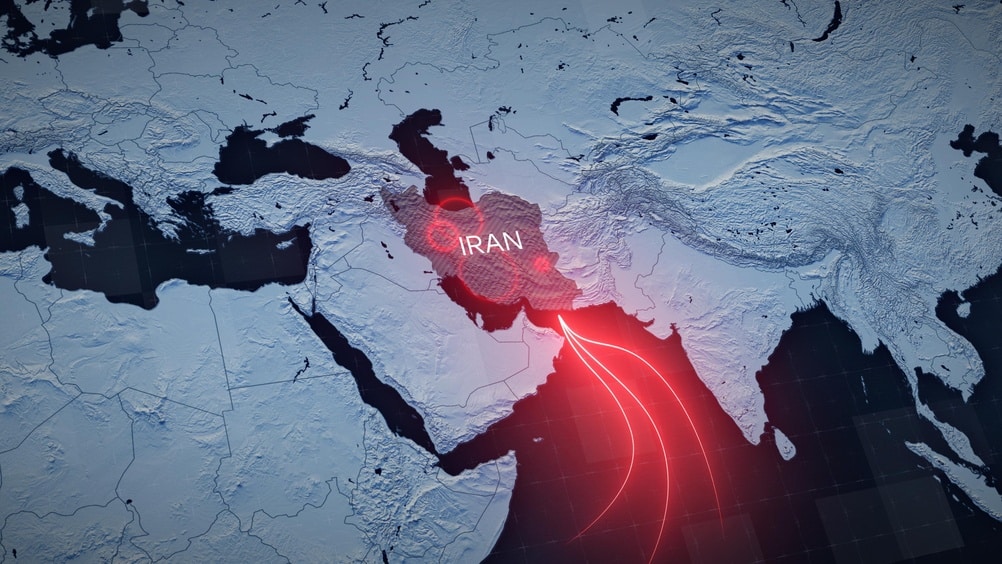
The Brink of Collapse: How a Middle East War Could Trigger Economic Chaos—and Open the Door to Financial Control

We Were Inches From an Economic Shock
Let’s get one thing straight.
This wasn’t a routine geopolitical flare-up.
This was a near miss.

The kind that doesn’t just stay “over there.” The kind that hits your gas pump. Your grocery bill. Your paycheck.
If key energy infrastructure in the Middle East had been wiped out, the result wouldn’t have been a mild disruption.
It would have been a global shockwave.
Oil. Natural gas. Supply chains. Everything.
And when energy goes—everything follows.
Energy Is the Backbone—And It’s Under Threat
Strip away the headlines. Ignore the talking points.
This comes down to one thing:
Energy is the foundation of the modern economy.
- No fuel → no transport
- No transport → no goods
- No goods → empty shelves, rising prices
It’s that simple.
Facilities in places like Qatar and Saudi Arabia aren’t just regional assets. They are global lifelines.
Take them offline?
You don’t get inconvenience.
You get instability.
A Fragile System Held Together by Timing and Luck
What should concern you isn’t just the conflict.
It’s how close everything is to breaking.
One escalation. One miscalculation. One strike too far.
That’s all it takes.
And the truth is, this system isn’t built for resilience anymore.
It’s built for efficiency.
Tight margins. Just-in-time supply chains. Global dependencies.
It works great—until it doesn’t.
And when it doesn’t?
It fails fast.
When Crisis Hits, Control Follows
Here’s where most people stop thinking.
They see crisis.
They don’t see what comes next.
Because history is clear:
Crisis expands control. Every time.
- Financial restrictions tighten
- Monitoring increases
- Systems centralize
Not always maliciously. Not always intentionally.
But consistently.
Because instability demands response—and response builds systems.
From Economic Shock to Financial Control
Now connect the dots.
If energy disruption triggers:
- Inflation spikes
- Market instability
- Supply shortages
What happens next?
Authorities step in.
Systems adapt.
Controls increase.
And suddenly, the same infrastructure we’ve been talking about—
Digital payments
Real-time settlement
Programmable systems
—becomes more than convenience.
It becomes management.
The Pattern Most People Miss
This is the pattern:
- Crisis hits
- Economy destabilizes
- New controls are introduced “for stability”
- Those controls don’t go away
That’s not speculation.
That’s history.
And each cycle builds on the last.
This Isn’t Just About War—It’s About What Comes After
You don’t need to predict worst-case scenarios to understand this.
You just need to recognize direction.
The system is already:
- More digital
- More centralized
- More capable of control
All it takes is the right trigger to accelerate it.
And global conflict?
That’s one of the biggest triggers there is.
My Take: The Real Risk Isn’t the Explosion—It’s the Aftermath
Everyone watches the missiles.
Almost no one watches the consequences.
That’s the mistake.
Because the real shift doesn’t happen in the moment of crisis.
It happens in the response.
In the policies.
In the systems.
In the “temporary measures” that quietly become permanent.
That’s where freedom erodes.
Not overnight.
But step by step.
The Bottom Line
We didn’t hit catastrophe.
Not this time.
But we got close enough to see how fragile everything really is.
And more importantly—
How quickly the world can shift when pressure is applied.
The question isn’t just whether another crisis will come.
It’s whether you’ll be ready for what follows.
Join the Inner Circle Before the Next Shock Hits
The people who understand these patterns early are the ones who stay ahead.
The rest?
They react after the system changes.
Get the analysis, the strategy, and the insight you won’t find in mainstream headlines.