The MAGA Divide: Elon Musk’s Third-Party Gambit Collapses as JD Vance Becomes the GOP’s New Power Broker

Populist Energy Meets Political Reality
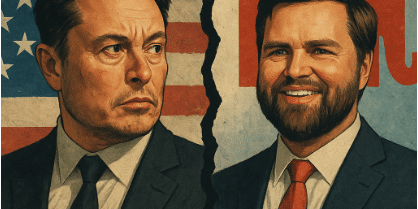
It’s easy to forget how much can change in less than a year. In November 2024, Donald Trump’s return to the White House was hailed as a vindication of the America First agenda—a populist rebuke to establishment rule and globalist policymaking. But now, less than twelve months into his second term, the movement that powered him back into office is showing signs of fracture. Nowhere is this rupture more visible than in the fallout between Trump and Elon Musk—a breakup that has triggered a quiet realignment within the GOP, laying bare a larger identity crisis for the MAGA movement.
The Rise—and Stalling—of the America Party
Musk’s initial break from Trump wasn’t subtle. In the months following the election, the billionaire Tesla founder threatened to create a new political force: the America Party. The idea was bold, even attractive to many disillusioned Americans—a third party aiming to topple the entrenched two-party duopoly and revive real political choice. But as with many high-concept ventures, Musk’s plan seems to have died before it ever truly lived.
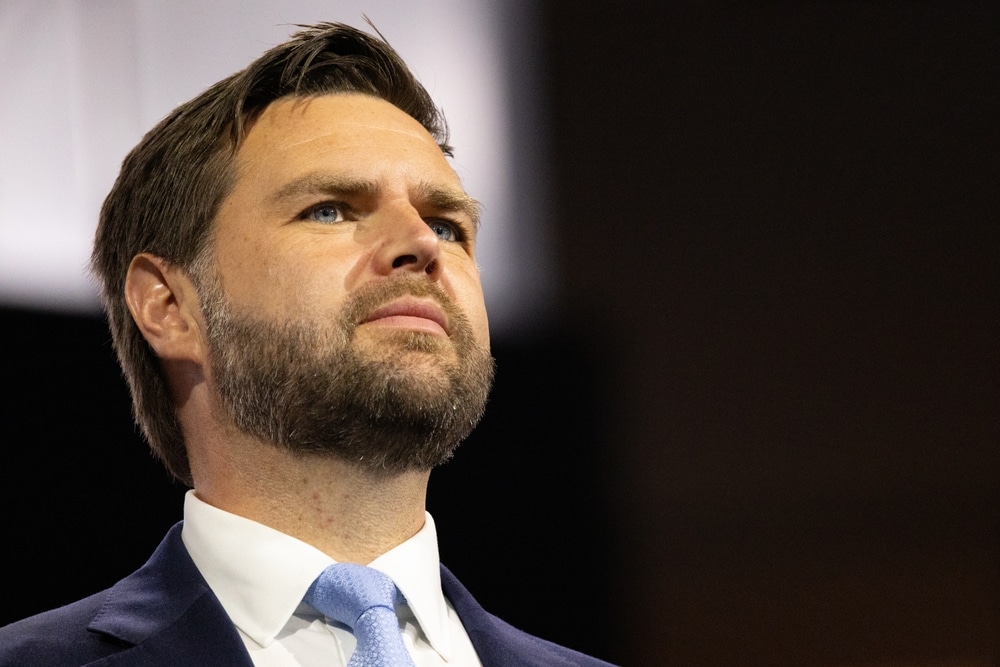
According to a report from The Wall Street Journal, Musk is now weighing whether to abandon his America Party experiment in favor of backing Trump’s vice president, JD Vance, in a potential 2028 presidential bid. Behind the scenes, Musk and Vance have remained in close contact—even as Musk’s relationship with Trump has deteriorated beyond repair. This shift from independence back to party loyalty reveals more than just strategy. It suggests a man hedging his bets within the corridors of power—exactly the kind of maneuvering the America Party was supposed to stand against.

JD Vance: The New Face of Controlled Populism
The pivot isn’t just about Musk; it’s about Vance. The young vice president has quietly become the bridge between the old MAGA movement and a new Republican elite shaped by venture capital money, techno-utopian ideologues, and authoritarian philosophical leanings. While tTrump’s populist rhetoric still animates much of the base, it’s increasingly clear that the institutional GOP is aligning behind a different brand: less combative, more polished—and far more comfortable with centralized authority.
Vance’s ties to Musk, tech billionaire Peter Thiel, and obscure philosopher Curtis Yarvin (better known as Mencius Moldbug) signal a broader transformation of the right. Yarvin’s “Dark Enlightenment” movement—a bizarre but influential call to replace democracy with a top-down technocracy—has been quietly creeping into the bloodstream of New Right ideology. Vance once praised Yarvin’s writings and even advocated purging the federal bureaucracy to install "our people." It’s a chilling echo of a philosophy that believes democracy is obsolete and should be replaced with corporate-style rule.
From Disruption to Integration: Musk’s Political Realignment
The irony here is thick. Musk’s America Party was pitched as a vehicle to return power to the people. But the figures he’s aligning with—Yarvin, Thiel, and Vance—represent a different vision altogether: one that doesn’t seek to dismantle centralized power, only to repurpose it under new management. Musk’s recent moves suggest his real goal may not be revolution but relevancy within an emerging political machine already consolidating its grip on Washington.
The result is a growing divide within MAGA itself. Some remain loyal to Trump’s blunt-force populism, while others are aligning with the Vance-Thiel axis—a camp that uses the language of anti-establishment politics while quietly advancing a more managed and hierarchical vision of governance. The problem? That vision isn’t populist, and it sure as hell isn’t libertarian.
The Death of the America Party
As for the America Party, it appears to be a casualty of Musk’s shifting priorities. Reports suggest no meaningful organizational activity is happening at the grassroots or state level. Even the Libertarian National Committee has noticed the vacuum. “It doesn’t seem like anything has been in action,” said chairman Steven Nekhaila, pointing out that despite all the bluster, the America Party has become a ghost ship.
This political chess game reveals an uncomfortable truth: America’s populist movements are being co-opted, not by the old establishment, but by a newer, slicker elite. One that speaks in algorithms and boardroom buzzwords rather than flag-waving rhetoric. The same way the banking class cloaked its monopolies in the language of "efficiency" and "innovation," this new political class hides its power grab under the veneer of “realism” and “post-democratic pragmatism.”
Technocratic Populism: A Contradiction in Terms
Whether or not JD Vance becomes the GOP nominee in 2028, the ideological groundwork is being laid today. And if Musk follows through on backing him—abandoning his third-party vision in the process—then we’re not looking at a political rebellion. We’re witnessing a surrender dressed up as strategy.
In a country already suffering from institutional rot, economic decay, and a shrinking middle class, the last thing we need is a government run like a Silicon Valley startup. But that’s precisely the future being sold to us by men like Thiel, Yarvin, and now—perhaps—Musk. It’s not freedom. It’s not reform. It’s a hostile takeover.
Take Control Before They Do
Want to understand how these political realignments will affect your money, your freedom, and your future?
Download Bill Brocius’ free guide, “7 Steps to Protect Your Account from Bank Failure,” and learn how to safeguard your wealth in this volatile political climate.
Get deeper insights from Bill himself by subscribing to the Inner Circle Newsletter for just $19.95/month—real information for real Americans.
And don’t forget to pick up Bill’s landmark book, The End of Banking As You Know It, now available through Dedollarize News.
Stay prepared. Stay independent. Stay informed.