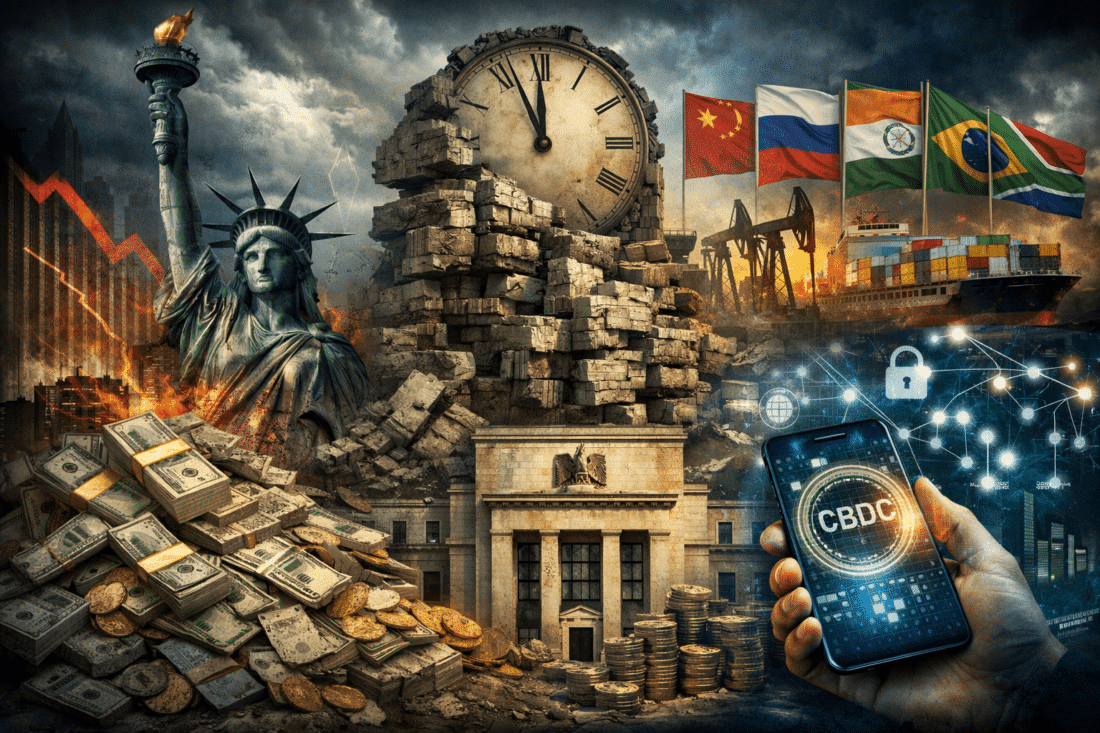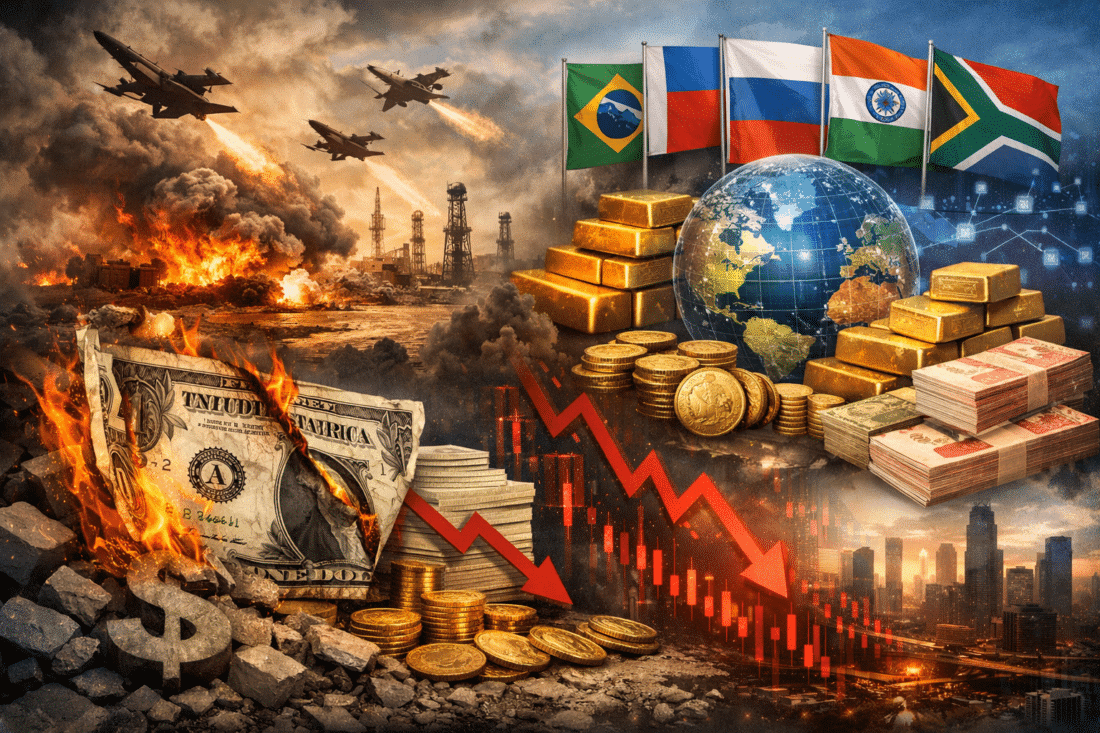
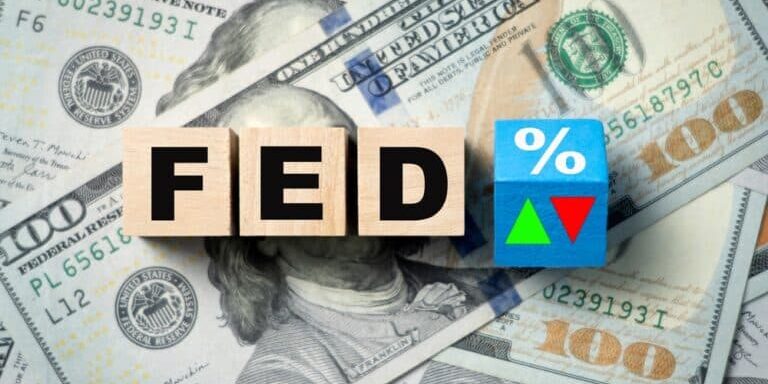
A Frozen Fed: Powell Admits Uncertainty as Financial Control Slips — What Happens When the System Stops Knowing?

A Central Bank Without Conviction
At yesterday’s press conference, Jerome Powell didn’t project control—he projected hesitation.
Faced with questions about inflation, energy shocks, tariffs, and economic growth, the Fed chair repeatedly emphasized what the Federal Reserve doesn’t know. Not what it plans to do. Not what it expects. But what remains uncertain.
In his own words, the economic effects of current global disruptions “could be bigger… much smaller… or much bigger.”
That’s not guidance. That’s guesswork.
For a central bank tasked with steering the world’s largest economy, this level of ambiguity is not just unusual—it’s revealing.
Policy Paralysis at the Worst Possible Time
The Fed is now effectively on hold, waiting for clarity that may not come anytime soon.
Why? Because it’s trapped.
- Raise rates too aggressively → risk crushing growth
- Cut rates too soon → risk reigniting inflation
- Do nothing → risk falling behind events entirely
This is the reality Powell didn’t explicitly say—but clearly signaled.
The Federal Reserve is no longer leading the economy. It is reacting to it.
And when central banks become reactive instead of proactive, history shows us what follows: instability, volatility, and policy overcorrections that often make things worse.
Political Pressure Is Reaching a Boiling Point
Compounding the uncertainty is an increasingly volatile political backdrop.
Powell’s term is set to expire. His successor is stalled. A Department of Justice investigation looms in the background. And lawmakers are openly leveraging confirmation battles to influence outcomes.
This is not a picture of institutional independence—it’s a power struggle.
Even Powell’s public recognition for “protecting the independence of the Federal Reserve” underscores the irony: independence is now something that must be defended, not assumed.
When monetary policy becomes entangled with political maneuvering, confidence erodes quickly—and markets notice.
The Energy Shock Wildcard
Layered on top of everything is a fresh wave of geopolitical tension, particularly in energy markets.
Energy shocks have historically been one of the most destabilizing forces for economies:
- They drive inflation higher
- They reduce consumer spending power
- They squeeze businesses already operating on thin margins
And yet, the Fed has no clear model for how this current situation will unfold.
Powell admitted as much.
This means monetary policy is now being shaped by variables outside the Fed’s control—global conflict, supply disruptions, and political decisions far beyond Washington.
A Familiar Pattern: When Institutions Lose Their Grip
If this feels familiar, it should.
History is filled with moments where central banks appeared confident—until suddenly they weren’t.
- The 1970s stagflation era
- The 2008 financial crisis
- The rapid inflation surge post-2020
In each case, policymakers were forced into reactive decisions after failing to anticipate or control unfolding events.
What we’re seeing now carries similar hallmarks:
- Delayed responses
- Conflicting signals
- Rising uncertainty
- Increasing reliance on “wait and see”
That’s not a strategy. That’s a system under strain.
What This Really Means for You
Let’s strip away the jargon.
The Federal Reserve is signaling that it does not have a clear path forward.
That has real consequences:
- Interest rate volatility becomes the norm
- Inflation risks remain unresolved
- Economic slowdowns become harder to manage
- Financial markets grow more unstable
Most importantly, it means one thing your readers need to understand clearly:
You are increasingly responsible for your own financial stability.
The era of assuming that central banks can “smooth things out” is fading.
And when institutions hesitate, individuals bear the consequences.
The Bottom Line: Uncertainty Is the Warning Signal
Powell’s message wasn’t just about rates or inflation.
It was a signal.
A signal that the system is under pressure.
A signal that control is not as firm as it once appeared.
And a signal that waiting for clarity may no longer be a viable strategy.
Because by the time clarity arrives—it’s often too late to act.
Take Action Before Control Tightens
Moments like this don’t just lead to instability—they often trigger transformation.
As uncertainty rises, policymakers historically move toward greater control:
- More oversight
- More intervention
- More centralized financial systems
This is where things are heading—toward a world of digital currency frameworks, increased transaction monitoring, and programmable financial systems that limit how and where money can be used.
If you’re seeing the warning signs now, you’re already ahead of most.
But awareness isn’t enough.
You need a plan.
That’s exactly why Bill Brocius put together the Digital Dollar Reset Guide—a direct, no-nonsense breakdown of what’s coming next and how to protect your financial autonomy before these systems are fully implemented.
Because once the system moves from uncertainty to control…
your options may be a lot more limited than they are today.