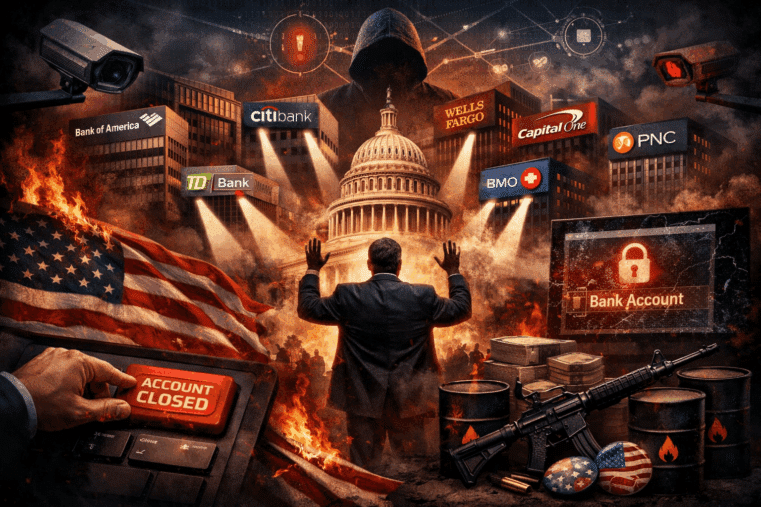
A Multipolar World Is Coming—Will Your Dollars Survive It?

BRICS Rising, Dollar Dying: Prepare for the Financial Fallout
Have you ever wondered what the end of dollar dominance might actually look like? It’s not some Hollywood dramatization. It’s happening now—in real time—and Malaysia just fired the next salvo.
The BRICS Trojan Horse: Malaysia’s Move Isn't About Trade—It's About Power
On the surface, Malaysia’s potential full membership in BRICS appears to be about expanding trade opportunities, regional influence, and diplomatic clout. But beneath the surface, this is a geopolitical torpedo aimed at the U.S. dollar's central role in global finance.
This is not about economics—it’s about exit strategies. For nations like Malaysia, Sri Lanka, Kenya, and even Panama, joining BRICS isn’t just pragmatic—it’s strategic. It’s about positioning themselves in a world no longer ruled by fiat promises from Washington and the Federal Reserve. And as these nations begin trading in Yuan, rubles, rupees—or gold-backed alternatives—the dollar becomes increasingly obsolete.

What happens when more countries decide they no longer need to settle trade in dollars?
You’re watching it.
Washington Watches, But Does It Understand?
Of course, the U.S. is “monitoring” these developments. That’s diplomatic code for, we’re worried but don’t want to admit it. And they should be.
The dollar isn’t backed by anything but trust. Not gold. Not oil. Just... faith. And every time a nation shifts trade into a BRICS-sponsored currency or Yuan-settled loan, that trust takes a hit.
Washington’s weaponization of the dollar—sanctions, SWIFT removals, financial warfare—has backfired. It’s accelerated the exact multipolar world it hoped to prevent.
Now Malaysia—strategically located, resource-rich, and diplomatically nimble—is leaning into that multipolar future with China’s full blessing. Once a reliable partner of the West, Malaysia’s pivot toward BRICS signals a tectonic shift that should send chills down the spines of dollar holders globally.
And still, the average American saver remains in the dark.
The Real Risk: A Death Spiral for the Dollar
The danger isn’t that BRICS replaces the dollar overnight. The danger is death by a thousand small exits. One country moves its oil trade into Yuan. Another begins issuing BRICS-backed bonds. A third, like Malaysia, joins the bloc and brings a cascade of ASEAN nations with it.
Each departure reduces global demand for the dollar. That means fewer buyers for U.S. Treasuries, higher borrowing costs, and a rapidly devaluing greenback.
What happens to your 401(k), your savings account, or the pension you’ve been counting on when the dollar no longer enjoys global trust?
Here’s a hint: they’re denominated in debt-backed fiat. And when demand drops, so does your purchasing power.
Just ask Argentina or Turkey what happens when confidence evaporates.
The Trap Is Closing—and Most Americans Are Still Asleep
Let’s be blunt: America’s financial house is built on a foundation of quicksand—$35 trillion in debt, trillions more in unfunded liabilities, and a central bank that solves every problem by printing more IOUs.
The only thing propping it up? Global dollar demand. Remove that, and the façade crumbles. That’s exactly what BRICS expansion aims to do.
And Malaysia’s involvement is more than symbolic. It’s a key step in BRICS’ march through Southeast Asia—one of the world’s fastest-growing economic zones. If Malaysia joins, you can expect Indonesia, Thailand, and the Philippines to consider similar moves.
And when enough countries stop settling trade in dollars, the Fed loses its grip on global liquidity.
Are you ready for that moment?
Your Move: Escape the Fiat Prison Before the Bars Slam Shut
There’s a storm coming. You can either prepare for it or be swept away by it. The expansion of BRICS is not just a diplomatic development—it’s a direct challenge to the fiat status quo. And Washington’s response? Muddled at best. Panicked at worst.
But you don’t have to wait for the collapse to start protecting yourself. There are steps you can take right now:
✅ Exit the fiat trap by converting a portion of your savings into physical assets like gold—especially those backed by sovereign guarantees.
✅ Diversify into alternative, decentralized currencies that don’t rely on trust in failing institutions.
✅ Educate yourself—because in a world of engineered ignorance, knowledge is sovereignty.
The financial landscape is shifting faster than most realize, and those who fail to prepare risk being left behind. If you’re ready to take control of your financial destiny, I’ve got two resources that can help you start today:
📘 Download my free book, "Seven Steps to Protect Your Bank Accounts", and learn actionable strategies to shield your wealth from the coming economic storm.
📗 For those who prefer the feel of a hardcover, I’m offering Bill Brocius’ groundbreaking book, "The End of Banking as You Know It," at a special price of $19.95 (currently $49.95 on Amazon). Order your copy.
The clock is ticking. The dollar’s grip is loosening. And BRICS isn’t waiting for you to catch up.
Welcome to the new financial order. Adapt—or be left behind.