
April 3 and the Oil Shock That Could Trigger America’s Digital Dollar Reset

Right now we’re watching one of those convergence points forming.
The Iranian wildcard in global oil markets, fragile liquidity across financial markets, and the rapid emergence of stablecoins as America’s answer to digital money are beginning to align in ways that could reshape how the entire monetary system operates.
Most investors are still focused on short-term market headlines.

They’re missing the much bigger transformation unfolding around them.
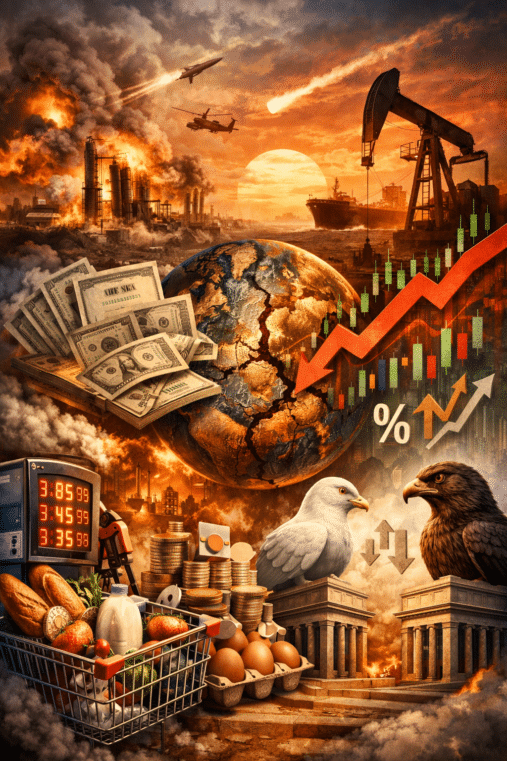
The Iranian Wildcard and the $150 Oil Scenario
If there is one trigger capable of sending the global economy into shock faster than anything else, it is energy.
Oil remains the bloodstream of the global financial system. Every truck, cargo ship, airline, factory and farm ultimately runs on it. When oil prices surge suddenly, the effects ripple through the economy with brutal speed.
The geopolitical pressure surrounding Iran has quietly become one of the most dangerous wildcards in global markets. The Strait of Hormuz, a narrow waterway between Iran and Oman, carries roughly a fifth of the world’s oil supply. Any disruption there would not simply tighten supply; it would ignite panic.
Energy analysts across trading desks are openly discussing a scenario where oil spikes to $150 per barrel or higher almost overnight.
At that price level, the consequences cascade rapidly. Transportation costs surge. Manufacturing expenses explode. Food prices follow. Inflation, which central banks have been struggling to control for years, would reignite across the entire Western economy.
When energy shocks collide with already fragile economic conditions, financial markets tend to react violently. Investors begin liquidating assets to cover losses and margin calls. Credit markets tighten. Risk appetite disappears.
This is where the real danger begins.
The Liquidity Trap Most Investors Aren’t Prepared For
Financial markets today are more fragile than most people realize. Years of cheap money, algorithmic trading, and massive government debt have created a system that depends heavily on continuous liquidity.
When that liquidity disappears, markets don’t decline smoothly. They seize.
Traders call it a “no bid” environment, where sellers overwhelm buyers and prices simply drop until someone is willing to step in.
An oil shock can trigger exactly that kind of environment. Energy costs surge, inflation expectations explode, and investors begin dumping everything from equities to crypto to corporate debt in order to reduce risk.
Liquidity drains from the system at the exact moment everyone needs it most.
That’s when financial crises historically begin.
The Financial Shock Some Analysts Believe Is Coming
Across trading floors and institutional investment firms, a growing number of analysts believe the global financial system is approaching another stress event.
The ingredients are already visible.
Government debt levels are at historic highs. Global supply chains remain vulnerable to geopolitical disruptions. Central banks have limited tools left after more than a decade of aggressive monetary stimulus.
Add an oil shock into that environment and the system begins to strain.
The danger is not simply rising prices or market volatility. The real threat is a sudden loss of confidence in financial stability itself. When investors begin to fear that central banks cannot control inflation or stabilize markets, capital begins fleeing risk assets across the board.
Those moments can trigger cascading financial shocks that spread from energy markets into equities, bonds, currencies, and eventually banking systems.
History shows that these types of events rarely remain contained.
They reshape the financial landscape.
Trump’s Stablecoin Strategy and the GENIUS Act
While global markets are wrestling with these risks, a quiet transformation of money is already underway in Washington.
Donald Trump’s executive order banning a U.S. central bank digital currency was widely celebrated by conservatives who feared direct government control over programmable money. That move effectively halted the idea of a Federal Reserve–issued digital dollar.
But eliminating a government CBDC does not mean the digital currency revolution disappears.
Instead, the focus has shifted toward stablecoins.
Under legislative efforts like the GENIUS Act, stablecoins are being promoted as a private-sector digital dollar that could modernize financial infrastructure while maintaining American leadership in global payments.
Supporters argue this approach allows innovation to flourish without handing the federal government direct control over individual financial transactions.
Critics warn that the distinction between stablecoins and centralized digital money may ultimately blur once regulation, compliance requirements, and financial surveillance frameworks become fully integrated into the system.
Either way, the United States is clearly moving toward a digitized monetary infrastructure, and stablecoins appear to be the vehicle Washington is willing to support.
The Transformation of Money Is Already Happening
For most of history, money has been physical. Coins and paper currency changed hands directly between people.
But modern financial systems are rapidly evolving into something very different.
Payments are becoming instantaneous. Assets are being tokenized. Settlement systems are moving onto digital networks that operate continuously rather than during traditional banking hours.
Stablecoins are only one piece of that transformation.
Banks are experimenting with blockchain settlement layers. Financial institutions are developing tokenized securities. Governments around the world are studying digital payment rails that could eventually replace traditional banking infrastructure.
In other words, money itself is becoming software.
Once that transition occurs, the financial system gains new capabilities that simply didn’t exist in the past. Transactions become programmable. Payments can move globally within seconds. Entire financial markets can operate digitally around the clock.
But every technological leap in finance also raises questions about control, privacy, and economic power.
The architecture being built today could shape the global monetary system for decades.
A System Under Pressure
If oil spikes to $150 and global markets begin to seize, policymakers will be forced to respond quickly. Financial crises have a way of accelerating technological and regulatory change.
During the 2008 crisis, central banks unleashed quantitative easing and emergency liquidity programs that permanently altered the financial landscape.
During the 2020 pandemic crisis, governments introduced massive digital stimulus transfers and emergency lending programs that would have been politically impossible just a few years earlier.
Every crisis opens the door for new financial infrastructure.
And right now the infrastructure being built revolves around digital money.
The Warning Signs Are Already Visible
Whether April 3 becomes a major turning point or simply another volatile day in markets remains impossible to predict.
What is clear, however, is that the global financial system is entering a period of profound transformation.
Energy markets are becoming more unstable. Geopolitical tensions are rising. Financial markets are operating with razor-thin liquidity buffers.
At the same time, the architecture of money itself is changing.
Moments like this—when economic pressure and technological change collide—are when the biggest shifts in financial history tend to occur.
The Smart Move Right Now
Understanding the transformation of money is no longer optional for investors, business owners, or anyone concerned about financial autonomy.
The global monetary system is evolving quickly, and those who recognize the warning signs early will be far better positioned than those who ignore them.
If you want a deeper breakdown of how the Digital Dollar Reset could reshape the financial system—and how digital currency infrastructure like stablecoins may change the future of money—there is one resource I strongly recommend.
Download the Digital Dollar Reset Guide by Bill Brocius.
It explains the financial transformation already underway and why the next major economic shock could accelerate the shift faster than most people expect.
Because when the architecture of money changes, the people who understand it first are the ones who stay ahead of the system.