
BRICS Currency Ambitions Signal the Next Phase of the Digital Dollar Reset — Why the Global Shift Toward CBDCs and Financial Surveillance Is Accelerating

A New Monetary Power Struggle Is Emerging
For decades, the U.S. dollar has served as the backbone of the global financial system. Roughly 58% of global foreign exchange reserves are still held in dollars, according to International Monetary Fund data. That dominance has allowed Washington to wield enormous geopolitical leverage — from sanctions to global liquidity control.
But over the past several years, the cracks have begun to show.
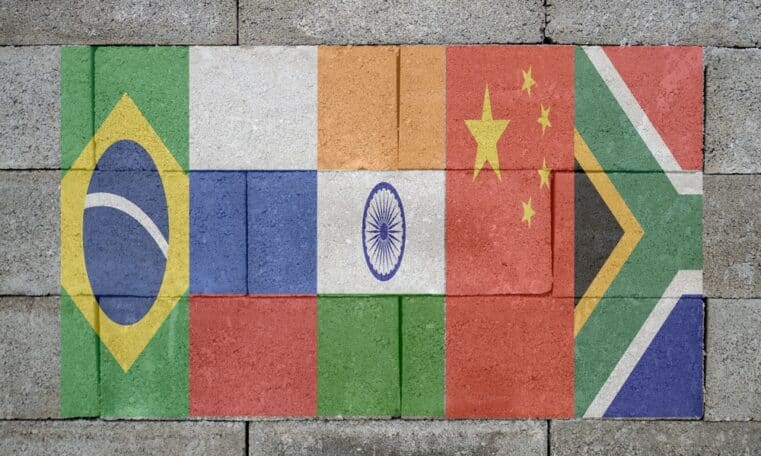
The BRICS economic bloc — Brazil, Russia, India, China, and South Africa — has increasingly moved to challenge the Western-dominated monetary framework, particularly after sanctions were imposed on Russia in 2022. Those sanctions effectively weaponized the dollar system, freezing assets and cutting Russia off from key global payment rails.

That event sent a clear signal to many nations: control of the global financial system equals geopolitical power.
Now, BRICS is pursuing a series of currency ambitions designed to reduce reliance on the U.S. dollar and build an alternative financial ecosystem.
While many Western analysts dismiss these efforts, the deeper implications are far more significant for everyday Americans.
Because when global monetary competition intensifies, central banks respond with control.
And that’s exactly where the story is heading.
The Five Currency Ambitions Driving the BRICS Strategy
A Potential BRICS Reserve Currency
One of the most discussed ambitions within BRICS circles is the creation of a shared reserve currency designed for international trade settlements.
The goal isn’t necessarily to replace domestic currencies but to bypass the dollar in global trade.
If implemented, this would allow participating nations to settle energy, commodities, and manufacturing trade without relying on dollar clearing systems dominated by Western banks.
Even if such a currency takes years to materialize, the mere pursuit of it sends a message: the monopoly of the dollar is being questioned.
Accelerating Global De-Dollarization
The second pillar of BRICS strategy is de-dollarization.
Many countries across Asia, Africa, and South America are experimenting with alternative settlement systems and non-dollar trade agreements.
Russia and China, for example, now reportedly settle over 90% of their bilateral trade in local currencies, dramatically reducing their exposure to the dollar system.
This shift reflects a broader trend:
Countries that fear sanctions or financial pressure are increasingly seeking ways to reduce dependence on the Western banking infrastructure.
Expanding the Use of Local Currencies
Another core ambition is strengthening national currencies within the BRICS bloc.
Instead of routing transactions through dollars, nations are encouraging direct currency swaps and bilateral settlement agreements.
This approach reduces reliance on the traditional system built around:
- U.S. correspondent banking networks
- SWIFT messaging infrastructure
- Dollar-denominated clearing
While these changes may sound technical, they represent a fundamental challenge to the existing financial order.
The Proposed BRICS Pay System
Perhaps one of the most tangible developments is the proposed BRICS Pay network.
This system would allow direct central bank-to-central bank settlements, bypassing many of the Western financial intermediaries that currently dominate global payments.
In essence, it could function as a parallel payment rail for international trade.
For decades, the dollar-based system has depended on Western institutions controlling transaction flows.
BRICS Pay is an attempt to build an alternative pipeline.
Linking Central Bank Digital Currencies
The final — and perhaps most consequential — ambition involves connecting central bank digital currencies (CBDCs) across BRICS nations.
India’s Reserve Bank has already floated the idea of linking digital currencies issued by member states into a unified settlement framework.
This could enable near-instant cross-border payments between national CBDCs.
While this may sound like a technological upgrade, it also signals something deeper:
Digital currencies are becoming the next battlefield in global monetary competition.
Why This Matters to Americans
At first glance, BRICS currency ambitions may appear to be a distant geopolitical issue.
But the ripple effects could directly impact the financial system here in the United States.
When global competitors challenge dollar dominance, Washington faces pressure to reinforce its own monetary infrastructure.
That’s where developments like the FedNow payment system and discussions around a U.S. central bank digital currency enter the picture.
FedNow, launched by the Federal Reserve, enables instant payments between financial institutions.
On the surface, it’s simply a modernization of payment rails.
But combined with growing interest in CBDCs and programmable money, it raises serious questions about the future structure of money itself.
The Quiet Rise of Financial Surveillance Infrastructure
Digital payment systems create a powerful byproduct:
transaction visibility.
Unlike physical cash, digital money leaves a permanent record.
When governments control the infrastructure behind that money, they gain unprecedented insight into financial activity.
That’s why critics warn that CBDCs could enable:
- Transaction monitoring
- Spending restrictions
- Capital controls
- Programmable monetary policy
These capabilities transform money from a neutral medium of exchange into a policy enforcement tool.
In a world where geopolitical currency competition is intensifying, policymakers may view such tools as necessary for maintaining control.
But the cost could be financial autonomy for ordinary citizens.
Historical Lessons From Monetary Power Shifts
History offers plenty of warnings about major currency transitions.
When the British pound lost its global reserve status in the 20th century, the world entered decades of financial restructuring.
Major monetary shifts rarely happen smoothly.
They tend to trigger:
- banking instability
- inflationary policies
- capital restrictions
- aggressive monetary experimentation
Today’s transition toward digital currency systems may represent the next phase of that historical pattern.
Protecting Financial Sovereignty in an Era of Digital Currency Control
Whether BRICS succeeds in its currency ambitions or not, one thing is clear:
The global monetary system is entering a period of rapid transformation.
Nations are building new payment rails.
Central banks are experimenting with programmable money.
Governments are expanding financial monitoring capabilities.
For individuals, the lesson is simple:
Relying entirely on centralized financial systems may become increasingly risky.
Diversification into tangible and decentralized assets — including precious metals and certain forms of digital currency — has historically been one way people protect themselves during monetary transitions.
The goal is not speculation.
The goal is financial resilience.
The Bottom Line
BRICS currency ambitions may not topple the dollar overnight.
But they do signal something important:
The era of unquestioned dollar dominance is evolving into a global monetary competition.
And when financial power struggles intensify, central banks rarely respond by giving individuals more freedom.
They respond by building systems that give themselves more control.
Understanding these shifts before they fully unfold may be one of the most important financial survival skills of the coming decade.
A Critical Step You Can Take Right Now
If you’re beginning to see the warning signs — rising CBDC experimentation, the expansion of instant payment infrastructure like FedNow, and the growing push toward a cashless society — now is the time to prepare.
Economic analyst Bill Brocius has laid out exactly what these changes could mean for ordinary Americans in his essential report:
Download The Digital Dollar Reset Guide
Inside, he explains how the coming transformation of money could impact your savings, your spending freedom, and your long-term financial independence.
More importantly, he outlines practical strategies designed to help individuals protect their wealth and maintain financial sovereignty as the global financial system shifts toward centralized digital control.
If you want to understand what’s coming — and what steps you can take now — download the guide.
Because when the rules of money start changing, the people who prepare early are the ones who stand the best chance of protecting their financial future.