BRICS Is Building a New Trade Order—And the Dollar Isn’t Invited

BRICS Expands Its Grip on Global Commodities
The BRICS alliance is no longer a loose collection of emerging economies. It now includes ten full members—Brazil, Russia, India, China, South Africa, Egypt, Ethiopia, Iran, the UAE, and Indonesia—and ten additional partner countries. Together, they represent an astonishing 46% of the world’s population and control roughly 44% of global grain production. That isn’t symbolic. That’s strategic leverage.
This isn't just an expansion in numbers—it's a consolidation of economic power. The BRICS nations are positioning themselves as the new arbiters of global resource flows, and they’re doing it with commodities that feed and fuel the world.
The BRICS Grain Exchange: A Direct Strike on Western Pricing Power
One of the most significant moves to come out of the 2024 Kazan Summit was the unanimous approval of a BRICS grain exchange. This initiative is not just about market efficiency—it's about sovereignty. As Russian President Vladimir Putin put it, the new exchange aims to shield national markets from “negative external intervention, speculation and attempts to cause artificial shortages.” His deputy, Dmitry Patrushev, was even more direct, describing it as a mechanism to build independent price indicators.

Translation? They’re breaking free of Western pricing control.
With this infrastructure, BRICS is taking the first real steps toward setting global commodity prices outside the dollar-dominated system. For countries long at the mercy of foreign market fluctuations and Wall Street speculators, this move isn’t just political—it’s existential.
Canada’s Role: A Middle Power at a Crossroads
Here’s where things get even more interesting. Canada, which currently holds the position of the world’s third-largest wheat exporter, stands to benefit from the shift—if it plays its cards right. Canadian wheat accounts for 15% of global trade, and BRICS markets now represent more than 40% of global grain demand. That’s an alignment no policymaker can afford to ignore.
As U.S. trade policies become increasingly punitive—tariffs on Canadian exports have hit as high as 35%—even America's allies are reconsidering their loyalties. A recent poll revealed that 91% of Canadians favor reduced reliance on the United States. Prime Minister Mark Carney underscored this changing mood, stating, “We cannot count or fully rely on what has been our most valued trading relationship.”
What’s more, Canada’s export profile is exactly what BRICS economies need: agricultural commodities, energy, and strategic minerals. India’s infrastructure boom and China’s growing food security concerns create immediate and long-term demand for Canadian supply chains. And the political space to deepen those ties has never been wider.
The Rise of a Multipolar Financial System
The financial foundation of this realignment is already taking shape. BRICS countries are implementing local settlement mechanisms that cut the dollar out of trade entirely. Discussions are underway to establish gold-backed units of account that combine member currencies. These are not distant dreams—they're live initiatives moving through development and deployment stages.
As Eduard Zernin, head of Russia’s Union of Grain Exporters, predicts, agricultural and related product trading on BRICS platforms could exceed $1 trillion. These are not marginal players anymore. These are market makers.
And Canada, with its globally respected systems of transparent pricing and reliable delivery, is being seen not just as a supplier—but as a potential anchor of credibility within these new networks.
Trump’s Threats Only Accelerate the Shift
Former President Donald Trump recently warned that countries aligning with BRICS could face additional tariffs—up to 10%. But instead of halting the shift, these threats appear to be accelerating it. Rather than stay chained to a partner that punishes economic diversification, countries like Canada are walking through new open doors.
The more Washington tightens its grip, the more nations are slipping away.
BRICS Isn’t Trying to Fit Into the Western Order—It’s Replacing It
The BRICS strategy isn’t to reform the existing system—it’s to build a parallel one that works on its own terms. The new system is rooted in real assets, tangible flows of food and energy, and financial tools designed to bypass the volatile, debt-soaked dollar.
Canada’s growing integration with BRICS-aligned trade corridors—from rail infrastructure to port systems—is a clear signal: even long-standing Western allies are now hedging against dollar exposure. In this emerging order, influence belongs to those who produce—not those who print.
The Takeaway: The Dollar’s Monopoly Is Finished
What’s unfolding now is not a negotiation. It’s a migration. Nations are walking away from dollar dependency, and they’re doing so with functional systems in place: new commodity exchanges, non-dollar settlements, and increasingly integrated trade alliances.
The BRICS commodity architecture is no longer aspirational—it’s operational. And as it scales, it will siphon more and more economic gravity away from the dollar system.
If you hold your wealth in dollar-based instruments, this matters. Because as the dollar loses global utility, it loses credibility—and with it, purchasing power, liquidity, and relevance.
You Still Have Time—But Not Much
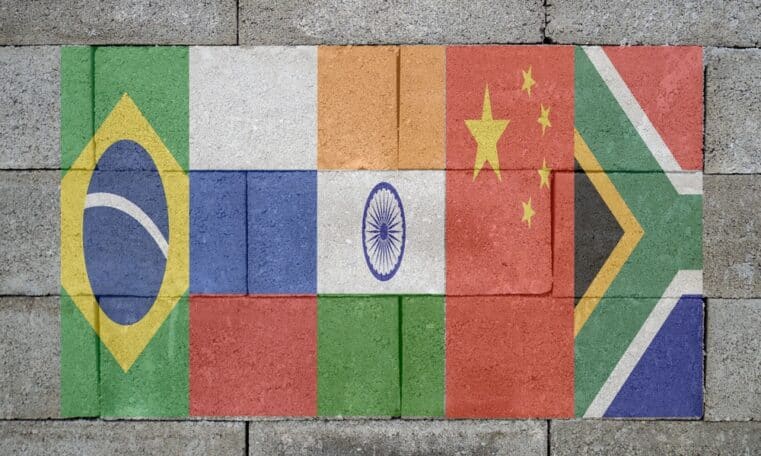
The BRICS bloc is constructing a new economy in real time. Every new agreement, every new infrastructure investment, every commodity deal settled in local currency—these are bricks in the wall of a world where the dollar is just one currency among many, no longer supreme.
If you're still sitting on dollar-based assets, you need to ask yourself: What happens when the rest of the world stops playing by America's rules?
📥 Download the free guide — The Digital Dollar Reset Guide — and get ahead of the curve before the next phase of the transition leaves you behind.
It’s not just coming. It’s already here.