BRICS Just Hit $1 Trillion in Trade—and It’s a Direct Strike Against the Dollar System

$1 Trillion Trade Milestone: What BRICS Just Achieved
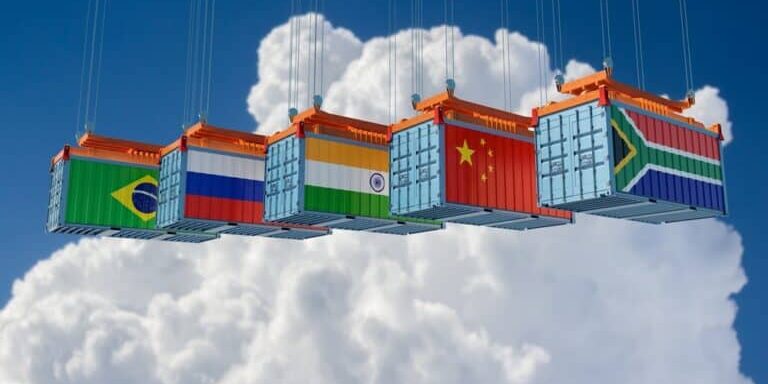
The BRICS bloc—now including Brazil, Russia, India, China, South Africa, UAE, Iran, Egypt, and Ethiopia—officially crossed $1 trillion in trade turnover in 2025.
Key highlights:
- Intra-BRICS trade now accounts for 20% of all BRICS exports and 30% of imports.
- China contributed 64% of total exports for the bloc.
- India’s external trade hit $825 billion, and Russia-China trade topped $200 billion for the third year running.
- New members are already plugged into the BRICS trade network, deepening regional coordination.
Sounds impressive—and it is. But this isn’t just about trade. It’s about power.

The Real Threat: A Global Economic Realignment
The mainstream press spins this as a positive development in multilateral trade. What they won’t say out loud is that BRICS is methodically undermining the U.S. dollar’s dominance—and doing it fast.
Here’s what you need to understand:
- BRICS now controls 39.2% of global GDP (PPP)—beating the G7.
- Projected BRICS economic growth: 3.8%, while G7 is limping along at 1.1%.
- The bloc represents 45% of the global population and 40% of oil production.
Put simply: BRICS is now the engine of the global economy, and it's doing everything in its power to break free of the Western financial chokehold.
Strategic Integration = Economic Warfare
This isn’t just raw growth—it’s intentional and strategic integration:
- Russia and China’s trade alliance is locking in bilateral resilience, bypassing the dollar.
- India is threading between alliances, strengthening ties with both Western and Eastern partners while maintaining independence.
- The UAE and Iran bring oil to the table, supercharging BRICS' energy clout.
- Digital infrastructure, payment systems, and trade logistics are being regionalized—cutting out SWIFT and Fed-controlled pipes.
This isn’t cooperation. It’s separation—from the dollar, from IMF control, from the surveillance-heavy Western monetary order.
BRICS vs G7: The Power Balance Has Shifted
Let’s not kid ourselves: this is a new Cold War—but with currency and trade, not bombs.
|
Metric |
BRICS |
G7 |
|
Global GDP Share (PPP) |
39.2% |
30% and falling |
|
Oil Production Share |
40%+ |
Under 30% |
|
Population Share |
45% |
~10% |
|
2025 Economic Growth Rate |
3.8% |
1.1% |
This is not a symbolic milestone. It’s a pragmatic reordering of global leverage—and the G7 is rapidly losing ground.
The U.S. Dollar Is the Target—Make No Mistake
With this level of trade integration, BRICS doesn’t just have alternatives to the dollar—they’re actively promoting them.
De-dollarization is no longer a theory:
- Bilateral trade in national currencies is expanding.
- BRICS members are building cross-border payment systems to compete with FedNow, SWIFT, and CHIPS.
- Rumors of a BRICS settlement currency backed by commodities have been circulating—and they’re not unfounded.
Once these systems are in place, the U.S. dollar becomes optional for a huge portion of global trade.
When that happens? The dollar’s global demand drops. Inflation skyrockets. Purchasing power collapses. Capital controls tighten.
That’s not a what-if scenario. That’s the logical endgame.
Digital Infrastructure + Resource Control = Leverage
BRICS is also investing heavily in:
- Digital currencies and regional payment networks
- Supply chain autonomy
- AI, biotech, and renewable energy sectors
This isn’t just about ditching the dollar. It’s about building a complete parallel economy, one that doesn’t need the U.S. or its institutions at all.
In the future, you’ll be locked into a CBDC-based system, while BRICS countries trade freely in alternative structures they control.
What This Means for You—Right Now
Don’t underestimate what just happened:
- $1 trillion in BRICS trade isn’t a data point—it’s a declaration of independence.
- The rise of BRICS spells the fall of U.S. monetary supremacy, and the rise of programmable currencies like FedNow to maintain control domestically.
- As dollar demand weakens globally, CBDCs will be positioned as the solution—but that solution comes with total surveillance, spending controls, and kill switches.
Wake Up Before It’s Too Late
The establishment wants you distracted by elections and inflation reports. Meanwhile, the real coup is happening in the financial system, and BRICS just fired the loudest shot yet.
If you’re not preparing for a post-dollar economy, you’re already behind.
That’s why I urge you to download the Digital Dollar Reset Guide by Bill Brocius. This isn’t financial advice—it’s survival intelligence.
Download the Digital Dollar Reset Guide now
before your dollars are worth as much as Washington’s promises.
Stay sharp. Stay sovereign.
—Derek Wolfe