The Hidden Housing Cost Trap: Why Goldman Sachs Was Right to Warn of an “Affordability Illusion”

The Hidden Costs of Homeownership Have Skyrocketed
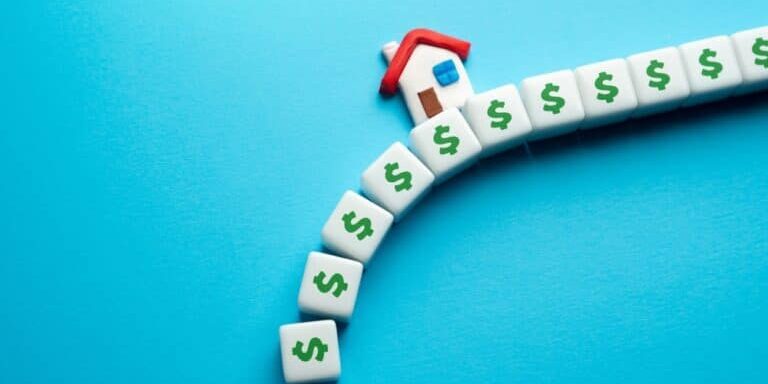
Recent data reveals that the average U.S. homeowner is now paying nearly $16,000 per year in “hidden” costs — expenses not accounted for in typical affordability metrics. These include essential but often overlooked financial burdens such as maintenance, property taxes, and homeowners insurance. When added to the base mortgage payment, these costs can easily push the real monthly burden far higher than anticipated.
What’s worse, these hidden costs are rising faster than household incomes. While wages have seen modest gains, they lag behind the escalating costs tied to homeownership, leaving many buyers in a tightening financial vise. Simply put, the sticker price of a home no longer tells the full story. The fine print — those ongoing, compounding costs — is what’s bleeding Americans dry.
Coastal and High-Cost Regions Feel the Pinch the Hardest
While all homeowners face the squeeze, the pain is far more acute in high-cost metro regions. In cities like New York, San Francisco, and Boston, hidden costs often surpass $22,000 annually — a figure that can make or break a household’s budget. For buyers in these areas, the dream of homeownership increasingly comes with a built-in financial trapdoor.

Even middle-income families who might technically qualify for a mortgage find themselves pushed to the edge by these extras. In these inflated markets, the true cost of “ownership” bears a closer resemblance to modern-day servitude — a constant outflow of cash just to stay housed in a place they thought they owned.
Rising Insurance Premiums Fueled by Climate, Risk, and Inflation
Homeowners insurance has emerged as one of the fastest-rising ownership expenses. Since 2020, average premiums have surged nearly 50%, driven by inflation, increased natural disaster risk, and climate volatility. Insurance providers aren’t absorbing these risks — they’re passing them directly to the homeowner.
In disaster-prone regions, the premium hikes are even steeper. Those living in flood zones, wildfire corridors, or hurricane-prone states are now paying thousands more per year just to maintain coverage. For many, it’s not even a question of luxury — it’s legally required. Yet with rising deductibles and narrower coverage, many are paying more for less.
Maintenance and the Age of Housing: The Silent Budget Killer
Maintenance is the unsung destroyer of affordability. As America’s housing stock ages — much of it built decades ago — the upkeep costs continue to climb. Leaky roofs, crumbling foundations, outdated electrical systems, and mold-prone basements aren’t abstract risks; they’re common realities for millions of homeowners.
On average, maintenance now accounts for more than $10,000 per year in homeownership costs. It’s not just a line item — it’s a constant financial drip that turns minor problems into major budget-busters. And as home prices stabilize or fall in some areas, these costs remain stubbornly high or even increase, offsetting any supposed “discount” in the purchase price.
Property Taxes and Local Government Costs Are Still Climbing
Another often-overlooked cost dragging homeowners down is the steady rise in property taxes. As municipalities reassess home values upward, annual tax bills follow. This isn’t just happening in booming urban areas — rural and suburban homeowners are also feeling the bite, particularly as local governments face budget shortfalls and hike rates to fill the gap.
These increases aren’t just an annoyance; they’re a structural burden. In some regions, rising taxes now represent a larger share of ownership costs than the mortgage interest itself. For retirees and fixed-income households, this can mean being taxed out of their homes — even if the mortgage is long paid off.
Even Slumping Home Prices Don’t Solve the Problem
While recent reports from Goldman Sachs note that slowing or even declining home prices in some markets might suggest a return to affordability, that idea falls apart under scrutiny. The reality is that while prices may dip, the non-mortgage costs rarely follow. Insurance premiums continue to rise. Maintenance needs don’t vanish. Property taxes stay stubbornly high.
This is the core of the “affordability illusion.” It’s a bait-and-switch. Buyers believe they’re getting a deal, only to find that monthly ownership costs remain oppressive. The system props up the illusion of affordability by emphasizing a single, incomplete metric — the mortgage payment — while ignoring the thousands of dollars bleeding from owners every year in ancillary costs.
Why This Evidence Confirms the “Affordability Illusion”
When you add it all up — the maintenance, the taxes, the insurance — it’s clear that the old way of calculating affordability is broken. For many households, the numbers look good on paper, but the lived experience is one of constant financial anxiety. What should be a source of stability and wealth-building becomes a long-term liability.
This illusion is especially dangerous for first-time buyers and younger families. With little room for error in their budgets, they walk into homeownership unprepared for the avalanche of hidden expenses. The result? A growing number of Americans trapped in homes they can barely afford to maintain, let alone improve or enjoy.
My Take (With Grit): This Isn’t Just a Crisis — It’s a Trap Laid by the System
Let’s be clear — this isn’t just some unfortunate trend. It’s systemic rot. We were sold homeownership as a ticket to freedom and stability. But in today’s reality, it’s looking more like a trap laid by lenders, insurers, tax authorities, and a broken market structure.
And while the Goldman Sachs crowd is finally starting to whisper about the affordability illusion, the truth is that most of these institutions helped create it. By ignoring or underplaying non-mortgage expenses in their affordability models, they’ve fed millions into a delusion. One that lines their pockets while leaving average Americans holding the bag.
This is more than a housing issue. It’s a wealth extraction mechanism. One designed to keep you working, paying, and barely staying above water — all while believing you’ve “made it” because you own four walls and a roof. But those walls are aging. That roof needs replacing. And the meter is running.
⚠️ Conclusion — If You’re Thinking of Buying a Home Right Now: Do the Math, Not the Marketing
Forget the headlines. Forget the interest rates. If you’re not factoring in an extra $1,300 to $2,000 per month in hidden ownership costs, you’re playing with fire. The “affordability” everyone’s talking about? It’s a mirage — and you’ll only see it clearly once it’s too late.
If you want the truth, you need to start doing your own calculations and questioning every financial claim. Because if you don’t — someone else already has, and they’ve bet their bonus on you falling for it.
Download “Seven Steps to Protect Yourself from Bank Failure” by Bill Brocius
Click here to download now