The War on Deflation: Why They Fear Falling Prices More Than Financial Collapse

What the Fear of Falling Prices Really Means
Explainer: Why the Ruling Class Fears Deflation—and Why You Shouldn’t
Imagine you wake up tomorrow and gas is back to $2 a gallon, groceries cost what they did in 2019, and rent drops to sane levels. Sounds good, right? To the average person, that’s a win. But to the central banks, political cronies, and corporate oligarchs—it’s a nightmare.
That’s because we live under an economic doctrine built on lies: namely, that falling prices are bad. This myth—born out of the Great Depression—has metastasized into gospel. Even today, when inflation is hammering consumers and hollowing out savings, the narrative machine keeps pumping out fear about prices “not rising fast enough.”
Let’s get something straight: deflation is not a threat to you—it’s a threat to them.

What Is Deflation, Really?
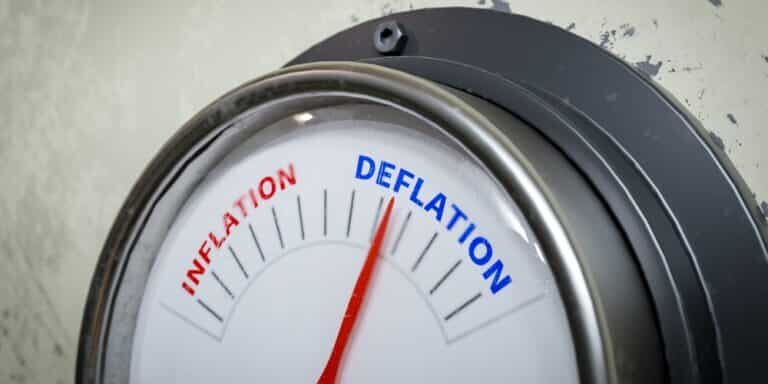
Contrary to what the media parrots, deflation isn’t just “prices going down.” True deflation is when your money gains purchasing power over time. That’s right—your dollar actually buys more, not less.
Historically, this happened in the 1920s and early ‘30s. Prices dropped, but it was because the economy was correcting itself after a central bank-fueled boom. In real terms, the dollar gained value—by a whopping 66% between 1920 and 1933. That’s the kind of monetary reality the establishment never wants to repeat.
Why Do They Fear It?
Because it shreds the mechanisms they rely on to keep the debt-driven economy afloat:
- Debt becomes harder to repay when money gets more valuable.
- Banks and financial markets take a hit, because inflated assets lose steam.
- Consumers benefit, which means less dependence on government handouts or financial bailouts.
In short: deflation puts the brakes on the control system.
A Quick History Lesson (the Stuff They Don’t Teach)
Back in the Depression era, politicians like Herbert Hoover and FDR got duped by Keynesian economists. They claimed that falling prices caused the Depression, so they went full throttle on intervention: raising wages, propping up prices, and inflating the money supply—all while pretending they were “saving the economy.”
Truth is, they made it worse. FDR outright stole the public’s gold, devalued the currency by decree, and turned what could’ve been a correction into a drawn-out disaster. But because the war pulled the country out of its economic tailspin, FDR was crowned a savior—and the myth that “deflation is evil” became permanent dogma.
The Real Agenda
What we’re seeing now is history repeating itself, only this time it’s global. Governments can’t afford deflation because:
- They’re buried in debt.
- They need continuous inflation to keep tax revenues rising without raising rates.
- They want to force people to spend, not save—because saving is resistance.
India’s situation, as Tucker points out, is a perfect case. After years of punishing inflation, prices finally start rising slower, and the global press calls it a “problem.” That’s not journalism—it’s regime propaganda.
Why It Matters Now
The Fed, ECB, and central banks worldwide are terrified of deflation—not because it hurts you, but because it exposes the fragility of their whole economic scheme. Inflation lets them inflate away debt, manipulate markets, and rob you slowly. Deflation? That’s financial sobriety—and it’s painful for addicts.
But maybe it’s time we detox.
Final Thought:
You’ve been lied to about inflation and deflation for decades. The powers that be don’t want prices to fall—they want you chasing your tail, paying more for less, while they print and spend behind the curtain.
The only real threat isn’t falling prices. It’s the system that fears them.
Call to Action:
Want to actually prepare for what’s coming down the pike? Download “Seven Steps to Protect Yourself from Bank Failure” by Bill Brocius and learn how to fortify your money against the collapse they say will never come—until it does.
Stay sharp. Stay skeptical. Stay free.
– Derek Wolfe