Venezuela’s Oil Mirage: Why U.S. Energy Giants Still Won’t Touch a Resource-Rich Nation After Decades of Socialism

The World’s Largest Oil Reserves… and Almost No Investors
On paper, Venezuela should be one of the most attractive energy investment destinations in the world.
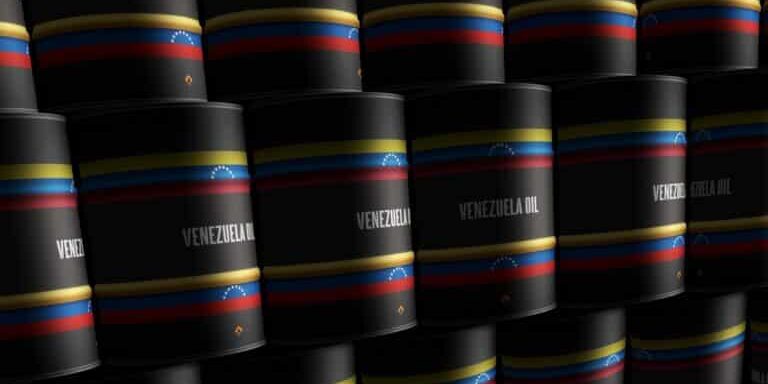
According to data from the U.S. Energy Information Administration, the country holds roughly 303.8 billion barrels of proven crude oil reserves, representing about 17 percent of the world’s total supply. By sheer volume alone, that places Venezuela at the top of the global energy hierarchy.
Yet despite recent political developments that theoretically reopen the country to Western companies, major U.S. oil firms are not rushing in.

That hesitation tells us something important.
When massive reserves exist but investment refuses to follow, the issue isn’t geology—it’s trust.
And Venezuela has spent decades destroying it.
The Hidden Problem: Venezuela’s Oil Is Expensive to Produce
Many people hear “largest oil reserves in the world” and assume extracting it should be simple.
But the reality is far more complicated.
Most of Venezuela’s oil sits in the Orinoco Belt, where the crude is extremely heavy and viscous. Unlike lighter oil fields found in places like Texas or Saudi Arabia, this oil must undergo a costly process before it can even reach a refinery.
Heavy crude often requires:
- Heating the oil underground just to move it
- Diluting it with lighter hydrocarbons
- Specialized refining equipment
- Larger capital investments in infrastructure
All of these steps dramatically increase production costs.
That means Venezuelan oil projects require consistently high oil prices just to remain profitable. When prices fluctuate—as they always do in global energy markets—the economics become far more uncertain.
For investors deciding where to deploy billions of dollars, that uncertainty matters.
A 50-Year Infrastructure Collapse
Even more troubling is the condition of Venezuela’s energy infrastructure.
Decades of mismanagement and underinvestment have left the country’s pipeline network and refineries in a state that industry analysts describe as catastrophic.
Many pipelines transporting crude from wells to refineries are reportedly over half a century old. Corrosion, leaks, and structural failures have become common.
Satellite imagery and industry assessments show:
- Rusted storage tanks
- Inoperable refinery systems
- Pipeline ruptures and oil spills
- Severely degraded transportation networks
In simple terms, Venezuela’s oil sector has been left to rot.
Experts estimate that as much as $100 billion in investment may be required just to restore the system to minimal operating capacity.
For any energy company evaluating the situation, that’s an enormous financial gamble.
The Real Barrier: Political Risk
But the biggest problem facing Venezuela’s oil sector isn’t heavy crude or aging pipelines.
It’s politics.
Oil extraction requires long-term investments that can take decades to pay off. Companies must invest billions today in the hope of stable returns far into the future.
That only works if the rules remain predictable.
In Venezuela, they rarely do.
Over the past several decades, investors have watched the government repeatedly:
- Nationalize foreign assets
- Renegotiate contracts
- Change regulatory frameworks
- Impose sudden policy shifts
Companies like ConocoPhillips have firsthand experience with these disruptions after previous nationalization waves wiped out foreign holdings.
Once investors lose confidence in property rights, rebuilding that trust can take generations.
Why Companies Are Waiting Instead of Investing
Economists describe the situation as an “investment under uncertainty” problem.
When risks are high and future policy outcomes remain unclear, companies often choose to delay irreversible investments.
That delay preserves flexibility.
Instead of committing billions to rebuild infrastructure today, energy firms can simply monitor the situation while keeping their options open.
For shareholders and executives responsible for managing risk, that’s the rational move.
Especially when other oil-producing regions offer:
- Lower production costs
- Modern infrastructure
- Stable legal frameworks
- Predictable regulatory environments
Capital flows toward stability. Venezuela currently offers the opposite.
The Long Shadow of Socialized Energy
There’s also a broader lesson here.
Venezuela was once one of the most prosperous countries in Latin America, built largely on its vast oil wealth.
But decades of state control over the energy sector gradually transformed a thriving industry into a cautionary tale.
Centralized planning replaced market incentives.
Political patronage replaced technical expertise.
Maintenance budgets were sacrificed for short-term government spending.
The result is what we see today: a country sitting on an ocean of oil while its production capacity collapses.
Resource wealth alone cannot sustain an economy if institutions are weak.
Why This Story Matters Far Beyond Venezuela
For readers concerned about economic freedom and financial stability, Venezuela offers a powerful warning.
When governments erode property rights, politicize industries, and treat private investment as expendable, capital eventually disappears.
And when capital disappears, infrastructure decays, productivity collapses, and economic decline accelerates.
History has shown this pattern repeatedly—from Latin America in the 20th century to the energy nationalizations of the 1970s.
The damage often lasts far longer than the political decisions that caused it.
The Bottom Line
Venezuela’s vast oil reserves remain one of the world’s great untapped energy resources.
But oil alone isn’t enough.
Until investors believe that contracts will be honored, property rights protected, and policies stabilized, billions of dollars in capital will remain on the sidelines.
Energy companies aren’t ignoring Venezuela because the opportunity is small.
They’re staying away because the risk is enormous.
And in global markets, trust—once broken—is one of the hardest commodities to restore.
A Bigger Financial Shift Is Already Underway
While the world focuses on geopolitical headlines and energy markets, a far larger economic transformation is quietly taking shape inside the global financial system.
Central banks are rapidly building the infrastructure for digital currencies, real-time payment systems, and unprecedented transaction monitoring.
Programs like the FedNow payment system and growing central bank digital currency (CBDC) initiatives signal a future where governments could gain far greater visibility—and potentially control—over financial transactions.
Many economists warn this shift could pave the way for programmable money, financial surveillance, and new forms of capital control in an increasingly cashless society.
That’s why my mentor Bill Brocius has been urging readers to prepare now—before these systems fully take hold.
His guide, the Digital Dollar Reset Guide, explains the risks behind digital currency control and outlines practical steps individuals can take to preserve financial autonomy in a rapidly changing monetary landscape.
If you recognize the warning signs already appearing across the global economy, you can learn more by downloading the guide.