$6,200 Gold Is Just the Beginning: Why the Financial System Is Flashing Red and Most Americans Aren’t Ready

UBS Just Made a Big Call — But Let’s Look Deeper
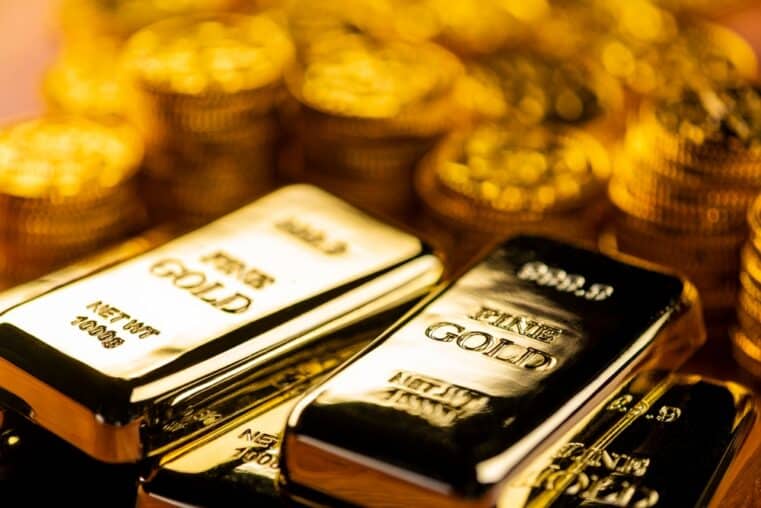
When a major institution like UBS raises its gold forecast to $6,200 per ounce, people pay attention. Just a month ago, they were talking about $5,000. Now they’re projecting an additional $1,000 surge in the coming months.
That kind of upward revision tells you something important:
The environment supporting gold isn’t fading — it’s strengthening.
But let’s slow down for a second.

This isn’t about chasing a number. It’s about understanding the forces behind the number.
And those forces are very real.
The Fed Is Easing — And That’s Rocket Fuel for Gold
UBS expects additional rate cuts this year.
Why does that matter?
Because gold competes with interest-bearing assets. When rates fall:
- Real yields drop.
- The dollar weakens.
- Opportunity cost of holding gold declines.
Think of it this way:
Fiat currency is like a car that loses value the moment you drive it off the lot. Lower rates just press harder on the depreciation pedal.
When real interest rates fall, gold historically rises. It’s not magic. It’s math.
And with government deficits exploding and debt at historic highs, policymakers are boxed in. Higher rates break things. Lower rates debase currency.
Neither is painless — but one tends to favor gold.
Geopolitical Tensions Aren’t Going Away
UBS pointed to escalating tensions in the Middle East, particularly involving Iran. Military buildup. Uncertainty. Volatility.
Now here’s the important part:
Geopolitical shocks often cause temporary spikes in gold.
But when tensions become persistent?
That creates a structural bid.
We are no longer in a world of isolated regional events. We’re in an era of:
- Energy supply vulnerability
- Great power rivalry
- Trade realignment
- Strategic resource competition
Gold thrives when global stability weakens.
Not because of fear — but because gold is no one else’s liability.
Central Banks Are Sending a Loud Message
This is the part I want my readers to focus on.
The World Gold Council reports record global gold demand exceeding 5,000 metric tons.
Central banks are accumulating gold at levels we haven’t seen in decades.
Ask yourself:
Why are central banks — the very institutions that manage fiat currencies — stockpiling physical gold?
Because they understand systemic risk.
They understand currency diversification.
They understand the fragility of a debt-based global system.
When the largest financial players in the world are quietly converting paper reserves into hard assets, that’s not speculation.
That’s preparation.
Supply Isn’t Keeping Up
UBS also highlighted something most headlines ignore: supply constraints.
Mine production has been stagnant. Exploration takes years. Permitting is slow. Many existing mines are projected to exhaust production plans by 2028.
You can’t print gold.
You can’t digitally create it.
When demand rises against constrained supply, prices adjust.
That’s Economics 101.
Do I Agree With $6,200 by Mid-Year?
Here’s my honest answer:
I agree with the direction.
I’m cautious about precise timing.
Markets don’t move in straight lines. They shake out weak hands. They overshoot. They consolidate.
But the structural drivers? They’re undeniable:
- Persistent fiscal deficits
- Easing monetary policy
- Rising geopolitical instability
- Strong central bank accumulation
- Supply limitations
Whether it’s $6,200 by June or later, the broader trend favors hard assets over paper promises.
Why This Matters for Everyday Investors
Let’s talk real life.
Most Americans are:
- Overexposed to equities
- Dependent on retirement accounts tied to market valuations
- Holding depreciating cash
- Unprotected against systemic shocks
Gold isn’t about speculation.
It’s about insurance.
It’s about stability in an unstable system.
UBS suggests a “mid-single-digit allocation” to gold in diversified portfolios.
That’s Wall Street’s polite way of saying:
“You might want some protection.”
For many working families, that allocation is still too low.
Not because gold replaces everything else — but because we are entering an era where diversification needs to include assets outside the financial system.
Commodities Are Entering a New Era
UBS also noted tightening supply in copper and aluminum, and structural demand driven by electrification and energy transition.
That’s important.
We’re entering a world of:
- Resource nationalism
- Infrastructure spending
- Energy transformation
- Persistent fiscal stimulus
Commodities aren’t just cyclical anymore — they’re strategic.
And gold sits at the center of that conversation as the monetary metal.
The Bigger Picture No One Wants to Say Out Loud
Here’s what this really signals.
We are transitioning from:
- Low inflation to structurally higher volatility.
- Stable globalization to strategic fragmentation.
- Fiscal discipline to permanent deficits.
- Monetary restraint to policy-driven liquidity cycles.
That environment supports tangible assets.
Gold and silver aren’t relics. They are financial stabilizers in a world of expanding balance sheets.
And while institutions are finally acknowledging this shift, everyday investors are still largely underprepared.
My Advice Moving Forward
Don’t chase headlines.
Don’t obsess over exact price targets.
Do focus on positioning.
If you don’t own gold or silver, consider building a position gradually.
If you do own some, review your allocation and your storage strategy.
The goal isn’t to predict every move.
The goal is to protect purchasing power.
Because once confidence shifts in the broader monetary system, price discovery can happen quickly — and violently.
Take the Next Step: Join the Inner Circle
If you’re reading this and thinking, “Okay Frank, I get it — but what do I actually do from here?” — that’s exactly why we built the Dedollarize Inner Circle.
This isn’t just another newsletter.
Inside the Inner Circle, we go deeper:
- Where gold and silver are headed next
- How to position before major policy shifts
- What central banks are signaling behind the headlines
- How to think about allocation, timing, and risk in plain English
I built this for serious readers who don’t want fluff — they want clarity, strategy, and a calm voice in a noisy financial world.
If the system feels unstable, that’s because it is. The key is not to panic — it’s to prepare intelligently.
Join the Dedollarize Inner Circle here
Don’t wait for the next shock to wish you had a plan.
Position yourself now.