Trump’s Tariff Blitz: Economic Nationalism, Executive Power, and the Hidden Costs to Financial Freedom

The Tariff Surge: What’s Actually Happening?
Recent trade moves signal an aggressive expansion of tariff authority through alternative legal mechanisms. Instead of backing away from sweeping import taxes after judicial resistance, the administration appears to be exploring narrower, time-bound statutory tools to continue broad-based tariff enforcement.
Whether framed as national security, balance-of-payments stabilization, or trade fairness, the pattern is clear:
- Tariffs are being positioned as a primary economic instrument.
- Executive discretion in trade policy is expanding.
- The global trading system is being reshaped around U.S. unpredictability.
The media narrative focuses on political boldness or legal maneuvering. But that misses the economic fundamentals.

From a libertarian and Austrian perspective, the issue isn’t personality or partisan strategy.
It’s distortion.
Tariffs Are Taxes—And Taxes Distort Markets
Let’s strip away the rhetoric.
A tariff is a tax on imported goods.
That means:
- Higher consumer prices.
- Higher input costs for domestic manufacturers.
- Reduced competitive pressure.
- Artificially reshaped supply chains.
Protectionism is often sold as a defense of domestic industry. In practice, it transfers wealth from consumers to politically favored sectors.
From an Austrian economics standpoint, tariffs interfere with price signals. Prices are not arbitrary—they are information. When you artificially inflate the cost of imported goods, entrepreneurs respond to manipulated signals rather than genuine market demand.
That leads to:
- Misallocated capital
- Overinvestment in protected industries
- Underinvestment in globally competitive sectors
Distortion today becomes stagnation tomorrow.
Trade Deficits Aren’t What Most People Think
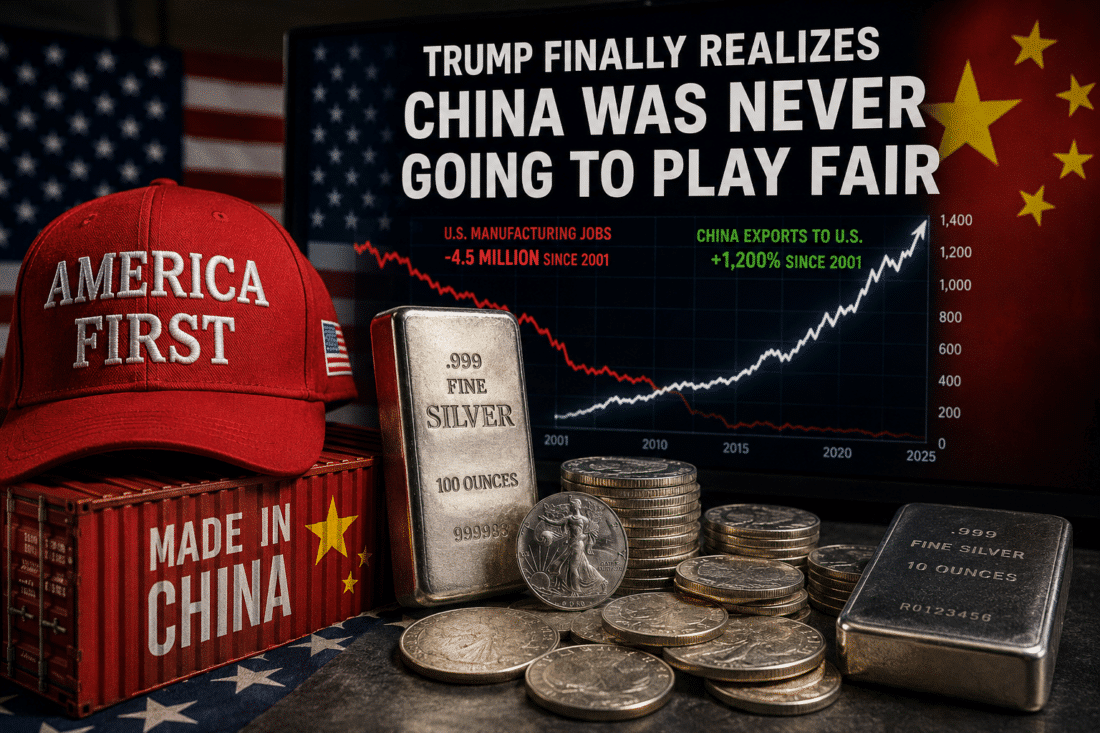
Much of the political justification for aggressive tariffs revolves around trade imbalances.
But here’s what rarely gets explained:
A trade deficit is not inherently a crisis.
In a fiat monetary system where the U.S. issues the global reserve currency, trade deficits often reflect capital inflows. Foreign exporters receive dollars and frequently reinvest them in U.S. assets—Treasuries, equities, real estate.
From a monetarist perspective, trade deficits are accounting counterparts to capital flows. They are not evidence of national decline.
From an Austrian perspective, the real structural risks come from:
- Chronic fiscal deficits
- Monetary expansion
- Artificially suppressed interest rates
Blaming trade for imbalances caused by monetary policy is economic misdirection.
Policy Uncertainty Is the Silent Economic Killer
Even if one believed in strategic tariffs, there’s a deeper issue: regime uncertainty.
When businesses cannot predict:
- The durability of tariff rates
- The legal basis for enforcement
- The political stability of trade rules
They hesitate to commit capital.
Global supply chains are long-cycle systems. Manufacturing plants, logistics hubs, and capital investments are planned over years—sometimes decades.
Frequent shifts in trade authority increase perceived risk. And when risk rises, investment slows.
Economic growth doesn’t collapse overnight. It erodes gradually through hesitation.
The Expansion of Executive Trade Power
There’s also a constitutional dimension.
Using emergency statutes, national security provisions, or balance-of-payments authorities to impose sweeping tariffs centralizes economic power in the executive branch.
Libertarians are instinctively wary of concentrated state power—regardless of which party holds it.
Trade policy was historically congressional territory. Its increasing consolidation under executive authority reflects a broader trend:
Economic governance by emergency justification.
That precedent rarely contracts once established.
Inflationary Pressures and the Consumer Impact
Tariffs do not operate in isolation.
They interact with:
- Monetary policy
- Supply chain resilience
- Consumer demand
- Currency valuation
Import taxes can create cost-push pressure. Domestic producers often raise prices to match the new tariff floor, even if their input costs don’t rise proportionally.
The result is subtle but real:
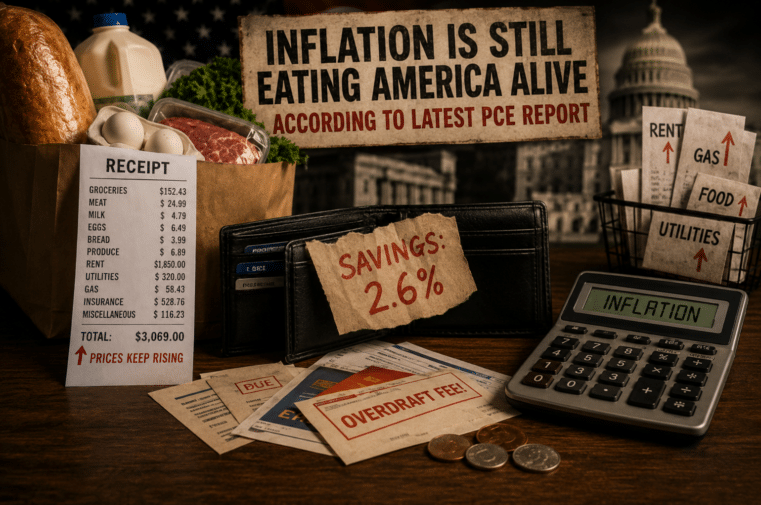
Consumers pay more.
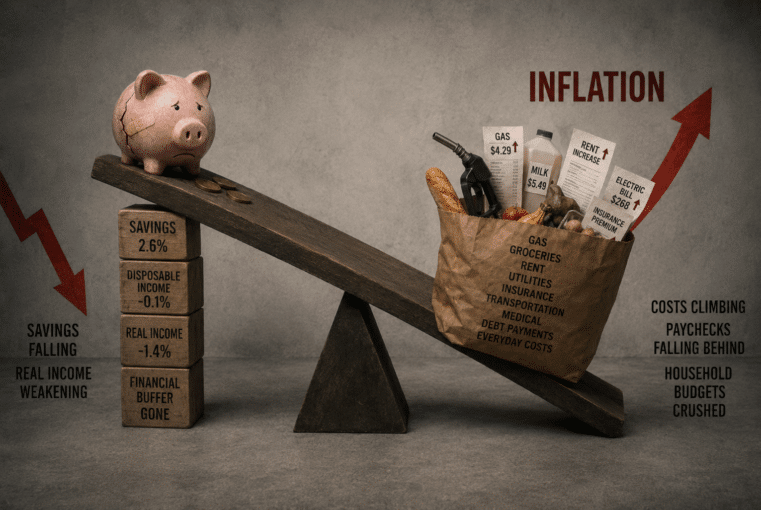
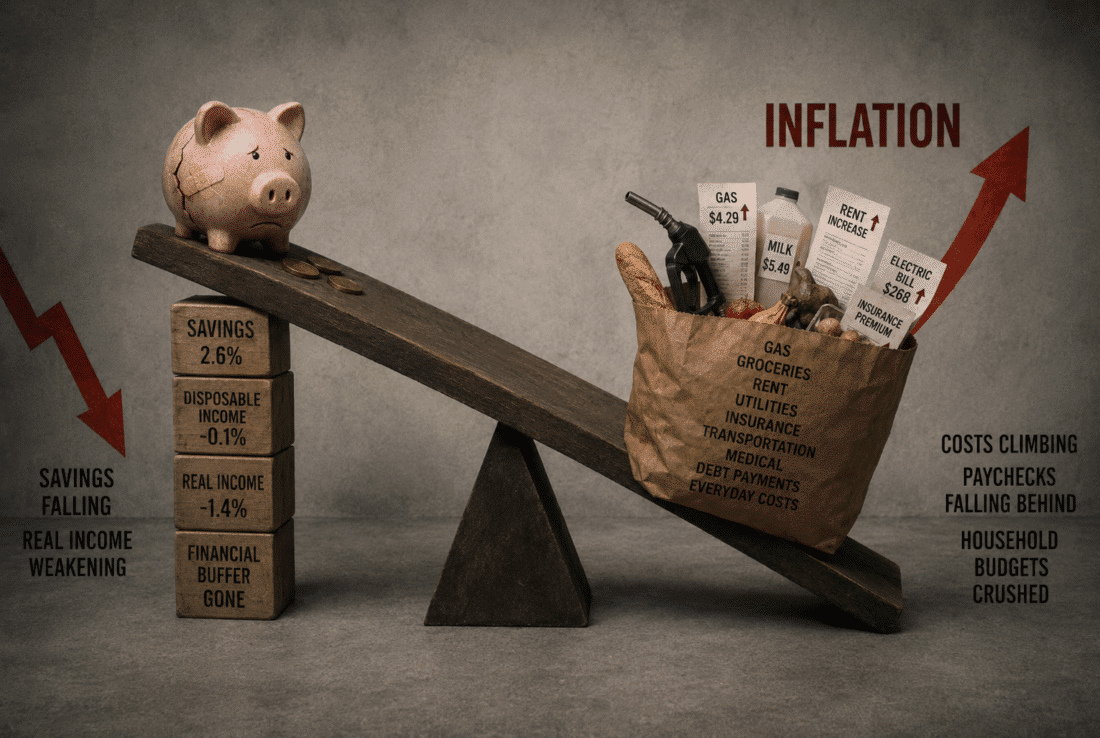
In a system already strained by fiscal deficits and monetary expansion, additional price pressures compound existing fragility.
Global Response: Adaptation, Not Compliance
The rest of the world doesn’t wait for clarity.
When U.S. trade policy becomes volatile, other nations:
- Diversify trade partnerships
- Develop alternative payment systems
- Strengthen regional agreements
Once those networks solidify, they rarely reverse completely.
Aggressive tariff strategy may generate short-term leverage—but long-term realignment can permanently reshape trade flows.
That affects dollar demand, capital markets, and geopolitical influence.
Free Trade vs. Economic Nationalism: A False Binary
This debate is often framed as:
- Globalism vs. nationalism
- Free trade vs. sovereignty
But that framing obscures the deeper issue.
Free trade is voluntary exchange across borders.
Economic nationalism relies on state-directed economic outcomes.
The libertarian position isn’t about surrendering sovereignty—it’s about limiting coercion.
Voluntary exchange generates wealth.
Centralized control reallocates it.
What This Means for Financial Autonomy
Why does this matter beyond trade headlines?
Because when trade becomes a strategic lever:
- Financial systems become political tools.
- Payment networks become geopolitical instruments.
- Monetary policy becomes intertwined with trade enforcement.
The more governments rely on economic levers for political outcomes, the more integrated—and controlled—the financial architecture becomes.
That trend affects:
- Cross-border capital movement
- Currency stability
- Long-term investment confidence
Economic centralization rarely stops at tariffs.
The Bigger Takeaway
The real story isn’t whether tariffs are “tough” or “reckless.”
The real story is this:
Expanding executive economic authority, distorting price signals, and injecting uncertainty into global trade carries long-term costs that aren’t visible in headline negotiations.
Protectionism doesn’t correct monetary mismanagement.
It doesn’t fix structural fiscal deficits.
It doesn’t resolve capital misallocation caused by artificial interest rates.
It shifts burdens.
And markets eventually reconcile distortions—often abruptly.
Final Thoughts
Tariff escalation may play well politically. It may generate short-term bargaining leverage. It may satisfy demands for visible action.
But sustainable prosperity comes from:
- Stable rules
- Predictable institutions
- Sound monetary policy
- Limited centralized power
From a libertarian and Austrian perspective, the core principle remains simple:
Economic freedom requires voluntary exchange, not policy shockwaves.
The deeper risk isn’t just higher prices.
It’s the normalization of economic management by executive decree.
And that’s a trend worth watching closely.
The Bottom Line: Prepare Now, Before the Digital Dollar Shift Locks You In
Here’s the part most analysts won’t say out loud.
When trade policy, monetary policy, and executive economic authority start converging, you’re watching the architecture of centralized financial control tighten in real time. Tariffs are one lever. The FedNow payment system is another. The ongoing development of central bank digital currency (CBDC) frameworks is the next logical step in that progression.
This isn’t about party politics. It’s about infrastructure.
Digital rails like FedNow normalize real-time transaction monitoring. CBDC pilots around the world are openly exploring programmable money—currency that can be restricted, time-limited, or behaviorally conditioned. That’s not theory. That’s documented monetary policy research.
If you value financial autonomy and sovereignty, you don’t wait for the rollout announcement to start thinking about defensive strategy.
You prepare.
That’s why the Digital Dollar Reset Guide by Bill Brocius isn’t optional reading—it’s essential intelligence. It breaks down:
- How the digital dollar system is being positioned
- The risks of programmable currency and financial surveillance
- Practical steps to protect your assets before deeper digital currency control mechanisms are implemented
If you recognize the warning signs—centralized monetary control, expanding transaction monitoring, erosion of cash privacy—then you already understand the stakes.
Download the Digital Dollar Reset Guide here
Don’t wait for the financial rules to change overnight. Get informed. Get positioned. Stay sovereign.