The “Tax the Rich” Trap: How Both Parties Protect the Same Corrupt Economic Machine

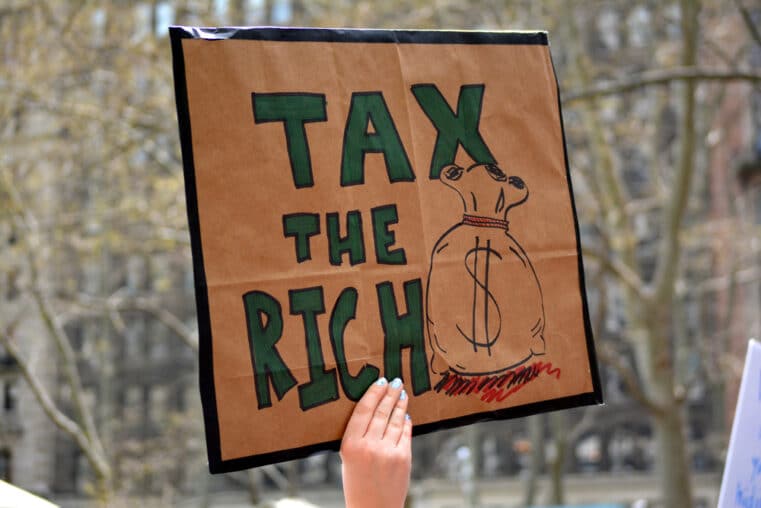
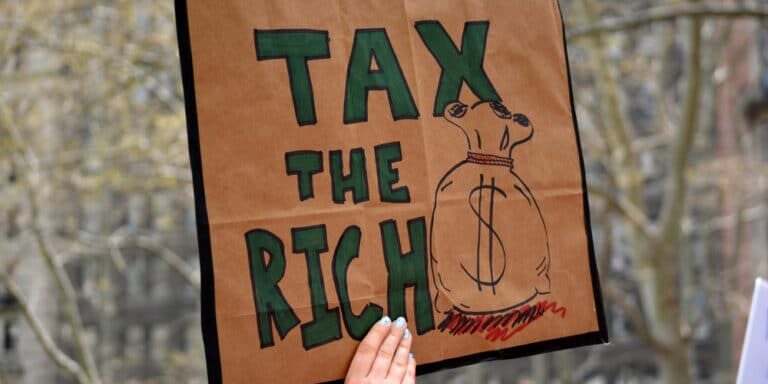
The Viral “Tax the Rich” Campaign Is Missing the Real Problem
Every few years, America replays the same tired economic theater.
A politician points at billionaires living in penthouses and declares that society’s problems could be solved if the wealthy simply “paid their fair share.” Social media erupts. Progressives cheer. Conservatives rush in to defend entrepreneurship and free markets. Cable news hosts scream at each other for a week.
And nothing actually changes.

This latest cycle started after New York politicians pushed new taxes targeting luxury properties and ultra-wealthy homeowners. Then came the predictable national escalation: Alexandria Ocasio-Cortez reviving the argument that billionaires fundamentally should not exist because extreme wealth can only be accumulated through exploitation.
Conservatives responded exactly as expected. They defended wealth creation, risk-taking, entrepreneurship, and innovation.
But both sides are still missing the central issue destroying the American economy.
The problem is not simply that rich people exist.
The problem is that Washington has spent decades building a system where the richest and most politically connected players operate under entirely different economic rules than everyone else.
America Doesn’t Have a Free Market—It Has a Government-Managed Economy
This is the part neither political tribe wants to fully admit.
Progressives often talk as if America is some kind of hyper-capitalist dystopia where greedy corporations operate with no restraints whatsoever.
That’s nonsense.
At the same time, establishment conservatives frequently pretend America still operates under something resembling a true free-market system driven purely by competition and consumer demand.
That’s equally detached from reality.
What America actually has is a heavily managed corporate-state economy where government intervention shapes winners and losers at nearly every level.
And the longer this system continues, the more profitable political influence becomes compared to actual production.
That changes everything.
Lobbying Became More Profitable Than Innovation
Here’s the ugly truth buried underneath the tax debate:
In modern America, many corporations no longer make their biggest returns by serving customers better.
They make their biggest returns by manipulating government.
Defense contractors spend billions lobbying Washington and receive trillions in government contracts.
Large banks receive bailouts after reckless behavior destroys the economy.
Major pharmaceutical companies gain regulatory advantages through captured agencies.
Massive corporations write tax loopholes with lawmakers while smaller competitors drown in compliance costs.
This isn’t theoretical.
This is the operating structure of the modern American economy.
And once political access becomes more profitable than entrepreneurship, the entire economic culture begins rotting from the inside out.
The Rich Aren’t All the Same—And That Distinction Matters
One of the biggest flaws in the “tax the rich” movement is that it treats all wealth as morally identical.
It isn’t.
There’s a massive difference between:
- A politically connected corporation feeding off government contracts
- A hedge fund benefiting from Federal Reserve distortions
- A monopolistic tech giant protected by regulatory barriers
- A manufacturer building real products people voluntarily buy
- A small business owner scaling a productive operation
Progressive rhetoric intentionally blurs these distinctions because it’s emotionally easier to attack “the rich” as a single villain class.
But economically, that’s dangerously simplistic.
Because when governments aggressively target wealth through taxation, regulation, and redistribution, they rarely hit only the parasitic elite.
They also crush productive businesses, productive investment, and productive risk-taking.
And those productive sectors are what actually sustain middle-class living standards.
Conservatives Are Wrong Too
Now here’s where establishment conservatives deserve criticism.
Too many on the Right continue defending the current economic structure as though it reflects genuine market capitalism.
It doesn’t.
Real capitalism requires:
- Open competition
- Equal rules
- Limited state favoritism
- Transparent markets
- Consumer-driven outcomes
What we have instead is an economy distorted by central banking, regulatory capture, political favoritism, debt monetization, and corporate lobbying networks that function like legalized bribery.
Pretending that today’s wealth distribution emerged naturally from healthy competition ignores decades of government intervention that systematically tilted the field toward insiders.
Americans feel economically squeezed because they are economically squeezed.
Housing costs exploded.
Healthcare costs exploded.
Education costs exploded.
Meanwhile asset inflation enriched those closest to financial and political power.
That’s not accidental.
That’s policy architecture.
Inflation Quietly Became the Largest Wealth Transfer Mechanism in America
Most Americans still underestimate how much damage monetary manipulation has done to the economy.
When governments create money endlessly while suppressing interest rates and inflating asset markets, wealth doesn’t spread evenly.
It concentrates.
People holding stocks, real estate, financial assets, and government-connected investments get richer.
Working Americans watching groceries, rent, insurance, and utilities climb every year get poorer.
And because inflation operates invisibly compared to direct taxation, politicians prefer it.
It allows governments to extract purchasing power quietly while avoiding immediate public backlash.
That’s one reason public frustration keeps rising even while official economic statistics claim things are improving.
People trust their grocery bill more than government press releases.
Why “Taxing the Rich” Won’t Fix the System
This is the fatal flaw in the progressive solution.
If government itself is already deeply captured by corporate influence and institutional corruption, giving that same government more power over wealth distribution does not solve the problem.
It expands it.
That’s the contradiction at the heart of modern progressive economics.
They correctly identify that ordinary Americans are being economically drained.
But they misdiagnose the mechanism.
The issue is not simply that rich people have too much money.
The issue is that political systems increasingly determine who gets rich in the first place.
And expanding government power inside an already corrupted system simply creates more opportunity for politically connected actors to exploit it further.
History shows this repeatedly.
Large corporations almost always survive heavy regulation better than small competitors.
Massive firms almost always navigate tax complexity better than independent businesses.
The burden ultimately falls hardest on productive middle-tier economic actors trying to build something real.
The Real Economic Divide Isn’t Rich vs Poor
The real divide is becoming something much darker:
Productive Americans versus politically connected extraction systems.
That includes:
- Corporate welfare networks
- Centralized financial institutions
- Regulatory monopolies
- Lobbying machines
- Bureaucratic expansion
- Debt-fueled monetary manipulation
The average worker is squeezed from both directions.
Progressives demand more taxation.
Corporate elites demand more subsidies.
Washington expands endlessly either way.
And ordinary citizens lose purchasing power, economic mobility, and financial stability while the ruling infrastructure grows richer and more insulated.
That’s why public anger keeps intensifying across the political spectrum.
People instinctively know the game is rigged.
They just disagree on where the rigging originates.
The Dangerous Psychology Behind Class Warfare Politics
Class resentment is politically useful because it simplifies complex economic problems into emotionally satisfying narratives.
It’s easier to tell struggling Americans that billionaires are hoarding society’s wealth than explain:
- Monetary policy distortions
- Regulatory capture
- Federal Reserve interventions
- Corporate-state collusion
- Inflationary debt systems
- Asset-driven inequality
But emotional narratives rarely produce good policy.
And historically, governments that weaponize envy eventually expand state power far beyond what citizens initially intended.
The wealthy adapt.
The politically connected survive.
The middle class absorbs the damage.
Every time.
The Economy Doesn’t Need More Centralized Control
America’s economic system absolutely has deep structural problems.
But those problems will not be solved by feeding more power, money, and authority into the same institutions that helped create them.
The answer is not endless redistribution.
The answer is dismantling the mechanisms that allow political favoritism, monetary manipulation, and institutional corruption to dominate economic life in the first place.
That means:
- Reducing corporate dependency on government
- Breaking regulatory capture
- Ending endless monetary expansion
- Restoring real market competition
- Reducing centralized economic control
- Limiting the power of unelected bureaucracies
Until that happens, the political class will continue selling Americans the same fake choice every election cycle:
Either worship the corporations or worship the state.
Meanwhile both continue feeding off the productive core of the country together.
Final Thoughts
The “tax the rich” debate survives because it’s emotionally powerful and politically convenient.
It gives struggling Americans a villain.
It gives politicians a campaign slogan.
And it allows the real machinery of economic extraction to continue operating quietly in the background.
But the deeper truth is far more uncomfortable.
America’s economy has been distorted for decades by centralized financial power, government intervention, and institutional favoritism that reward political access over productive contribution.
Until Americans recognize that reality, both parties will continue offering cosmetic solutions while the underlying system grows more unstable, more centralized, and more predatory.
And the longer that continues, the harder the eventual correction becomes.
The Financial System Is Changing Faster Than Most Americans Realize
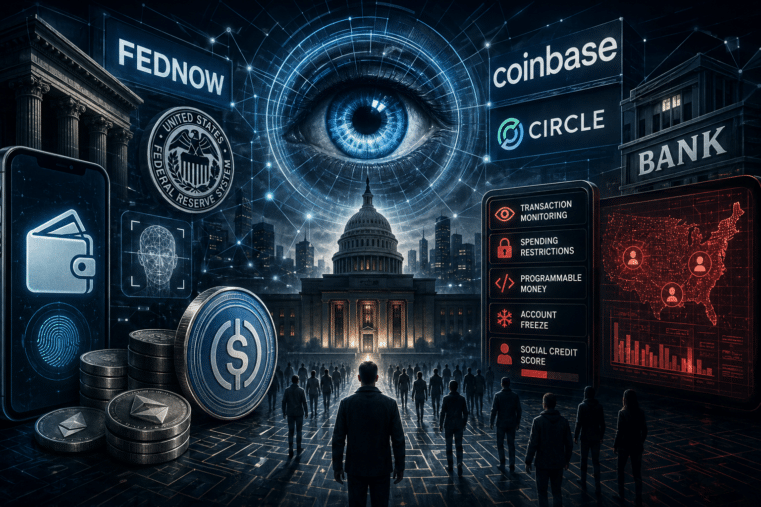
While political factions argue endlessly over taxation, another transformation is accelerating beneath the surface: the expansion of centralized digital financial infrastructure, programmable monetary systems, and transaction-level financial oversight.
Most Americans still don’t fully understand how rapidly the financial landscape is evolving—or what those changes could mean for personal financial autonomy in the years ahead.
That’s why more people are turning to the Digital Dollar Reset Guide by Bill Brocius as essential preparedness intelligence for the economic transition already underway.
If you want a deeper understanding of:
- CBDC risks
- FedNow infrastructure
- Financial surveillance systems
- Programmable money
- Cashless society dangers
- Protecting financial sovereignty
Then download the guide now before these systems become fully embedded into everyday life.