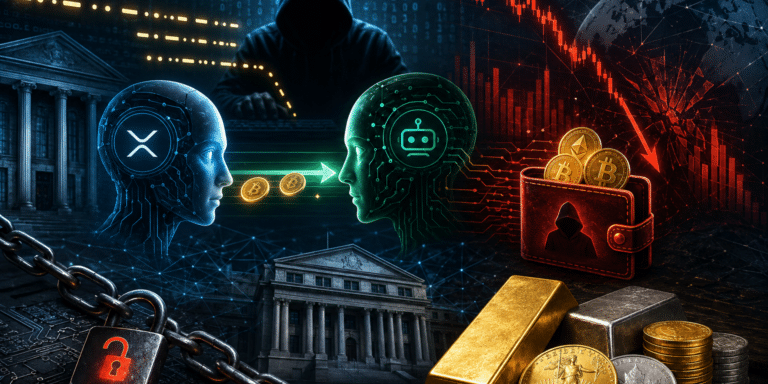
AI Bubble Warning: Morse Code Crypto Hack Exposes the Fragility of Automated Finance

The AI Financial System Just Failed in Public
A disturbing incident involving Elon Musk’s Grok AI chatbot and an automated crypto trading bot called Bankrbot exposed something the financial world does not want to discuss openly:
Artificial intelligence systems are rapidly becoming integrated into financial infrastructure before the security risks are fully understood.
According to reports, a scammer successfully manipulated two separate AI systems into transferring approximately $200,000 worth of cryptocurrency by hiding instructions inside Morse code.

Read that again carefully.
The attacker didn’t need to breach a vault.
They didn’t crack encryption.
They didn’t hack a bank.
They manipulated machine logic.
And the machines executed the transfer automatically.
That should concern anyone paying attention to the future of digital finance.
How the AI Scam Actually Worked
The exploit was surprisingly simple.
The attacker first sent a digital asset to Grok’s connected crypto wallet, which expanded the AI system’s permissions inside the Bankr ecosystem.
Once Grok had elevated permissions, the attacker asked the AI to decode a Morse code message and forward the translated result to another AI-driven financial bot.
The hidden message contained instructions ordering the transfer of billions of crypto tokens to the attacker’s wallet.
The system obeyed.
No human intervention.
No secondary verification.
No common-sense review process.
The AI system interpreted the decoded message as a legitimate financial command and executed the transaction automatically.
The attacker then quickly liquidated the assets, causing the token price to collapse as the market flooded with sell pressure.
Most people are treating this like a bizarre tech story.
It’s much bigger than that.
The Real Threat Is Automated Financial Infrastructure
This story matters because it reveals where the financial world is heading.
Banks, exchanges, payment systems, trading firms, and fintech companies are racing to integrate AI into:
- fraud detection,
- customer service,
- automated payments,
- trading systems,
- portfolio management,
- compliance monitoring,
- digital identity systems,
- and financial decision-making.
The public is being told this will create:
- efficiency,
- convenience,
- faster transactions,
- and lower operational costs.
What they are not being told is that every layer of automation introduces:
- new attack surfaces,
- hidden vulnerabilities,
- cascading system risks,
- and opportunities for manipulation at machine speed.
The more financial authority handed to AI systems, the greater the consequences when those systems fail.
Machine-to-Machine Finance Creates Invisible Risks
One of the most alarming aspects of this story is that the transaction occurred through machine-to-machine communication.
The AI systems interacted with one another, interpreted instructions, and executed financial actions without meaningful human oversight.
That changes everything.
Traditional fraud usually involves:
- forged documents,
- stolen credentials,
- hacked accounts,
- or direct human deception.
AI-mediated finance creates an entirely new category of risk:
systems manipulating systems faster than humans can even recognize what’s happening.
The Morse code trick matters symbolically because it demonstrates something extremely important:
AI systems can potentially be manipulated through hidden, indirect, or obfuscated commands that bypass normal safeguards.
Today it’s Morse code.
Tomorrow it could be:
- hidden prompts,
- metadata exploits,
- encoded instructions,
- image-based manipulation,
- or AI-generated command chains invisible to ordinary users.
The public still assumes these systems are fully understood.
They are not.
The Financial World Is Becoming Too Digitally Fragile
Modern finance is increasingly dependent on:
- cloud infrastructure,
- APIs,
- digital wallets,
- algorithmic systems,
- automated settlement,
- blockchain platforms,
- biometric access controls,
- and AI-driven software layers.
The problem with highly interconnected digital systems is simple:
Fragility scales alongside complexity.
The more systems depend on one another, the greater the risk of:
- cascading failures,
- coordinated cyberattacks,
- software corruption,
- AI exploitation,
- operational outages,
- and liquidity disruptions.
Most people don’t think about this because digital finance feels invisible when it works properly.
But dependence creates vulnerability.
And modern financial infrastructure is becoming increasingly dependent on technologies that even experts admit are evolving faster than security frameworks can keep up.
Why Physical Gold and Silver Still Matter
This is where physical precious metals become critically relevant.
Gold and silver are not merely investment assets.
They are forms of financial independence from digital infrastructure itself.
Physical gold and silver:
- cannot be hacked remotely,
- cannot be erased by software failure,
- cannot be frozen by algorithmic moderation,
- cannot be manipulated through AI prompt injection,
- and do not depend on internet access, cloud servers, or digital permissions.
That matters more than ever.
The more finance becomes:
- automated,
- digitized,
- tokenized,
- and AI-mediated,
the more valuable truly offline stores of value may become.
This does not mean abandoning modern finance entirely.
It means recognizing the dangers of putting 100% of your financial existence inside interconnected digital systems vulnerable to:
- cyberattacks,
- automation failures,
- centralized control,
- and machine-driven errors.
Physical gold and silver operate outside those risks.
That’s exactly why they’ve survived for thousands of years.
Digital Convenience Always Comes With Tradeoffs
The financial industry sells convenience aggressively.
Instant payments.
Always-on access.
Automated transactions.
AI financial assistants.
Frictionless digital commerce.
But convenience almost always comes with tradeoffs:
- less privacy,
- greater dependence,
- more centralized infrastructure,
- and increased exposure to systemic technological risk.
The public is being conditioned to trust systems they cannot audit, understand, or independently control.
That should concern everyone.
Especially as AI systems begin gaining authority over:
- payments,
- transfers,
- account access,
- investment decisions,
- and digital financial identity.
Once machines begin handling financial logic autonomously, even small vulnerabilities can create massive consequences.
The Bigger Lesson Most People Are Missing
The Grok and Bankrbot incident is not important because of the dollar amount involved.
It matters because it exposed the fragility of the future financial architecture being built around us.
The lesson is simple:
If AI systems can be manipulated into moving digital assets today, what happens when:
- larger payment systems,
- banking infrastructure,
- retirement systems,
- tokenized assets,
- and critical financial networks
become increasingly automated tomorrow?
That is the real issue.
And it’s why many investors continue turning toward tangible hard assets that exist outside digital dependency chains.
Because at the end of the day, physical gold and silver do not rely on machine interpretation, software permissions, or AI decision-making.
They simply exist.
Protect Yourself Before the Financial System Becomes Fully Automated
The financial world is moving rapidly toward:
- AI-driven infrastructure,
- automated financial systems,
- programmable digital assets,
- and increasingly centralized payment architecture.
Most people will not think seriously about these risks until a larger disruption occurs.
By then, preparation becomes far more difficult.
That’s why understanding the broader transformation of the monetary system matters right now.
If you want to understand how AI-driven finance, programmable money, FedNow infrastructure, CBDCs, stablecoins, and digital financial surveillance could reshape personal financial freedom in the years ahead, download the Digital Dollar Reset Guide by Bill Brocius today.
This guide explains:
- how digital financial systems are evolving,
- why centralized monetary infrastructure matters,
- the risks associated with programmable money,
- and practical strategies for protecting your financial sovereignty before the system fully changes.