GOLD AND SILVER WARNING: Hot Inflation Data Just Exposed the Economic Trap Americans Are Walking Into

Gold and Silver Are Pulling Back — But Don’t Misread What’s Really Happening
Whenever gold or silver dip, the financial media loves to act like the “hard asset trade” is over.
I’ve seen this game for decades.
A hotter inflation report comes out. Treasury yields rise. The dollar strengthens. Precious metals temporarily pull back. Then the talking heads start telling Americans that inflation is “under control” and the Federal Reserve still has everything handled.

Meanwhile, ordinary people are still getting crushed at the grocery store.
Still drowning in debt.
Still watching insurance, rent, utilities, and food costs rise faster than their paychecks.
That disconnect matters.
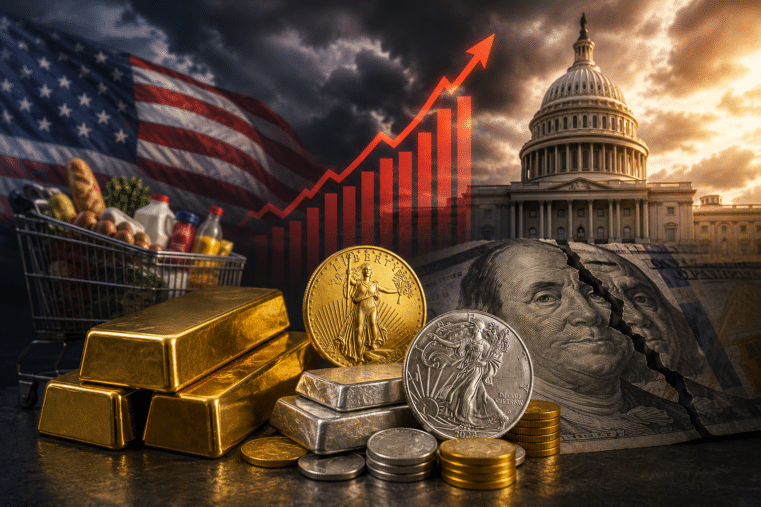
Because despite this short-term pullback in gold and silver prices, the underlying reasons to own hard assets are actually becoming stronger — not weaker.
And the latest Producer Price Index report just proved it.
The Inflation Problem Is Getting Worse Again
The April PPI report came in much hotter than expected.
Final demand prices rose 1.4% in a single month — the biggest increase since March 2022.
Year-over-year producer inflation is now running at 6%.
That’s not “stable.”
That’s not “transitory.”
That’s inflation pressure rebuilding inside the economy.
And once inflation becomes embedded at the producer level, consumers eventually feel it everywhere.
Businesses pass costs on.
Manufacturers raise prices.
Energy companies raise prices.
Transportation costs rise.
Then Americans get squeezed all over again.
The people sitting in Washington may pretend things are improving, but working-class Americans know the truth every time they swipe a debit card.
Energy Prices Are Quietly Reigniting Inflation
One of the biggest stories buried inside the inflation data is energy.
Energy prices surged 7.8% in April alone.
Gasoline jumped over 15%.
Crude oil remains elevated as geopolitical tensions continue destabilizing global supply chains.
And here’s the problem most economists ignore:
Energy inflation spreads into everything.
Food prices rise because transportation costs rise.
Manufacturing costs rise.
Shipping costs rise.
Utility bills rise.
Even housing costs eventually absorb energy inflation.
That’s why inflation becomes so dangerous once energy starts moving higher.
It creates a domino effect across the entire economy.
And right now, global instability is making that threat much worse.
The Middle East Crisis Is Still a Major Threat to Markets
The financial media keeps trying to reassure investors that cease-fire talks and diplomatic meetings will stabilize things.
Maybe temporarily.
But the broader reality is that the world is becoming increasingly unstable.
Oil markets remain extremely volatile because traders know one thing:
The Strait of Hormuz remains one of the most critical energy chokepoints on Earth.
Any disruption there could send oil prices sharply higher overnight.
That would pour gasoline directly onto the inflation fire.
And this is where gold and silver become incredibly important.
Precious metals often thrive during periods of:
- Geopolitical instability
- Inflation uncertainty
- Currency weakness
- Declining confidence in central banks
Short-term price fluctuations don’t change that reality.
If anything, they create opportunities.
Why Higher Interest Rates Are Creating an Economic Trap
The Federal Reserve now faces a serious problem.
Inflation is proving stubborn.
But the economy is already heavily dependent on cheap debt.
That creates a trap.
If the Fed keeps rates high:
- Borrowing slows
- Housing weakens
- Credit stress rises
- Consumer spending weakens
- The economy risks recession
But if the Fed cuts rates too aggressively:
- Inflation could explode higher again
- The dollar weakens
- Commodity prices surge
- Confidence in the financial system erodes further
There are no painless solutions anymore.
This is what happens after years of reckless money printing, endless deficits, and artificially suppressed interest rates.
Eventually reality shows up.
And reality always sends the bill.
Gold and Silver Still Have Strong Long-Term Fundamentals
A lot of inexperienced investors panic when metals pull back for a few trading sessions.
That’s emotional investing.
The smart money looks at fundamentals.
And the fundamentals for gold and silver still look extremely strong.
For gold:
- Inflation remains elevated
- Central banks continue buying
- Global debt levels remain unsustainable
- Currency confidence continues deteriorating
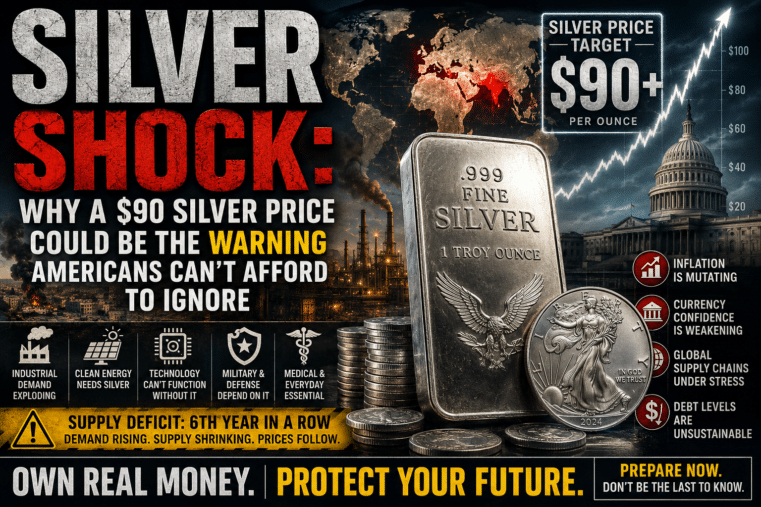
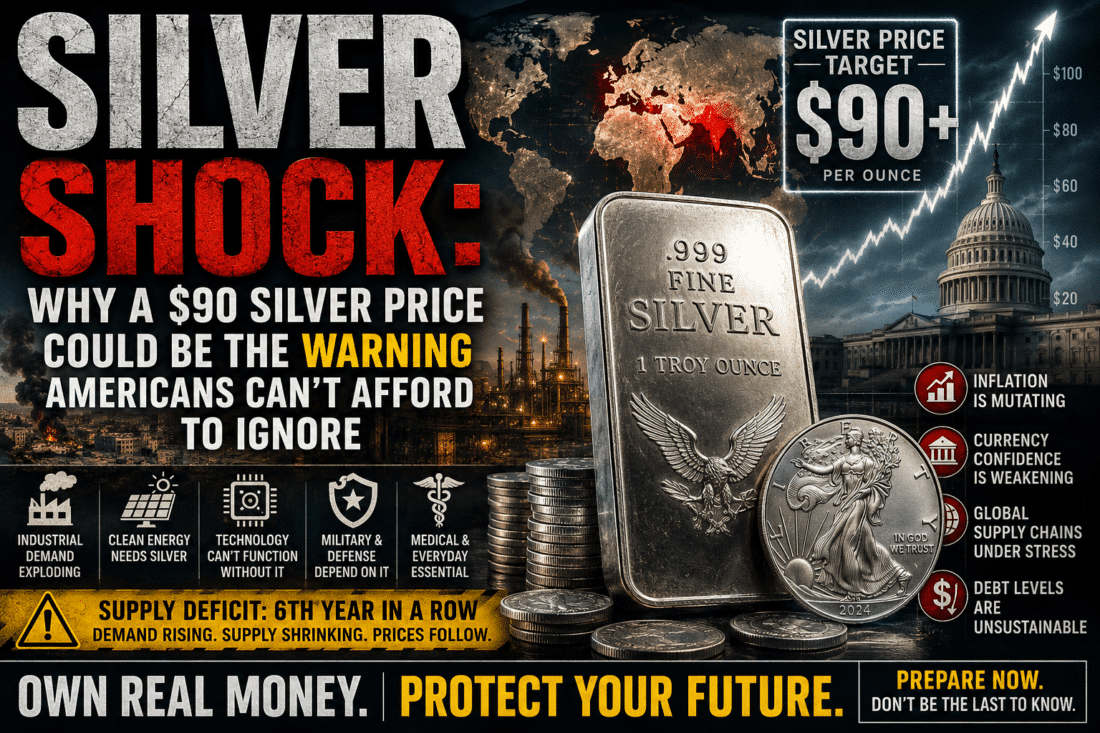
For silver:
- Industrial demand remains strong
- Supply deficits continue
- Green energy demand is rising
- Electric vehicle production requires silver
- Solar expansion depends heavily on silver
That’s why silver has continued holding relatively strong despite higher yields and a firmer dollar.
Industrial demand is creating a floor underneath the market.
And once investment demand returns aggressively, silver could move very quickly.
Why Physical Precious Metals Matter More Than Digital Wealth
I grew up around people who believed in owning real things.
Not paper promises.
Not financial engineering.
Not digital numbers on a screen.
Real assets.
And frankly, that mindset is becoming more important every year.
Because today:
- Banks can freeze accounts
- Inflation can destroy purchasing power
- Markets can crash overnight
- Governments can expand surveillance
- Debt bubbles can implode suddenly
Physical gold and silver exist outside much of that system.
That’s why central banks continue accumulating gold while ordinary citizens are encouraged to trust paper assets forever.
The elites understand the risks.
The question is whether everyday Americans are paying attention.
Silver May Still Be One of the Most Undervalued Assets on Earth
One thing I keep coming back to is how small the silver market actually is compared to global financial markets.
It doesn’t take massive institutional money flows to move silver prices dramatically higher.
And if inflation worsens while industrial demand stays elevated, silver could become one of the most explosive hard assets of the next economic cycle.
Most people still think silver is just some old coin-shop metal.
They don’t realize it’s now critical to:
- AI infrastructure
- Renewable energy
- Defense systems
- Advanced electronics
- Electric vehicles
- Semiconductor manufacturing
That changes the long-term picture entirely.
The Financial System Is Becoming More Fragile
This latest inflation report wasn’t just another economic data release.
It was another warning sign.
A warning that inflation remains deeply embedded.
A warning that central banks are losing control.
A warning that geopolitical instability is feeding economic instability.
And perhaps most importantly:
A warning that the purchasing power of the dollar continues weakening over time.
That’s why hard assets matter.
Not because they make people rich overnight.
But because they help preserve purchasing power while paper systems deteriorate.
That distinction could become extremely important in the years ahead.
Final Thoughts: Don’t Let Short-Term Volatility Distract You
Markets move up and down every day.
But major economic trends unfold over years.
Right now, the bigger trends are becoming increasingly clear:
- Persistent inflation
- Rising energy instability
- Growing global debt
- Fragile banking systems
- Declining trust in institutions
- Increasing demand for hard assets
Gold and silver are responding to those realities.
Short-term pullbacks don’t erase the bigger picture.
If anything, they often create opportunities for people paying attention before the crowd catches on.
Join the Dedollarize Inner Circle Before the Next Crisis Hits
The financial world is changing fast — and most Americans are dangerously unprepared for what’s coming next.
Join the Dedollarize Inner Circle today for:
- Exclusive precious metals analysis
- Wealth protection strategies
- Economic crisis alerts
- Insider market insights
- Actionable research ignored by mainstream media
The people who prepare early usually come out ahead.
Don’t wait until the next financial shock makes the headlines.