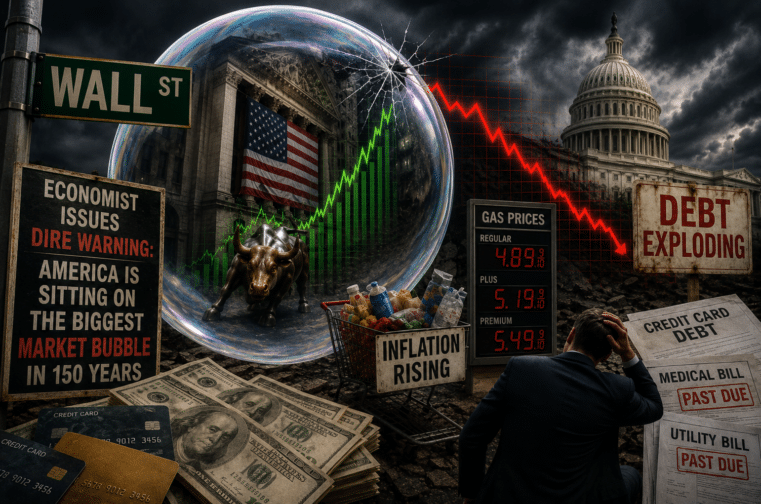
ECONOMIST ISSUES DIRE WARNING: America Is Sitting on the Biggest Market Bubble in 150 Years

The Biggest Market Bubble in 150 Years May Already Be Here
If you’re struggling to understand how the stock market keeps climbing while average Americans can barely afford groceries, you’re not crazy.
The system itself has become disconnected from reality.
According to economist Dr. Mark Thornton of the Mises Institute, today’s financial markets may be more dangerously overvalued than almost any period in modern history.

Many analysts now warn the growing US debt crisis is fueling an unsustainable financial bubble that continues enriching Wall Street while putting enormous pressure on working families struggling with inflation and rising living costs.
That should send chills down every investor’s spine.
Thornton says major valuation indicators are now flashing extreme warning signs rarely seen over the past 150 years.
And honestly, when you step back and look around, does any of this actually feel sustainable to you?
Housing costs are exploding.
Credit card debt is at record highs.
Consumers are stressed out.
Yet Wall Street keeps acting like everything is perfectly healthy.
That’s usually how bubbles behave right before reality catches up.
Why the Rich Keep Getting Richer While Everyone Else Falls Behind
One of the most important points Thornton made is something most mainstream economists never want to discuss openly:
The money-printing system benefits the wealthy first.
This is known as the “Cantillon Effect,” but you don’t need a fancy economics degree to understand it.
Here’s how it works in plain English.
When the Federal Reserve creates trillions of dollars out of thin air, that money doesn’t magically land in your checking account first.
It flows into:
- Big banks
- Wall Street firms
- Government spending
- Large corporations
- Financial institutions
They get access to freshly created money before prices rise.
By the time that money trickles down to working families, inflation has already eaten away purchasing power.
In other words, the people closest to the money printer benefit first.
Everybody else gets stuck paying higher prices.
That’s exactly why Americans feel poorer even while the stock market keeps setting records.
The economy is being inflated from the top down.
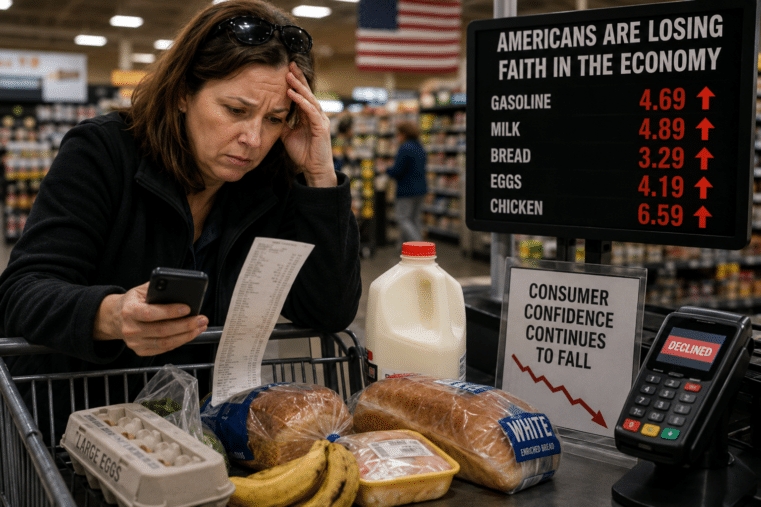
Consumer Sentiment Is Collapsing for a Reason
One statistic from the interview jumped out at me immediately:
Consumer sentiment recently plunged near historic lows.
And honestly, does that surprise anybody anymore?
People are exhausted.
Families are working harder while falling further behind.
Food prices remain elevated.
Energy prices are rising again.
Insurance premiums are crushing household budgets.
And now many Americans are carrying debt balances at interest rates that would’ve been considered financial insanity just a decade ago.
The media keeps talking about “strong economic data,” but regular people know the truth because they live it every day.
You can’t fake financial stress forever.
Eventually reality shows up at the kitchen table.
Gold and Silver Prices May Be Getting Manipulated Again
One of Thornton’s most controversial claims involved the sudden selloff in gold and silver following Kevin Warsh’s Federal Reserve nomination.
His argument?
The move looked coordinated.
Now look, I’ve spent decades watching precious metals markets, and I’ll say this carefully:
The timing certainly raised eyebrows.
Thornton believes major financial institutions likely had advance knowledge of the announcement before the public did, allowing markets to react before ordinary investors even understood what was happening.
Whether you agree or disagree, one thing is undeniable:
Gold and silver often experience violent short-term selloffs precisely when fear inside the financial system starts rising.
That’s happened repeatedly throughout modern monetary history.
And despite temporary price pressure, central banks around the world continue accumulating gold at extraordinary rates.
That tells me smart money still understands the long-term risks facing fiat currencies.
Why the Federal Reserve May Be Trapped by the US Debt Crisis
This is the part most Americans still don’t fully understand.
The Federal Reserve may no longer have good options left.
Why?
Because America’s debt problem has become mathematically overwhelming.
The national debt has exploded past levels that many economists consider historically dangerous.
And here’s the real problem:
If the Fed raises interest rates aggressively to fight inflation, it dramatically increases the government’s borrowing costs.
That means:
- Higher debt interest payments
- More pressure on federal spending
- Greater banking stress
- Slower economic growth
- Increased recession risk
But if the Fed cuts rates too quickly or prints more money?
Inflation could spiral even further out of control.
That’s the trap.
The system became addicted to cheap money years ago.
Now it’s suffering the consequences.
Middle East Chaos Could Trigger a New Inflation Wave
As if America’s debt crisis wasn’t dangerous enough, global instability is now adding fuel to the fire.
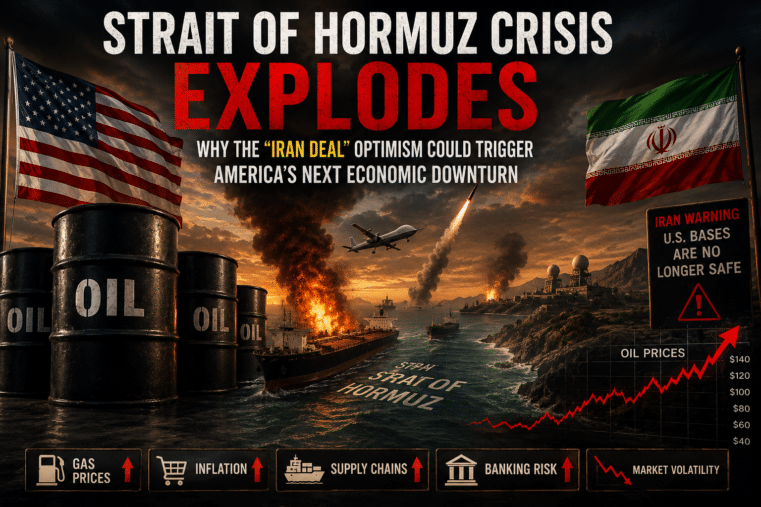
The ongoing conflict in the Middle East is already disrupting energy markets and supply chains.
And energy affects everything.
When oil prices rise:
- Transportation costs rise
- Food prices rise
- Manufacturing costs rise
- Mining costs rise
- Consumer prices rise
This is exactly why inflation tends to become sticky during geopolitical crises.
Even worse, rebuilding damaged infrastructure and production capacity can take years.
That means inflationary pressure may not disappear anytime soon.
And historically, periods of war, debt, and inflation have often been extremely favorable for gold and silver ownership.
Why Silver Could Be the Most Undervalued Asset in the World
I’ve said this for years:
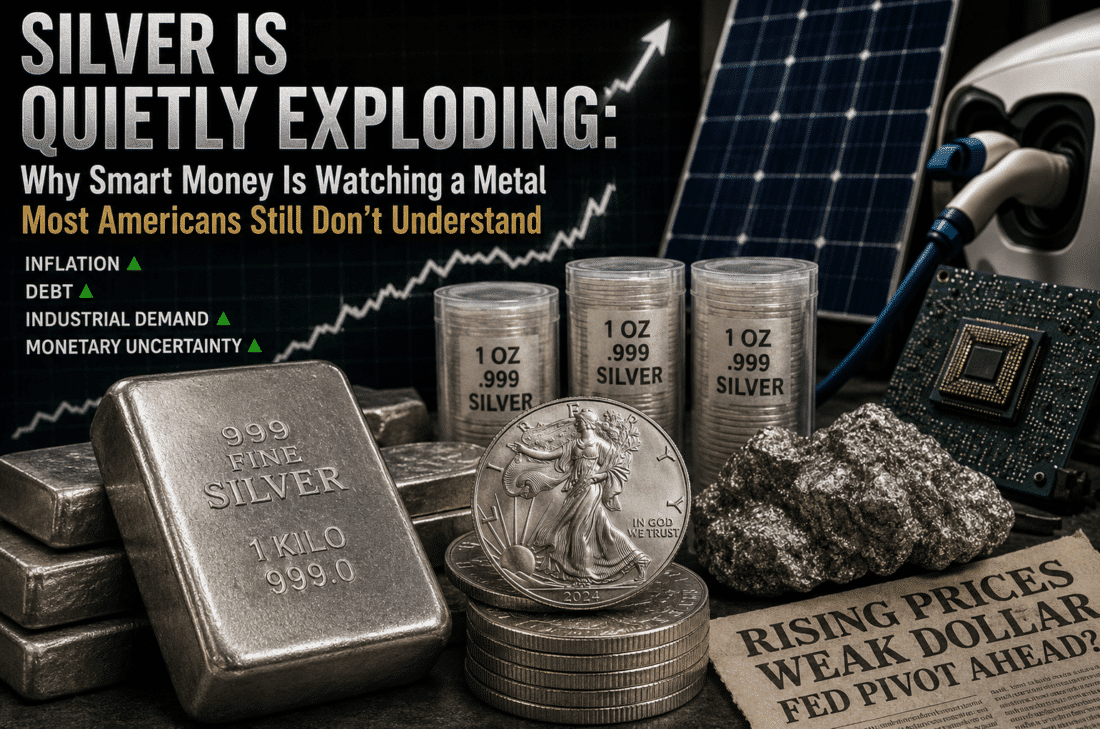
Silver remains one of the most misunderstood assets on Earth.
Most people think silver is just a cheaper version of gold.
Wrong.
Silver is both:
- A monetary metal
- A critical industrial resource
It’s essential for:
- Solar energy
- Electronics
- Artificial intelligence infrastructure
- Electric vehicles
- Defense technology
- Medical systems
At the same time, physical silver inventories remain extremely tight.
And if investor demand accelerates while industrial demand stays elevated, the market could face serious supply shortages.
That’s when silver moves can become explosive.
We’ve seen it before.
And we may see it again.
Why States Are Quietly Moving Toward Precious Metals
Another fascinating development Thornton discussed is the growing push among U.S. states to support gold and silver ownership.
Some states are:
- Eliminating taxes on precious metals
- Building independent bullion depositories
- Encouraging sound-money legislation
- Reducing dependence on New York financial infrastructure
Why does that matter?
Because confidence in centralized financial systems is weakening.
People are starting to recognize the risks of having all financial power concentrated in a handful of institutions.
Gold and silver represent decentralization.
Real ownership.
Financial privacy.
Protection outside the banking system.
And that becomes increasingly attractive during periods of monetary instability.
The Wealth Transfer Has Already Started
Most Americans are still waiting for the government, the Fed, or Wall Street to “fix” the economy.
I wouldn’t count on it.
The reality is this:
The wealth transfer is already happening.
Those closest to financial power continue benefiting from asset inflation while working families absorb the pain of rising living costs.
That’s why understanding real money matters now more than ever.
Because inflation doesn’t destroy wealth evenly.
It punishes savers.
It punishes wage earners.
And it rewards those holding scarce hard assets.
That’s one reason central banks continue buying gold aggressively while average investors remain distracted by headlines and short-term volatility.
What the US Debt Crisis Means for Investors and the Economy
Dr. Mark Thornton’s warning should not be ignored.
The combination of:
- Massive debt
- Overvalued markets
- Sticky inflation
- Geopolitical instability
- Monetary manipulation
- Declining consumer confidence
…creates an extremely fragile financial environment.
And history shows these conditions rarely end quietly.
Gold and silver may fluctuate in the short term, but the long-term fundamentals driving hard assets have never been stronger.
The financial system is becoming increasingly unstable beneath the surface.
And the people who prepare before the panic arrives are usually the ones who survive it best.
Join the Dedollarize Inner Circle Before the Next Financial Shock
The mainstream media will not warn you in time.
Wall Street will not protect your purchasing power.
And Washington certainly isn’t going to solve the debt crisis honestly.
That’s why thousands of Americans are joining the Dedollarize Inner Circle to stay ahead of the economic chaos unfolding right now.
Inside the Inner Circle, you’ll get:
- Exclusive gold and silver analysis
- Real-time economic breakdowns
- Wealth preservation strategies
- Inflation survival insights
- Early warnings the mainstream media ignores
The next phase of this financial crisis could unfold faster than most people expect.