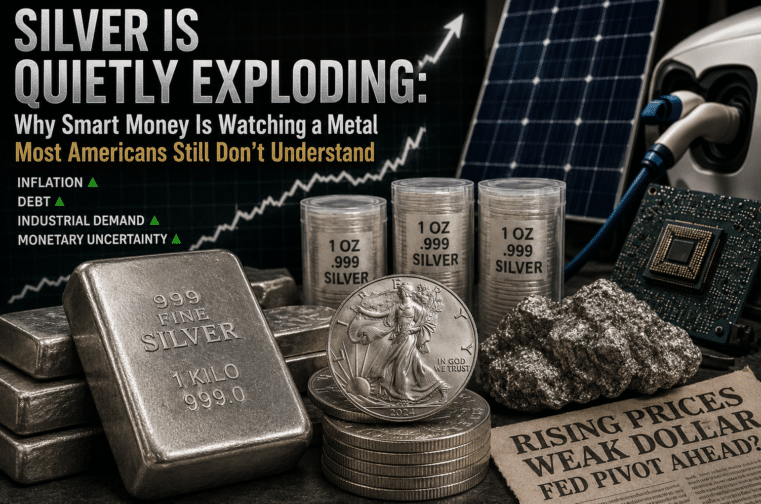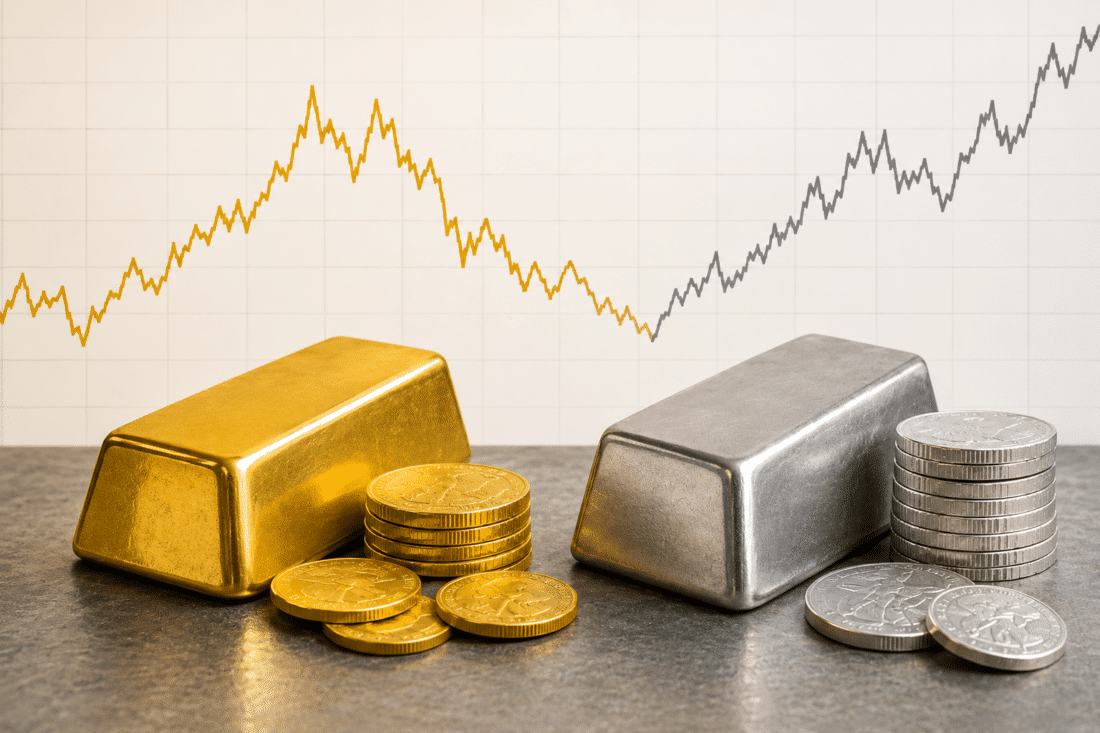
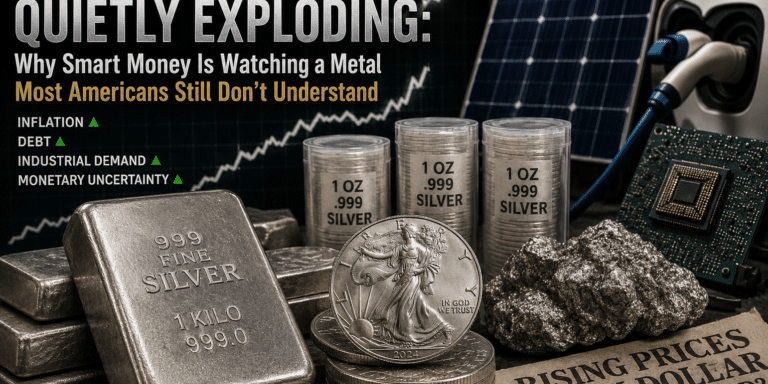
SILVER IS QUIETLY EXPLODING: Why Smart Money Is Watching a Metal Most Americans Still Don’t Understand

Why Silver May Be Warning About a Major Economic Shift
Most Americans never think about silver.
They think about gold.
They think about stocks.

Maybe Bitcoin.
But increasingly, investors are beginning to ask a very different question: is silver a good investment in a world filled with inflation, debt expansion, banking uncertainty, and weakening confidence in fiat currencies.
But silver?
That’s still viewed by many people as an old-fashioned metal sitting in a coin shop somewhere.
And that may be exactly why so many investors are missing what’s happening right now.
Because while Wall Street remains obsessed with tech stocks and central bank headlines, silver is quietly beginning to outperform nearly every major precious metal again.
And historically?
That tends to happen during periods of growing monetary instability.
Why Silver May Be Warning About a Major Economic Shift
In late trading Monday, silver surged more than 3%, significantly outperforming gold as:
- The U.S. dollar weakened
- Treasury yield expectations softened
- Oil prices plunged
- Investors began pricing in lower future interest rates
At first glance, this may sound like just another ordinary trading day.
It’s not.
Because silver behaves differently than gold.
Gold is primarily viewed as monetary insurance.
Silver is both:
- A monetary metal
- And a critical industrial metal
That makes silver uniquely positioned during periods of economic transition.
And right now, the global economy is undergoing massive transition simultaneously across:
- Energy systems
- AI infrastructure
- Currency systems
- Industrial production
- Monetary policy
Silver sits directly in the middle of all of it.
Why Falling Oil Prices Could Push Silver Prices Higher
A lot of investors assume lower oil prices are automatically bad for gold and silver.
That’s overly simplistic.
What markets are really reacting to is the possibility that easing geopolitical tensions — particularly surrounding Iran and the Strait of Hormuz — could reduce inflation pressure enough to force central banks back toward easier monetary policy sooner than expected.
And that’s where things become very interesting for precious metals.
Because once investors believe:
- Interest rate hikes are slowing
- Inflation is moderating
- The Fed may pivot dovish
- The dollar could weaken
then gold and silver often begin moving aggressively higher.
Especially silver.
Why?
Because silver historically thrives when liquidity conditions improve and monetary confidence weakens simultaneously.
Why Silver Is No Longer Just a Precious Metal Investment
This is one of the biggest misunderstandings in modern investing.
Silver is not simply a shiny metal people stack in safes anymore.
Silver has become strategically essential to the modern global economy.
It is used heavily in:
- Solar panels
- AI infrastructure
- Data centers
- Electric vehicles
- Semiconductors
- Medical equipment
- Military technology
- Electronics
- Industrial manufacturing
And unlike fiat currencies, silver cannot simply be printed out of thin air.
That matters enormously.
Because while governments continue creating debt at historic levels, the world is simultaneously demanding more physical silver than ever before.
That imbalance is becoming increasingly difficult to ignore.
America’s Debt Problem Is Fueling Precious Metals Demand
Let’s bring this home for everyday Americans.
The average person may not care about commodity markets or sovereign reserve policy.
But they absolutely care about:
- Grocery prices
- Rent
- Energy bills
- Retirement savings
- Purchasing power
And here’s the reality:
The U.S. financial system is becoming increasingly dependent on debt expansion and monetary intervention just to maintain stability.
America now faces:
- Massive deficit spending
- Exploding interest payments
- Persistent inflation pressure
- Weakening middle-class purchasing power
- Banking fragility
- Record national debt
At some point, confidence becomes the real issue.
That’s where precious metals enter the picture.
Because historically, gold and silver perform best when trust in monetary systems begins deteriorating.
And trust is becoming a serious problem globally.
Silver Could Become the Most Undervalued Hard Asset in the World
Gold gets most of the headlines.
Central banks buy gold.
Governments hold gold reserves.
But silver may actually have far greater upside potential percentage-wise if monetary instability accelerates.
Why?
Because silver markets are dramatically smaller and tighter than gold markets.
That means relatively small shifts in demand can create explosive price movements.
And right now, demand pressures are building from multiple directions simultaneously:
- Industrial demand
- AI expansion
- Electrification
- Green energy systems
- Monetary hedging
- Retail precious metals buying
Meanwhile supply remains constrained.
That combination can become extremely powerful very quickly.
Wall Street May Be Missing the Bigger Story
One thing I’ve noticed over the years is that major market shifts usually begin quietly.
By the time mainstream analysts fully understand what’s happening, prices have often already moved substantially higher.
Silver feels increasingly like one of those situations.
Because beneath the daily volatility, several enormous long-term trends are converging:
- Global de-dollarization
- Rising sovereign debt
- Currency instability
- Industrial supply shortages
- AI infrastructure expansion
- Weakening confidence in fiat systems
Silver sits at the intersection of all of them.
That’s not normal.
And it may explain why silver tends to move so violently once momentum finally begins building.
The Federal Reserve Is Cornered
This is the part many Americans still don’t fully understand.
The Federal Reserve is trapped between two impossible choices:
- Keep rates high and risk crushing the economy
- Lower rates and risk reigniting inflation
Neither outcome is good.
And historically, when central banks become trapped, hard assets often benefit.
Especially precious metals.
Because investors begin searching for assets outside the direct control of policymakers.
Gold does that.
Silver does too.
But silver also carries industrial demand dynamics that could amplify the move dramatically.
Physical Silver Matters More Than Paper Promises
I want to make something very clear here.
There’s a major difference between:
- Physical silver
- And paper silver exposure
In highly leveraged financial systems, paper markets can become extremely unstable during periods of stress.
That’s why many experienced precious metals investors prefer holding at least some physical metal outside the banking system entirely.
Because counterparty risk becomes very real during monetary instability.
And if trust in the broader financial system weakens further, physical ownership could matter far more than many people currently realize.
Why Everyday Americans Are Turning Back to Tangible Assets
People aren’t stupid.
They can feel the system changing.
Even if they can’t fully explain it.
Americans see:
- Rising prices
- Endless debt creation
- Banking concerns
- Currency debasement
- Economic uncertainty
- Political dysfunction
And instinctively, many people are beginning to move back toward tangible assets again.
That includes:
- Gold
- Silver
- Land
- Energy assets
- Real commodities
Because tangible things tend to matter more during unstable monetary periods.
Silver fits directly into that trend.
My Response: Silver Still Looks Early to Me
After decades around markets, I’ve learned something simple:
The biggest opportunities usually feel uncomfortable before they become obvious.
Silver still feels largely ignored by mainstream investors.
That alone gets my attention.
Because underneath the surface, the setup looks increasingly powerful:
- Monetary instability
- Growing industrial demand
- Supply constraints
- Weakening confidence in fiat systems
- Potential Fed easing ahead
- Expanding geopolitical uncertainty
And unlike many financial assets today, silver still represents something real.
Tangible.
Finite.
Outside the promises of governments and central banks.
That matters.
Especially now.
The Smart Money Is Watching Precious Metals Closely
Most people won’t pay attention to silver until prices are dramatically higher.
That’s how these cycles usually work.
But smart money watches early signals carefully.
And silver’s recent breakout behavior may be telling us something important:
- Investors are repositioning
- Monetary expectations are shifting
- Hard assets are regaining attention
- Confidence in fiat systems continues weakening
The next phase of the precious metals cycle may already be starting quietly.
And most Americans are still asleep.
Join the Dedollarize Inner Circle Before Silver Makes Its Next Major Move
Inside the Dedollarize Inner Circle, we track:
- Gold and silver markets
- Federal Reserve policy
- Sovereign debt risks
- Inflation trends
- Commodity supercycles
- Central bank activity
- CBDCs and monetary surveillance
- Wealth protection strategies
If you want deeper analysis on the forces reshaping the global financial system — and why precious metals may become increasingly important in the years ahead — now is the time to stay ahead of the curve.