Drone Strike Near UAE Nuclear Plant Sparks New Fears of Economic Shock and Global Energy Crisis

The Strike Near a UAE Nuclear Facility Is a Warning the Global Economy May Be Entering a Dangerous New Phase
Most people saw the headline and moved on.
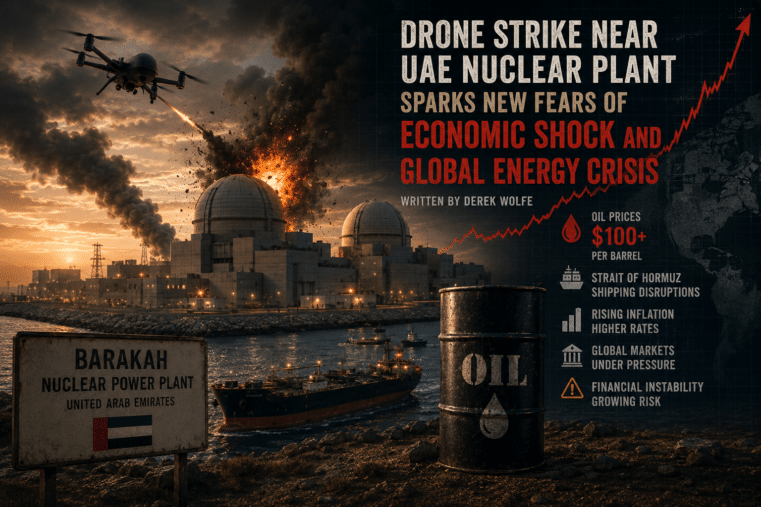
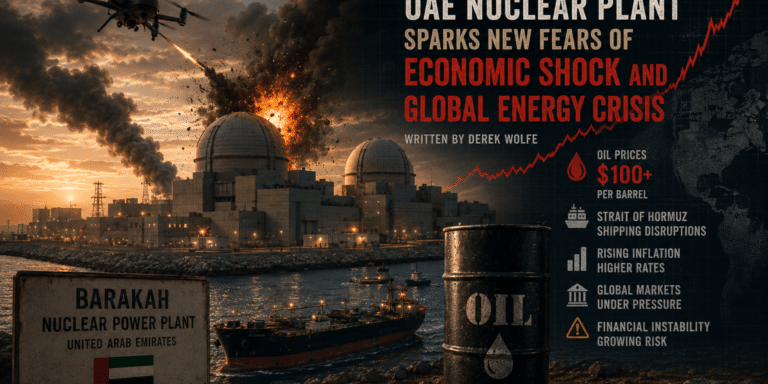
A drone struck near the Barakah Nuclear Power Plant in the United Arab Emirates. Officials quickly assured the public there was no radiation leak, no operational damage, and no immediate threat to nuclear safety.
But that misses the real story entirely.

The attack was not important because of what happened.
It was important because of what almost happened.
For the first time, one of the most strategically important energy and infrastructure facilities in the Middle East came dangerously close to becoming a direct casualty of an escalating regional conflict.
And if these attacks continue, the economic fallout could become severe very quickly.
Why the Barakah Nuclear Facility Matters to the Global Economy
Barakah is not just another power plant.
The facility generates roughly 25% of the UAE’s electricity supply and represents one of the most critical pieces of infrastructure in the Gulf region.
Any successful disruption to Barakah would immediately pressure:
- UAE power generation
- Regional industrial output
- Oil export operations
- Water desalination systems
- Financial markets
- Global energy prices
The fact that a drone was able to strike infrastructure near the facility at all exposes a dangerous reality:
Critical energy infrastructure across the Gulf is increasingly vulnerable.
And markets are starting to realize it.
The Strait of Hormuz Is Becoming the Center of Global Economic Risk
The bigger issue here is not the drone itself.
It’s the growing instability surrounding the Strait of Hormuz.
Roughly one-fifth of the world’s oil supply normally flows through this narrow shipping corridor. As tensions escalate between Iran, Israel, Gulf states, and the United States, commercial shipping activity through the strait is already slowing dramatically.
Reports now show:
- Commercial vessel traffic remains heavily restricted
- Oil shipments are facing delays and rerouting
- Tanker insurance costs are climbing
- Energy traders are pricing in prolonged instability
This is why oil prices continue rising despite official reassurances about diplomacy.
Markets understand something politicians do not want to admit publicly:
Once global shipping chokepoints become militarized, economic disruption spreads rapidly.
Rising Oil Prices Could Trigger Another Inflation Shock
The economic danger starts with energy.
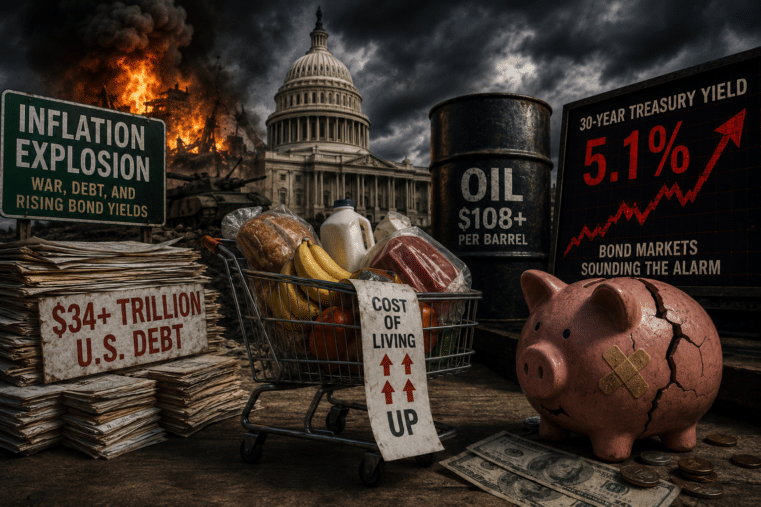
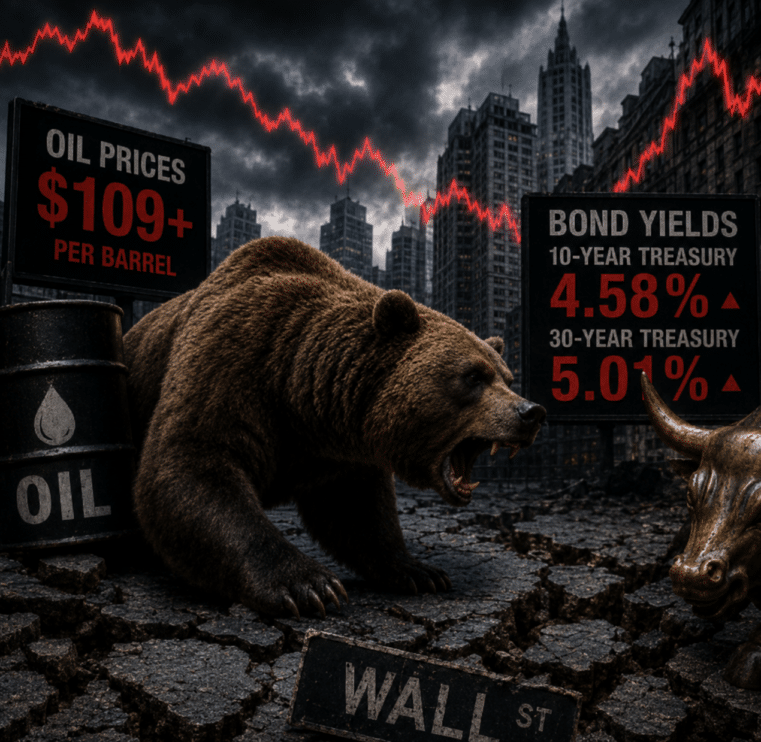
Brent crude pushing above $100 per barrel again is not just another commodity story. Rising oil prices affect virtually every layer of the global economy.
Higher energy costs increase:
- Transportation expenses
- Manufacturing costs
- Shipping prices
- Airline fuel expenses
- Food production costs
- Consumer prices across nearly every sector
Inflation does not remain isolated inside energy markets for long.
It spreads outward through the entire economy.
And this is happening at a time when consumers are already struggling under elevated housing costs, rising debt burdens, and persistent inflation from previous monetary expansion.
The timing could not be worse.
Supply Chains Are Once Again Under Pressure
Many people assumed the supply chain crisis ended after the pandemic-era disruptions faded.
That assumption may prove dangerously premature.
The Strait of Hormuz is one of the most strategically important trade routes on Earth. If instability continues escalating, supply chain disruptions could intensify across multiple industries simultaneously.
That includes:
- Energy markets
- Electronics manufacturing
- Industrial materials
- Fertilizer supply
- Shipping logistics
- Consumer goods imports
Even partial disruptions can trigger cascading economic effects.
The modern global economy depends on highly coordinated just-in-time delivery systems. Those systems become fragile during geopolitical instability.
The longer this conflict drags on, the greater the risk that shortages, delays, and cost spikes begin spreading internationally.
Bond Markets Are Already Flashing Warning Signs
One of the clearest signals that investors are becoming nervous is happening in bond markets worldwide.
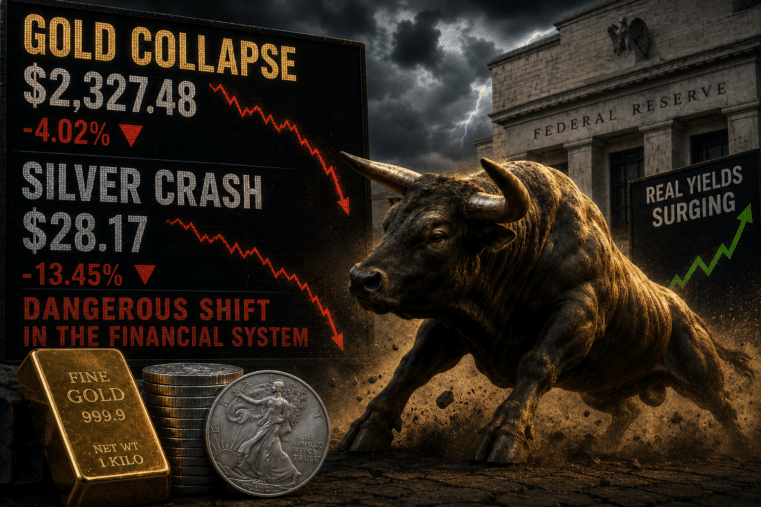
Long-term bond yields continue rising sharply as investors demand greater compensation for inflation risk and fiscal instability.
This matters because higher yields create pressure across the entire economy.
Rising yields mean:
- Higher mortgage rates
- More expensive business loans
- Increased government borrowing costs
- Tighter credit conditions
- Greater pressure on heavily indebted companies
The economic system spent over a decade addicted to ultra-low interest rates and easy money policies.
Now geopolitical instability is colliding with inflation risks at the exact moment central banks have the least flexibility to respond.
That combination creates serious systemic danger.
Governments Are Entering Another Era of Massive Deficit Spending
Wars are expensive.
And prolonged geopolitical conflicts rarely stay contained financially.
Military operations, defense spending, emergency energy measures, infrastructure protection, and economic stabilization programs all increase government spending dramatically.
That means larger deficits.
And larger deficits require more debt issuance.
But investors are already demanding higher yields to hold government debt due to inflation fears and economic uncertainty.
This creates a dangerous cycle:
- Governments borrow more
- Bond supply increases
- Yields rise further
- Debt servicing costs explode
- Deficits worsen even faster
The system becomes increasingly unstable the longer conflict persists.
The Fragile Ceasefire May Not Hold
The political situation itself remains extremely unstable.
Public statements from both sides suggest negotiations are deteriorating while trust continues collapsing.
The current ceasefire framework appears increasingly fragile, with both Iran and the United States issuing aggressive demands while military operations continue indirectly through regional actors.
That uncertainty is what markets fear most.
Financial systems can often handle bad news.
What they struggle with is prolonged uncertainty combined with escalating risk.
And right now, uncertainty is everywhere:
- Energy markets
- Shipping routes
- Bond markets
- Currency markets
- Global trade networks
Investors are beginning to realize this conflict may not end quickly.
Why Average Americans Should Pay Attention
Many Americans assume Middle East conflicts only affect oil prices temporarily.
That view is outdated.
The modern economy is globally interconnected in ways most people underestimate.
A prolonged disruption in Gulf energy infrastructure and shipping routes could directly impact:
- Gasoline prices
- Grocery costs
- Airline ticket prices
- Heating and utility bills
- Consumer goods pricing
- Stock market volatility
- Retirement accounts
- Mortgage rates
At the same time, inflation pressures would make it harder for central banks to lower interest rates even if economic growth weakens.
That creates the worst possible environment for consumers:
- Higher living costs
- Slower economic growth
- Elevated borrowing costs
- Increased financial instability
In other words, stagflation risks begin rising again.
The Financial System Is More Fragile Than It Appears
One of the biggest problems today is that the global financial system remains heavily leveraged after years of cheap money policies.
Governments, corporations, banks, and consumers all accumulated massive debt under the assumption that low rates and stable globalization would continue indefinitely.
Now those assumptions are breaking down.
Geopolitical instability is exposing just how fragile the system has become underneath the surface.
The drone strike near Barakah was not merely an isolated security event.
It was another reminder that modern economies rely on highly concentrated infrastructure networks that become vulnerable during periods of conflict.
And once markets begin losing confidence in the stability of those systems, volatility can accelerate very quickly.
Final Thoughts: Prepare for Prolonged Economic Volatility if the War Expands
The attack near the UAE nuclear facility should be treated as a warning sign, not a footnote.
Even though the immediate damage was limited, the broader implications are enormous.
Critical infrastructure is increasingly vulnerable.
Energy markets remain unstable.
Global shipping routes are under pressure.
Bond markets are flashing inflation concerns.
Governments are piling on more debt.
And the geopolitical situation remains highly unpredictable.
If this conflict escalates further or drags on for months, the economic consequences could spread far beyond the Middle East.
Higher inflation, supply chain disruptions, rising interest rates, and deeper financial instability may only be the beginning.
Most people are still assuming the global economy will simply absorb these shocks like it always has.
That assumption may prove dangerously optimistic.
Prepare Before the Financial System Tightens Control During Crisis Conditions
Periods of war, economic instability, inflation, and financial stress have historically been used to justify major expansions in centralized financial oversight and digital control systems.
As governments respond to rising economic pressure, systems tied to digital payments, transaction monitoring, and centralized financial infrastructure are rapidly expanding behind the scenes.
If you want to understand how FedNow, digital currencies, programmable money, and financial surveillance systems could evolve during future crises, you need to read The Digital Dollar Reset Guide by Bill Brocius.
Inside the guide, you’ll learn:
- How financial crises accelerate centralized control systems
- Why digital payment infrastructure matters during emergencies
- The risks tied to programmable money and transaction restrictions
- How inflation and instability reshape monetary systems
- Practical steps to strengthen your financial preparedness