Gold and Silver Collapse as Rising Real Yields Signal a Dangerous Shift in the Financial System

The Precious Metals Selloff Is Sending a Warning Most Investors Are Ignoring
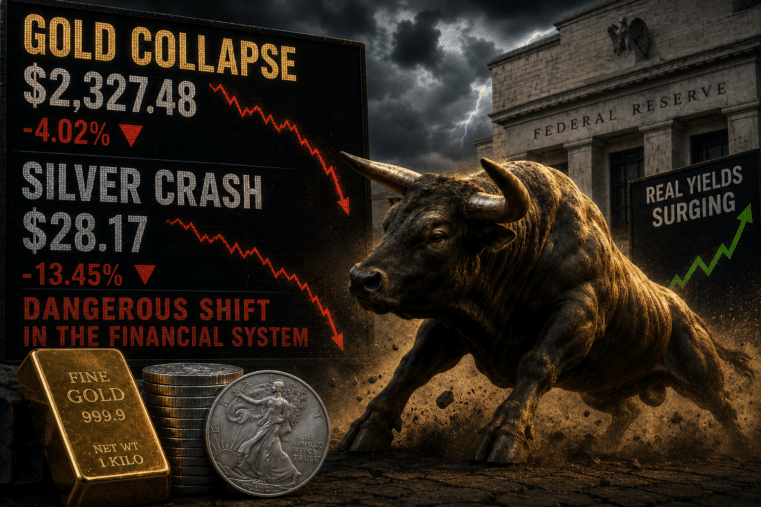
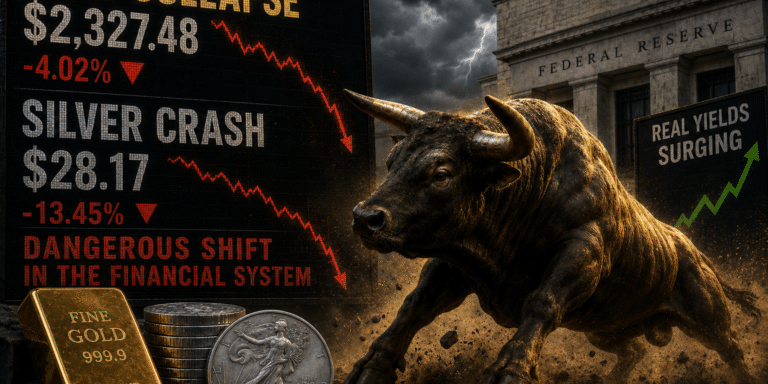
Gold fell nearly 4% this week. Silver cratered more than 13% from recent highs. For casual observers, it looked like another ugly week in the commodities market. For people paying attention to the deeper mechanics of the financial system, it looked like a flashing red warning light.
The growing pressure from inflation and interest rates is now exposing structural weaknesses that policymakers and central banks spent years trying to suppress.
The mainstream financial media is framing this as a simple reaction to rising bond yields and shifting Federal Reserve expectations. That explanation is technically correct — but dangerously incomplete.

What we’re witnessing is the collision between persistent inflation, unsustainable debt levels, tightening monetary conditions, and a financial system that has become addicted to cheap money.
And precious metals are caught directly in the blast zone.
Why Inflation and Interest Rates Are Crushing Gold and Silver
To understand why gold and silver are struggling, you first need to understand one of the most important concepts in modern finance: real yields.
Real yields are the return investors earn on government bonds after inflation is factored in. When real yields rise, investors can suddenly earn meaningful returns holding Treasury debt instead of parking capital in non-yielding assets like gold.
That’s exactly what’s happening now.
The 30-year Treasury yield pushing above 5% is not just another market statistic. It represents a dramatic tightening of financial conditions across the economy. More importantly, inflation expectations have not risen at the same pace, meaning real yields are climbing sharply.
That creates a direct headwind for precious metals.
Institutional money managers who previously used gold as protection against monetary debasement are now reallocating into higher-yielding assets. The opportunity cost of holding gold increases as real returns on bonds rise.
In plain English: investors can suddenly get paid to sit in government debt again.
And that changes everything.
The Federal Reserve Is Trapped Between Inflation and Economic Collapse
The Federal Reserve created this environment through years of aggressive monetary intervention, near-zero interest rates, and massive liquidity injections that distorted markets beyond recognition.
Now inflation remains sticky enough that policymakers cannot rapidly cut rates without risking another inflationary surge.
That leaves the Fed trapped.
If rates stay elevated:
- Economic growth slows
- Credit markets tighten
- Corporate defaults rise
- Consumer spending weakens
- Government borrowing costs explode
If rates are cut too quickly:
- Inflation risks reigniting
- Confidence in the dollar deteriorates
- Long-term bond markets lose credibility
- Capital flees into hard assets and commodities
There is no painless exit from this situation.
The financial system has become structurally dependent on low rates, cheap debt, and constant intervention. Every attempt to normalize policy exposes just how fragile the system actually is.
Silver’s Collapse Reveals Just How Fragile Market Sentiment Has Become
Silver’s sharper decline compared to gold is especially revealing.
Silver operates as both a monetary metal and an industrial commodity. When fears about economic slowdown rise, silver often gets hit harder because industrial demand expectations weaken alongside investor sentiment.
The magnitude of silver’s decline suggests something important:
Markets are becoming increasingly nervous about future economic growth.
This is not the behavior of a healthy economy entering a stable expansion cycle. This is the behavior of markets trying to price in uncertainty, tightening liquidity, and deteriorating confidence.
Volatility spikes when investors stop trusting the long-term stability of the economic outlook.
That’s where we are now.
The Bond Market Is Starting to Expose the Debt Problem
One of the most underreported aspects of this entire situation is what rising long-term yields mean for government debt.
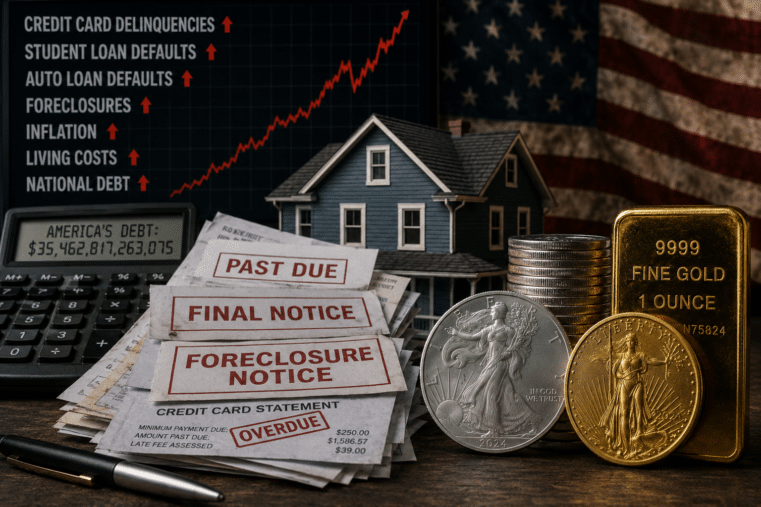
The United States government is already carrying debt levels that would have been considered catastrophic just two decades ago. Every percentage point increase in long-term interest rates dramatically increases debt servicing costs.
That creates a dangerous feedback loop:
- Higher yields increase borrowing costs
- Higher borrowing costs worsen deficits
- Larger deficits require more Treasury issuance
- More issuance pressures yields even higher
This cycle becomes increasingly difficult to control without direct intervention from central banks.
The bond market is beginning to force reality back into a system that has spent years suppressing it through monetary engineering.
And markets do not adjust smoothly when decades of artificial conditions begin unwinding.
Why Gold’s Long-Term Outlook May Still Remain Intact
Despite the brutal selloff, dismissing gold entirely would be a mistake.
The same forces hurting gold in the short term may eventually become the exact catalysts that drive its next major move higher.
Consider the broader landscape:
- Persistent inflation pressures remain unresolved
- Global debt continues exploding
- Geopolitical instability is intensifying
- Banking system fragility still exists beneath the surface
- Fiscal deficits continue widening
- Consumer purchasing power keeps eroding
These conditions historically create fertile ground for hard assets over the long run.
The problem is timing.
In highly leveraged financial systems, liquidity shocks often hit precious metals first before broader instability fully emerges. Investors sell what they can sell to meet margin calls and cover losses elsewhere.
That creates violent corrections even in assets that may later recover strongly.
We’ve seen this pattern before during previous financial crises.
Investors Should Stop Trusting Surface-Level Narratives
One of the biggest mistakes retail investors make is believing official narratives at face value.
Every major financial dislocation is initially described as “manageable,” “temporary,” or “well contained.” We heard it during the housing bubble. We heard it during the banking crises. We heard it during inflation spikes.
Now we’re hearing similar reassurances while long-term yields surge, debt servicing costs explode, and precious metals volatility accelerates.
The deeper issue is not whether gold fell 4% this week.
The deeper issue is why the system has become so vulnerable to rising rates in the first place.
That vulnerability did not appear overnight.
It was engineered over decades through reckless monetary policy, unsustainable debt accumulation, financialization of the economy, and dependence on central bank intervention.
The market turbulence we’re seeing now may only be the early stages of a much larger repricing event across global financial markets.
Rising Real Yields Could Trigger Broader Market Stress
The danger with rapidly rising real yields is that they tighten conditions everywhere simultaneously.
They pressure:
- Housing markets
- Corporate debt markets
- Commercial real estate
- Consumer lending
- Equity valuations
- Banking sector liquidity
This is why investors should not view the precious metals decline in isolation.
Gold and silver are reacting to broader systemic stress building underneath the economy.
And if the bond market continues forcing yields higher, pressure across all major asset classes could intensify quickly.
That is when financial accidents tend to happen.
Final Thoughts: The System Is Under More Pressure Than Officials Admit
The recent collapse in precious metals momentum is not occurring in a vacuum.
It reflects growing stress inside a heavily leveraged financial system that has become dangerously dependent on low interest rates and perpetual intervention.
Rising real yields are exposing structural weaknesses policymakers spent years trying to paper over with easy money and liquidity injections.
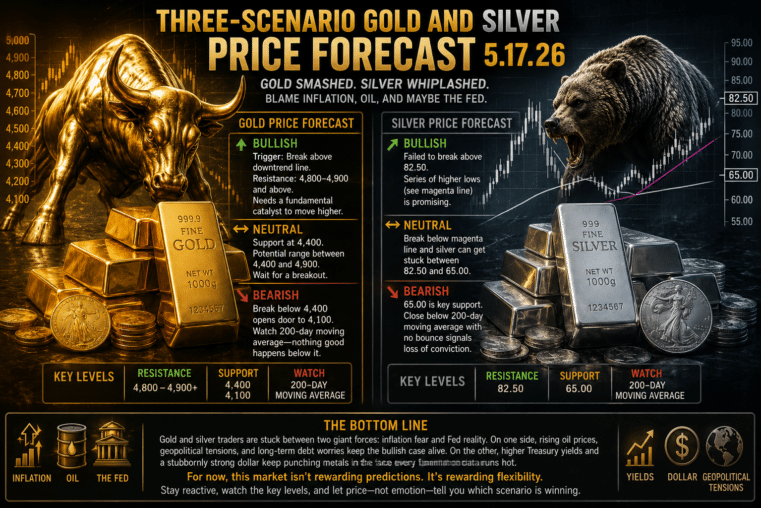
Gold and silver may remain volatile in the short term. More downside is entirely possible if yields continue climbing.
But the bigger story is the instability now spreading through the financial architecture itself.
And once confidence in the system starts breaking down, market reactions can become violent very quickly.
The smartest investors are not simply watching the price of gold.
They’re watching the bond market, the debt markets, liquidity conditions, and the growing signs that the financial system is entering a far more unstable phase than most people realize.
Protect Yourself Before the Financial System Changes Overnight
Most Americans still have no idea how rapidly the financial system is evolving behind the scenes. While rising debt, inflation, and market instability dominate headlines, governments and central banks are quietly expanding digital financial infrastructure that could dramatically reshape personal financial freedom in the years ahead.
If you want to understand where this system is heading — including the risks tied to FedNow, digital currencies, centralized transaction monitoring, and programmable money — then you need to read The Digital Dollar Reset Guide by Bill Brocius.
This guide breaks down:
- The growing push toward a cashless financial system
- The risks of centralized digital payment control
- How financial surveillance is expanding
- Why programmable money could change personal autonomy forever
- Steps individuals can take now to prepare financially