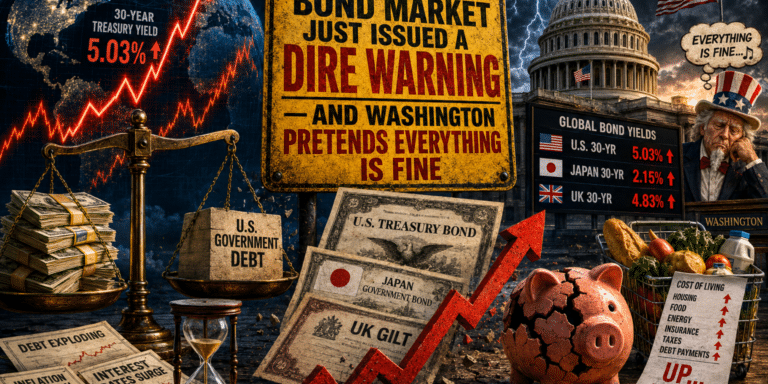
The Global Bond Market Just Issued a Dire Warning — And Washington Pretends Everything Is Fine

The Free Money Era Is Dying in Real Time
For nearly two decades, politicians discovered what they believed was the ultimate cheat code:
Spend endlessly.
Borrow endlessly.
Print endlessly.
And somehow, the system kept limping forward as cheap money and central bank intervention masked the growing dangers of the US debt crisis.
Governments bailed out banks, financed wars, inflated asset bubbles, launched emergency stimulus programs, and exploded national debt levels while central banks kept interest rates artificially low enough to mask the damage.

The illusion became addictive.
Debt no longer looked dangerous.
Deficits no longer mattered.
Economic reality itself seemed suspended.
But now the global bond market is delivering a brutal wake-up call.
And the people in power are running out of ways to hide it.
Why the Bond Market Matters More Than the Stock Market
Most Americans obsess over the stock market because that’s what television tells them to watch.
But the bond market is where the real stress signals appear first.
At roughly $145 trillion globally, the bond market acts as the foundation underneath the entire financial system. It determines borrowing costs for:
- Governments
- Banks
- Businesses
- Mortgages
- Credit cards
- Consumer loans
When bond yields rise aggressively, the entire economy becomes more expensive to maintain.
And that’s exactly what’s happening right now.
Rising Bond Yields Signal a Growing Global Debt Crisis
The warning signs are no longer isolated to one country.
They’re global.
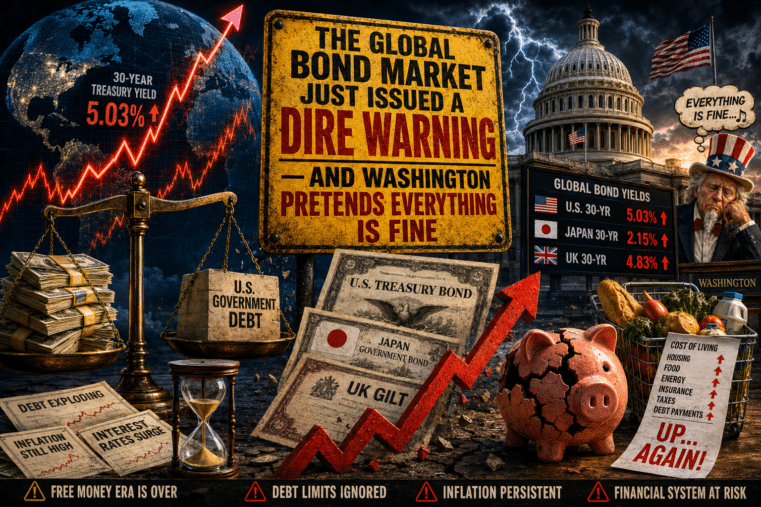
In the United States, the 30-year Treasury yield recently surged above 5%, reaching levels not seen since before the 2008 financial crisis.
Japan’s 30-year government bond yield just hit an all-time record high.
Britain’s long-term government debt yields climbed to their highest levels since 2008 amid fears of political instability and uncontrolled spending.
This matters because bond investors are beginning to lose confidence in governments’ ability to control inflation, debt expansion, and long-term fiscal stability.
In plain English?
The lenders of the world are demanding higher returns because they trust governments less.
That’s not a small development.
That’s a flashing red warning light for the global financial system.
Inflation Never Really Left — It Just Changed Form
The political class keeps pretending inflation is “cooling.”
Average people know better.
Housing costs remain brutal.
Food prices remain elevated.
Insurance costs are exploding.
Utility bills continue climbing.
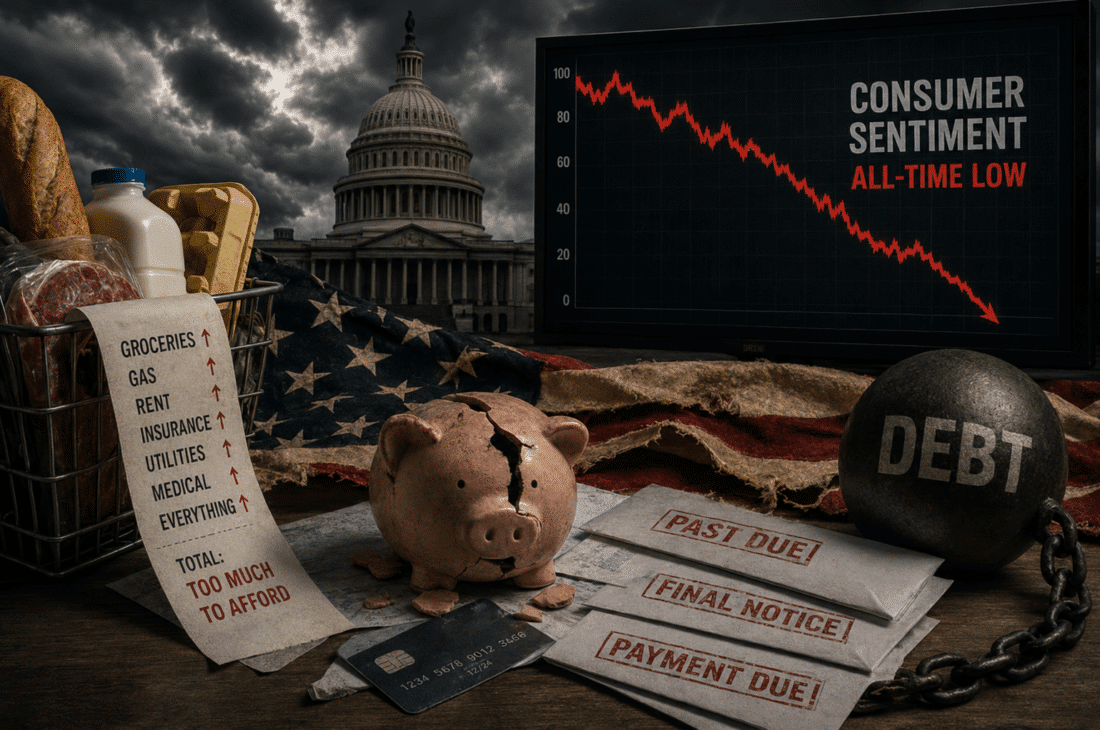
Debt servicing costs are getting worse.
The reality is simple:
The inflation created by years of monetary expansion never disappeared.
It embedded itself into the system.
Now bond investors are pricing in the possibility that inflation may remain structurally higher for years due to:
- Geopolitical conflict
- Supply chain instability
- Energy disruptions
- Government overspending
- Massive infrastructure and AI investment demands
In other words, the world is becoming more expensive to operate.
And somebody eventually has to absorb those costs.
Governments Are Trapped by Debt as Bond Markets Lose Confidence
Here’s the uncomfortable truth nobody in Washington wants to admit:
Modern governments are trapped.
The entire system now depends on perpetual borrowing.
If they stop spending aggressively, economic growth weakens.
If they keep spending aggressively, debt spirals further out of control.
That’s why every crisis suddenly becomes justification for more borrowing:
- Pandemic relief
- Bank bailouts
- Foreign wars
- Energy subsidies
- Housing interventions
- Industrial policy
- AI infrastructure races
Every problem gets solved with more debt creation.
And for years, central banks enabled it by suppressing interest rates and flooding markets with liquidity.
But markets are beginning to revolt against that strategy.
The AI Buildout Is Quietly Accelerating the Crisis
One detail buried in the mainstream reporting deserves far more attention:
The artificial intelligence boom is creating enormous new demand for capital.
Data centers.
Energy infrastructure.
Semiconductor expansion.
Grid modernization.
Cloud computing.
All of it requires staggering amounts of financing.
Now combine that with already massive government borrowing needs worldwide.
The result?
Competition for capital intensifies.
Borrowing costs rise.
Interest rates stay elevated.
Debt becomes harder to sustain.
This is one reason the “lower rates forever” fantasy is rapidly collapsing.
The financial system is entering a period where money itself becomes more expensive.
That changes everything.
How the US Debt Crisis Is Hurting American Families
The consequences are no longer theoretical.
Mortgage rates have surged dramatically in just months as the US debt crisis pushes bond yields higher and makes borrowing more expensive across the economy.
For millions of Americans, homeownership is drifting further out of reach while existing homeowners face:
- Higher refinancing costs
- Rising insurance premiums
- Property tax increases
- Elevated maintenance expenses
Businesses face the same pressure.
Higher borrowing costs mean:
- Less expansion
- More layoffs
- Reduced investment
- Slower hiring
- Greater financial stress
Meanwhile, the Federal Reserve is cornered.
If inflation remains elevated, rates may need to stay high or even rise further.
If the economy weakens too quickly, cutting rates risks reigniting inflation again.
This is what happens when years of artificial monetary policy collide with economic reality.
The Media Still Refuses to Admit the Bigger Problem
Corporate media outlets keep framing these developments as temporary volatility.
That’s misleading.
What we’re witnessing is the gradual breakdown of the post-2008 economic model — the system where central banks could endlessly intervene without consequences.
For years, markets became conditioned to expect:
- Cheap money
- Endless liquidity
- Constant intervention
- Government rescue programs
- Artificially inflated asset prices
Now the math is changing.
Bond markets are forcing governments to confront limits they’ve ignored for decades.
And the political establishment hates limits.
The Dangerous Trade-Offs Are Just Beginning
The next economic downturn could become extremely dangerous because governments no longer have easy options.
In previous recessions, politicians responded with:
- Massive stimulus spending
- Emergency borrowing
- Aggressive monetary easing
But now those same responses risk triggering:
- Higher bond yields
- Currency weakness
- Inflation spikes
- Investor panic
- Debt instability
That means policymakers are trapped between economic pain and financial instability.
Neither option is politically survivable.
Which means leaders may become increasingly desperate to maintain control through intervention, regulation, and expanded financial oversight mechanisms.
History suggests governments rarely surrender power voluntarily during periods of economic stress.
This Is What the End of Financial Illusions Looks Like
For years, people were told debt didn’t matter.
Money printing didn’t matter.
Deficits didn’t matter.
Now the bond market is exposing the lie.
The global financial system was built on the assumption that governments could indefinitely borrow without consequences because central banks would always intervene to stabilize markets.
But confidence has limits.
And once confidence weakens, the entire structure becomes fragile.
That’s why bond markets matter so much right now.
They’re not merely reacting to economic conditions.
They’re signaling declining trust in the long-term sustainability of the system itself.
Final Thoughts From Derek Wolfe
The financial establishment spent decades engineering a world dependent on cheap debt, endless liquidity, and artificial economic support.
Now reality is pushing back.
The bond market is effectively warning governments that the era of consequence-free spending is ending — and ordinary people will once again pay the highest price through inflation, reduced purchasing power, economic instability, and declining living standards.
Most people still believe the system is fundamentally stable because they’ve been conditioned to trust official narratives.
But systems built on perpetual debt expansion eventually hit limits.
Always.
The question is no longer whether the reckoning is coming.
The question is how severe it becomes once confidence finally breaks.
Prepare Before the Financial System Tightens Further
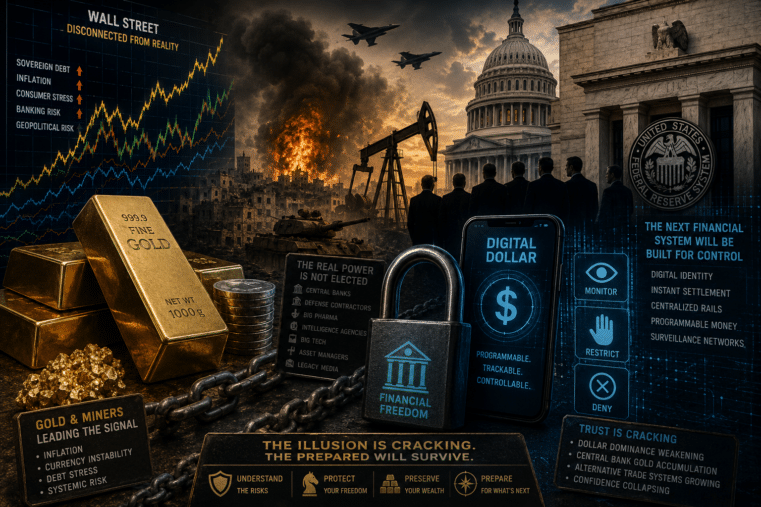
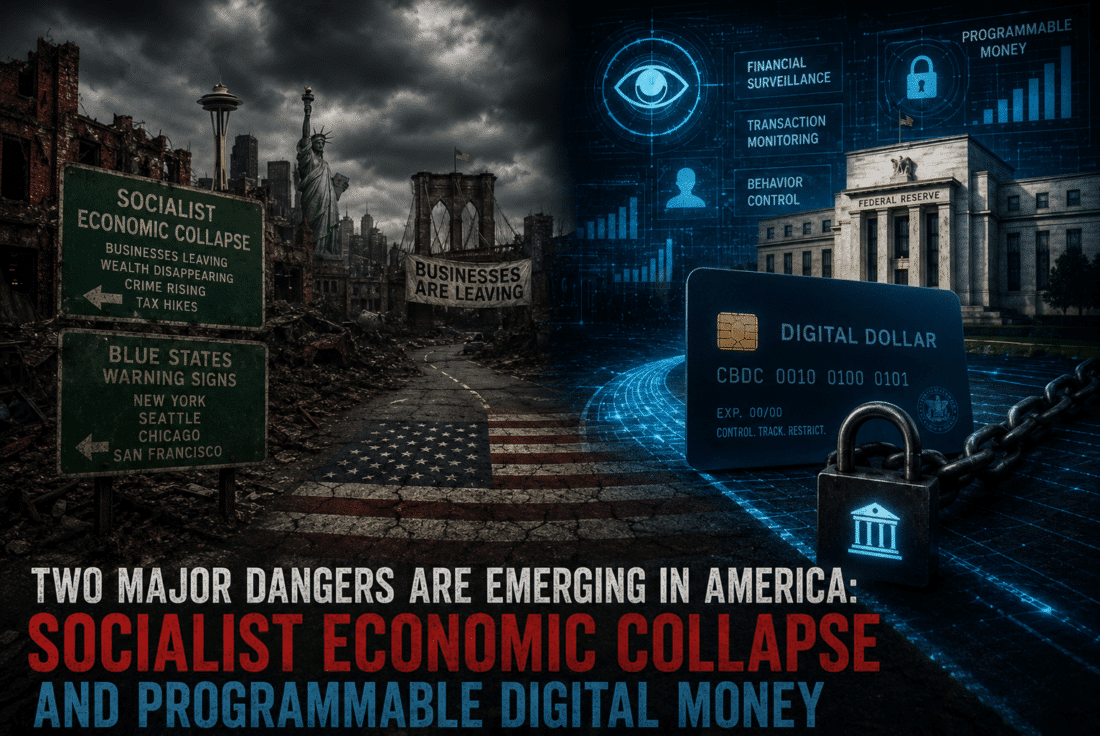
If you’re starting to see the pattern — rising debt, persistent inflation, growing financial instability, and expanding government interest in centralized digital financial systems — now is the time to understand where this is heading.
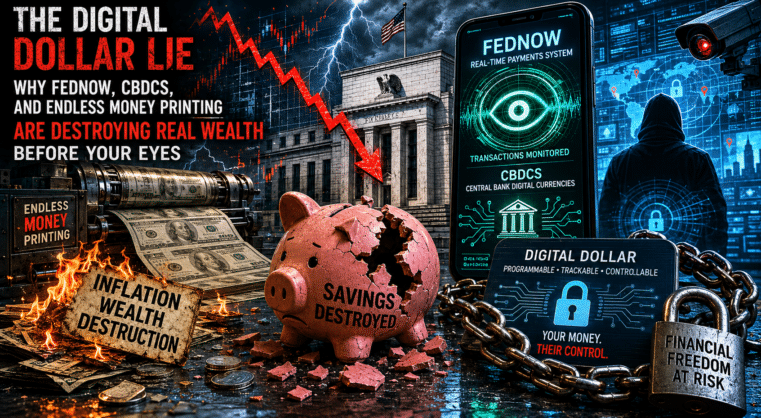
Bill Brocius’ Digital Dollar Reset Guide explains the deeper transformation unfolding behind the scenes, including the risks tied to FedNow, CBDCs, programmable money, and the expanding architecture of financial surveillance.
The people paying attention early will have the greatest chance to protect their financial independence before the next phase arrives.