Dollar Panic Today, Gold Explosion Tomorrow? Why Smart Savers Are Quietly Preparing for What Comes Next

Why Gold Sometimes Stalls When the World Is in Crisis
A lot of readers write to me confused.
They’ll say something like:
"Frank, the world looks like it’s on fire. Why isn’t gold skyrocketing every single day?"

It’s a fair question.
Recently, economist Thorsten Polleit explained something that many everyday investors don’t realize: during financial stress, investors often rush into the most liquid asset available first — the U.S. dollar.
Think of it like a storm hitting a crowded beach.
When lightning strikes, people don’t calmly walk to their cars. They run to the closest shelter they can find.
In the financial system, that shelter is usually cash and U.S. Treasuries.
So in the short term, money sometimes floods into dollars before it moves anywhere else.
But that doesn’t mean the long-term case for gold and silver has disappeared.
In fact, the opposite may be true.
The Bigger Story: The Debt Machine Keeps Growing
Here’s the reality most mainstream headlines avoid talking about.
The entire global financial system is drowning in debt.
Governments, corporations, and even households are sitting on record levels of borrowing. And every year, the problem grows larger.
When I started working in finance decades ago, national debt numbers looked big — but manageable.
Today they’re astronomical.
Here’s the catch: when debt levels get this large, central banks lose flexibility.
If interest rates rise too much, debt payments explode and markets break.
So policymakers are left with two options:
- Let the system collapse
- Print more money to keep it going
History shows which option governments usually choose.
Why Central Banks May Be Forced to Print Again
Polleit made a critical observation that everyday investors should understand.
The economy is now so heavily indebted that sustained high interest rates could destabilize the entire financial system.
Banks, hedge funds, governments, and corporations all depend on cheap money.
If borrowing costs stay elevated for too long, something eventually snaps.
And when that happens, central banks usually respond the same way they always have:
They open the monetary floodgates.
We saw it in:
- 2008 during the financial crisis
- 2020 during the pandemic
- multiple banking scares in recent years
Every time the system wobbles, the response is more liquidity.
And more liquidity means more currency dilution.
The Silent Tax Most People Don’t See
I like to explain inflation in simple terms.
Imagine you own a bottle of whiskey.
Now imagine someone quietly adds water to that bottle every year.
The bottle stays the same size.
But the strength gets weaker and weaker.
That’s what happens when governments print money.
Your paycheck might look the same.
Your bank balance might even grow.
But the purchasing power inside those dollars slowly evaporates.
That’s why groceries feel more expensive.
Why rent keeps climbing.
Why retirement savings don’t stretch as far as they used to.
It’s not your imagination.
Why Gold and Silver Are Seeing Structural Demand
One of the most important points Polleit made is something many analysts are starting to recognize:
Demand for precious metals is no longer just speculative.
It’s structural.
Central banks themselves have been buying gold at some of the fastest rates in decades.
Countries around the world are gradually diversifying away from dollar reserves.
Why?
Because they understand something many everyday savers are just beginning to realize:
Fiat currencies depend on trust.
Gold does not.
Gold has been money for thousands of years because it cannot be printed, diluted, or digitally created by a central authority.
Why Volatility Doesn’t Change the Long-Term Trend
Precious metals rarely move in straight lines.
They surge.
They stall.
They correct.
That’s normal.
But the long-term drivers behind gold and silver remain powerful:
- Rising global debt
- Persistent inflation pressures
- Geopolitical conflict
- Central bank intervention
- Declining confidence in fiat currencies
Those forces don’t disappear just because the dollar rallies for a few weeks or months.
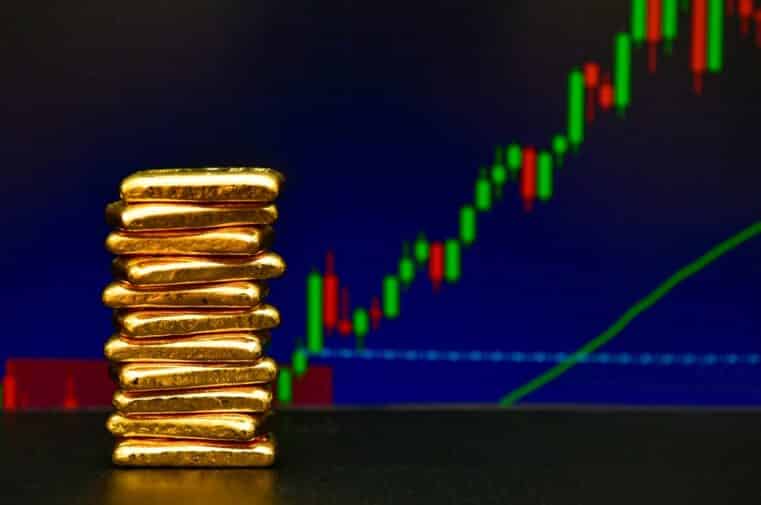
Polleit even suggested that gold could reach $8,000 within five years if current trends continue.
Whether that exact number proves correct isn’t the real issue.
The real issue is the direction of the system.
And that direction is clear.
More debt.
More money creation.
And less purchasing power for paper currencies.
What This Means for Everyday Savers
If you’re an ordinary person trying to protect your savings, the lesson is simple.
You can’t control government policy.
You can’t control central bank decisions.
But you can control where you store your wealth.
For thousands of years, people have turned to gold and silver during uncertain times because they exist outside the financial system.
They don’t rely on a bank.
They don’t depend on a government promise.
And they can’t be created with a keystroke.
That’s why many long-term investors see precious metals as financial insurance.
Not speculation.
Protection.
Join the Inner Circle Before the Next Shock Hits
If there’s one lesson I’ve learned after decades in finance, it’s this:
Most people wait until after a crisis to start protecting themselves.
By the time the headlines are screaming about bank failures, market crashes, or emergency bailouts, the smart money has already moved.
That’s exactly why we created the Dedollarize Inner Circle.
Inside the Inner Circle, you’ll get deeper insights into what’s really happening in the global financial system — the kind of analysis that rarely makes it into the mainstream financial media.
We break down:
- The real forces driving gold and silver markets
- What central banks are doing behind the scenes
- Warning signs of instability in the banking system
- Strategies many investors use to protect purchasing power during uncertain times
If you’re serious about staying ahead of the financial risks building in today’s economy, I strongly encourage you to join us.
You can learn more about the Dedollarize Inner Circle Here
Because when the next financial shock arrives — and history says it eventually will — the people who prepared early will be the ones sleeping best at night.