The Iran War Supply Shock: Is This the Crisis That Triggers the Next Inflation Wave?

A War That Starts With Oil—but Doesn’t End There
When most people hear about a conflict in the Middle East, they think about oil prices. And that’s a good starting point. But it’s only the beginning of the story.
The region surrounding Iran sits at the center of some of the most important energy arteries in the world. One of the most critical is the Strait of Hormuz, a narrow shipping corridor through which roughly one-fifth of the world’s oil supply passes every day. If that passage becomes unstable—or worse, blocked—the shockwaves don’t stop at the energy markets.
They ripple through manufacturing, transportation, agriculture, and consumer goods. In other words, they ripple through your daily life.

The media tends to frame this as a logistics problem. Ships may have to reroute. Fuel costs may rise. Supply chains may slow.
But anyone who has watched the global economy closely over the past decade knows something important:
Supply disruptions rarely stay small for long.
They cascade.
The Fragility of Modern Supply Chains
Over the last several years, the global economy has been running on increasingly fragile infrastructure.
We saw this during the COVID era, when factory shutdowns in Asia created shortages across the Western world. A single container ship stuck in the Suez Canal was enough to disrupt global shipping for weeks.
What these events revealed was uncomfortable but undeniable:
The modern supply chain is optimized for efficiency, not resilience.
Companies have spent decades reducing inventory and tightening logistics networks in order to maximize profit margins. That strategy works perfectly—until something goes wrong.
And when something does go wrong, the system has very little slack.
Now consider what happens when the disruption isn’t a pandemic or a shipping accident—but a military conflict in one of the most strategically important energy regions on Earth.
Energy Shocks Spread Faster Than Wars
Energy markets are uniquely sensitive to geopolitical instability.
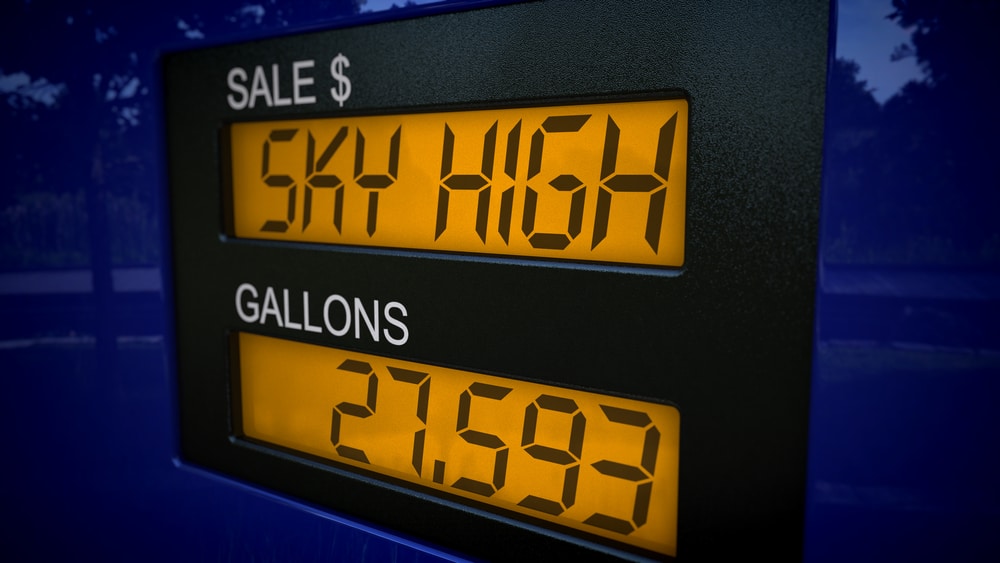
A single attack on infrastructure or shipping routes can move oil prices dramatically, not because the supply has disappeared overnight, but because markets anticipate shortages.
And anticipation alone is enough to trigger price spikes.
Higher energy prices then ripple outward through the entire economic system.
Fuel costs rise.
Shipping becomes more expensive.
Manufacturers pay more for raw materials.
Food producers face higher transportation costs.
Eventually those costs reach the end of the chain—the consumer.
This is why economists often describe energy shocks as inflation accelerants.
They amplify price pressures across the entire economy.
The Second-Order Effects Most People Miss
Interestingly, the United States might not experience the direct impact of Middle Eastern disruptions as severely as Europe or parts of Asia. America has increased domestic energy production in recent years, and some of the immediate supply losses would affect other regions first.
But the global economy does not operate in isolation.
If energy costs spike in Europe, Japan, or South Korea, their manufacturing costs rise. Those costs then flow into the goods they export to the United States.
This is the hidden channel through which distant conflicts affect domestic prices.
Global supply chains are interconnected webs. A disruption in one corner eventually sends vibrations through the entire structure.
As one economist recently put it, supply chains behave a lot like financial markets: a ripple in one place can become a tidal wave somewhere else.
Why Inflation Could Be the Real Battlefield
For households already dealing with years of rising prices, the possibility of another inflation surge is not a trivial concern.
Energy-driven inflation is particularly difficult to manage because it spreads quickly and touches nearly every sector of the economy.
Central banks have limited tools to combat this type of shock. Raising interest rates doesn’t create more oil, reopen shipping lanes, or stabilize geopolitical tensions.
Instead, policymakers often find themselves reacting rather than controlling events.
The result is a familiar pattern: price volatility, economic uncertainty, and reactive policy decisions.
The Strategic Shift Happening Beneath the Surface
Beyond the immediate economic impact, supply chain disruptions are also accelerating something deeper—a reconfiguration of global trade and monetary systems.
When nations begin to doubt the stability of global shipping routes or the reliability of energy supplies, they start making strategic adjustments.
These include:
- Reshoring manufacturing closer to home
- Diversifying supply chains across multiple regions
- Building alternative trade partnerships
- Exploring new settlement systems for international payments
Over time, these shifts can reshape the global financial architecture.
The last several years have already seen growing interest in alternative payment networks, commodity-backed trade agreements, and regional financial alliances.
Supply chain crises have a way of accelerating these trends.
The Lesson History Keeps Repeating
History shows that major economic transitions rarely occur during calm periods.
They tend to happen during moments of disruption.
Oil shocks in the 1970s reshaped global energy policy.
Financial crises in 2008 triggered massive central bank interventions.
The pandemic accelerated digital commerce and remote work.
Each crisis exposed weaknesses in the existing system—and pushed governments and institutions toward structural change.
That doesn’t mean every conflict leads to a financial transformation.
But it does mean that when multiple stresses converge—energy disruption, supply chain fragility, inflation pressures, and geopolitical conflict—the potential for systemic change increases dramatically.
The Bottom Line
The developing conflict involving Iran is not just a regional story. It is a reminder of how tightly interconnected the global economy has become.
Energy routes, shipping corridors, and supply chains form the invisible infrastructure that keeps modern life running smoothly.
When those systems come under strain, the consequences can extend far beyond the original event.
Higher energy prices can fuel inflation.
Supply disruptions can alter trade patterns.
Geopolitical instability can reshape financial systems.
Most headlines will focus on the immediate conflict. But the deeper question is not just what happens on the battlefield.
It is what happens to the global economic system that depends on stability in that region.
Because when critical supply chains tighten and energy markets react, the effects rarely stay contained.
They travel—quietly but powerfully—through the entire global economy.
A Final Word — Don’t Wait for the System to Change Around You
If the last few years have taught us anything, it’s this: global disruptions happen faster than most people expect.
Pandemics. Supply chain breakdowns. Banking instability. Inflation shocks. Now rising geopolitical tensions in one of the world’s most critical energy corridors.
Each event exposes just how fragile the financial system has become.
But here’s the uncomfortable truth most people don’t want to face:
By the time the average person realizes the system is shifting, the window to prepare is often already closing.
The global monetary system is evolving rapidly. New payment infrastructures, digital currencies, and centralized financial controls are already being built behind the scenes—often under the banner of “efficiency,” “security,” or “innovation.”
But as history shows, greater financial control rarely leads to greater financial freedom for individuals.
That’s why preparation matters.
If you want to better understand how the global financial system is changing—and what steps you can take now to protect your financial independence—I strongly encourage you to download the Digital Dollar Reset Guide by Bill Brocius.
This guide breaks down:
- Why the global monetary system is undergoing a historic transformation
- How digital currencies and centralized financial systems could reshape everyday transactions
- Practical strategies individuals can consider to safeguard their financial autonomy in uncertain times
You can download your copy here:
Download the Digital Dollar Reset Guide:
https://secure.dedollarizenews.com/reset/ddr-ebook/?utm_source=Dedollarize_News&utm_medium=ebook&utm_campaign=gsi&utm_term=static_mranderson&utm_content=digital_dollar_reset_guide
The world is changing faster than most headlines admit. The question is simple:
Will you understand what’s happening before the system shifts—or after it’s already locked into place?