Dollar Under Siege: War Spending and the BRICS Power Shift Threatening U.S. Dominance

The Price Tag Nobody Wants to Talk About
Let’s strip away the political theater and look at the raw numbers.
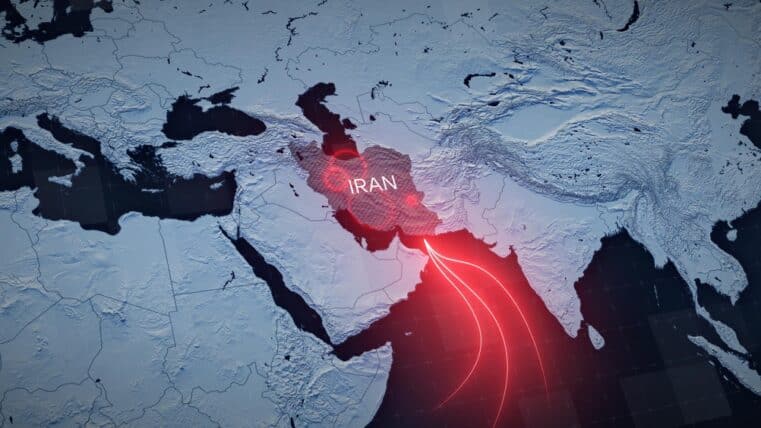
The ongoing conflict with Iran is costing the United States anywhere from $800 million to $2 billion per day. That’s not a rounding error—it’s a sustained financial hemorrhage layered on top of an already bloated deficit.
In just the opening phase, billions were spent in a matter of days. Analysts are now projecting totals that could climb into the tens of billions—and that’s assuming things don’t escalate further.

But here’s the real issue: this isn’t being paid for with surplus capital. It’s being financed through debt.
And debt, at this scale, doesn’t just sit quietly in the background. It ripples outward—into bond markets, into inflation expectations, and ultimately into global confidence in the dollar itself.
The Bond Market Is Flashing Warning Signals
If you want to understand where this is heading, don’t watch the headlines—watch the bond market.
Long-term Treasury yields are rising, pushing toward levels that signal growing discomfort among investors. That’s not случайность. That’s a reaction.
When governments spend aggressively—especially during wartime—investors demand higher returns to compensate for the increased risk of inflation and fiscal instability.
Translation: it’s getting more expensive for the U.S. to borrow money.
And when borrowing costs rise while spending accelerates, you get a dangerous feedback loop—more debt, higher interest payments, and even greater pressure on the system.
This is how financial strain compounds. Quietly at first. Then all at once.
BRICS Has Been Preparing for This Moment
While Washington is focused on the battlefield, another game is being played in the background.
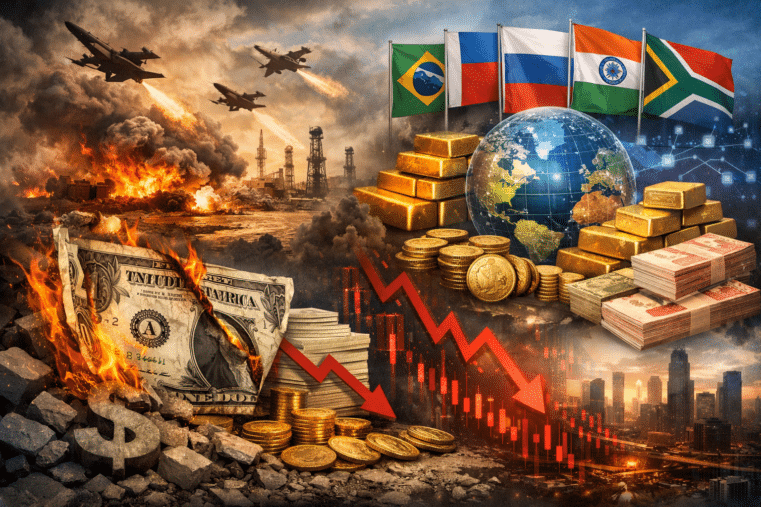
BRICS nations—Brazil, Russia, India, China, and South Africa—have spent years building the framework for a parallel financial system.
Not as a reaction. As a strategy.
Consider what’s already in motion:
- Bilateral trade agreements that bypass the dollar entirely
- Payment networks operating outside traditional Western systems
- Massive increases in gold reserves among central banks
- Growing trade volume between BRICS nations hitting record highs
This isn’t theoretical. It’s operational.
The proposed BRICS settlement unit—part gold-backed, part currency-based—is designed to reduce reliance on the dollar in global trade.
And the infrastructure to support it is already running.
When the Dollar Becomes Optional, Everything Changes
The dollar doesn’t collapse overnight. That’s not how this works.
It erodes.
Slowly at first—through bilateral trade deals, alternative payment systems, and shifting reserve strategies. Then faster, as confidence begins to slip and adoption of alternatives accelerates.
The key turning point isn’t when the dollar disappears.
It’s when it’s no longer required.
Once major economies can settle trade without touching the dollar, its dominance weakens. And once that dominance weakens, the entire structure supporting it—debt markets, global demand, geopolitical leverage—starts to shift.
This is the stage we’re entering now.
War Accelerates What Was Already in Motion
Here’s the part that matters most.
The conflict with Iran didn’t create this shift—it accelerated it.
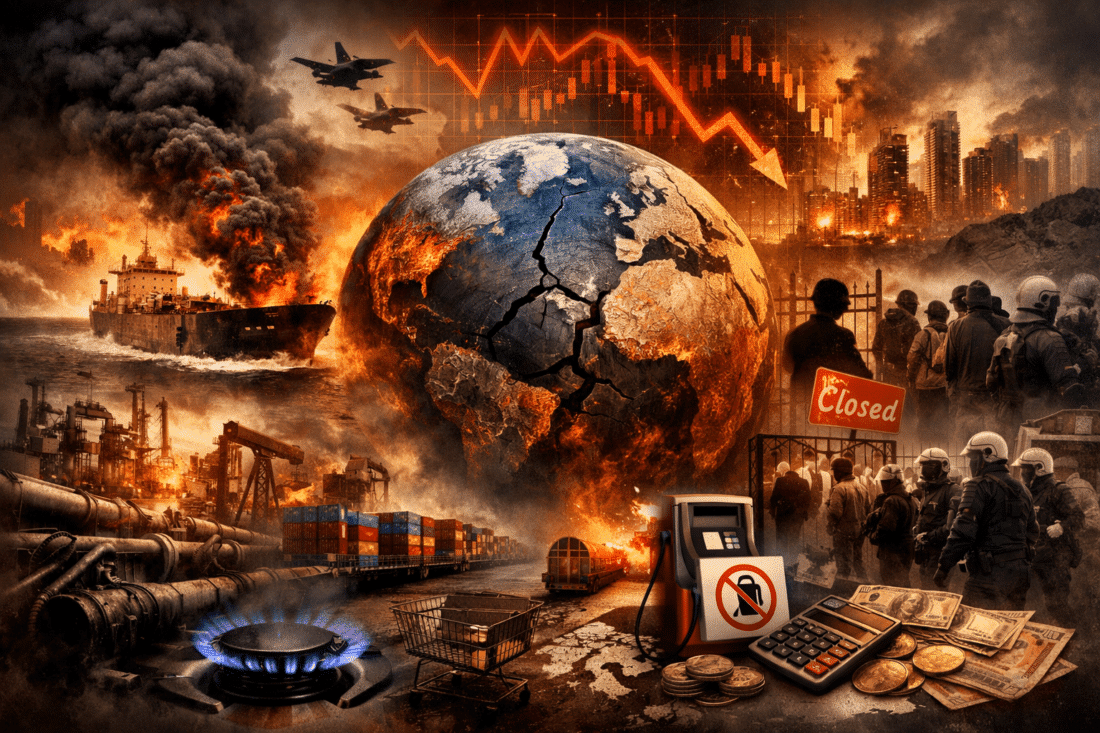
Every billion spent widens deficits. Every spike in oil prices adds inflationary pressure. Every market reaction chips away at confidence.
And while the U.S. is occupied managing the immediate costs of war, other nations are moving forward with long-term plans to reshape the global financial system.
It’s not coordinated in the way people like to imagine. It’s more pragmatic than that.
Countries are simply acting in their own interest.
And right now, reducing dependence on the dollar makes a lot of sense.
The Structural Problem No One Is Solving
Even if the conflict ended tomorrow, the underlying issue wouldn’t disappear.
The U.S. is facing a structural imbalance:
- Persistent deficits
- Rising borrowing costs
- Increasing reliance on debt issuance
- Diminishing appetite from global buyers
At some point, the math becomes unavoidable.
You can’t indefinitely expand debt while expecting unwavering confidence from the rest of the world.
And once that confidence begins to fade, the consequences don’t stay contained—they spread across markets, currencies, and economies.
My Take: This Isn’t a Crisis—It’s a Transition
What we’re witnessing isn’t a sudden collapse.
It’s a transition period.
A slow rebalancing of global power, where the dollar’s role is being challenged not by a single event, but by a combination of pressures—economic, geopolitical, and strategic.
The danger isn’t that everything breaks overnight.
The danger is that it changes gradually enough that most people don’t react until it’s too late.
By the time the shift becomes obvious, the systems, alliances, and rules will already be different.
Final Warning: Don’t Wait for the Headlines to Catch Up
If you’re waiting for mainstream confirmation, you’re already behind.
The signals are there:
- Explosive war spending
- Rising bond yields
- Coordinated moves away from the dollar
- Alternative systems gaining traction
This isn’t speculation. It’s a pattern.
And patterns like this don’t reverse easily.
Take Action While You Still Can
The global financial system is shifting in real time. As power moves away from the dollar externally, internal systems tied to digital currency, centralized control mechanisms, and evolving monetary frameworks are being positioned as the next phase.
If you want to understand what’s coming—and how to protect yourself—you need to get ahead of it.
Download the Digital Dollar Reset Guide Here
This isn’t optional reading. It’s critical intelligence for anyone paying attention.