IRAN CRISIS TRIGGERS GLOBAL ECONOMIC WORLD WAR - SYSTEMIC BREAKDOWN IS ALREADY UNDERWAY

The First Shots of an Economic World War Have Already Been Fired
Let’s drop the polite language.
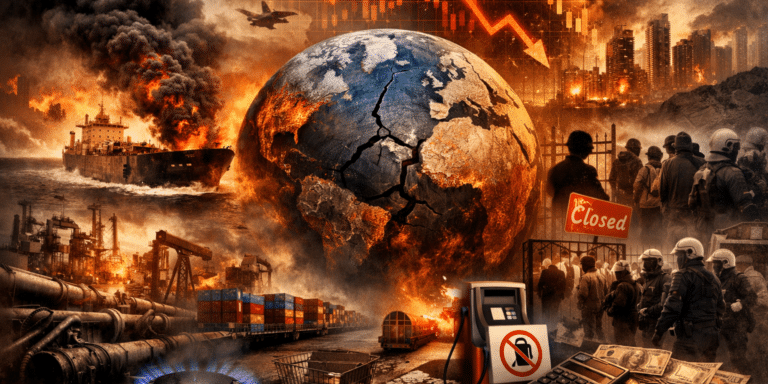
What we are witnessing is not just a geopolitical conflict—it is the opening phase of an economic world war, where the battlefield is energy, logistics, and financial survival.
When a single chokepoint like the Strait of Hormuz—responsible for roughly one-fifth of global oil flows—is disrupted, the result is not localized pain. It is systemic shock.

And that shock is now spreading.
This is not theory. It’s already happening:
- Governments are rationing energy
- Workweeks are being cut or restructured
- Entire sectors are being scaled down to conserve fuel
- Prices are being manipulated or capped to prevent unrest
These are not normal market responses. These are wartime economic measures.
Energy Has Become the Weapon
Every major global conflict eventually comes down to resources. In this case, the weapon is clear: energy supply.
When supply drops and demand remains constant, the outcome is mathematical:
- Prices surge
- Shortages emerge
- Governments intervene
But here’s the critical shift—this isn’t just about higher gas prices.
This is about who controls access to energy and who gets cut off.
Countries dependent on imports—especially across Asia—are now scrambling:
- Schools closed
- Government workweeks shortened
- Fuel prices forcibly adjusted
- Public life constrained to reduce consumption
This is what economic warfare looks like in real time. Not bombs—but restrictions.
The Domino Effect Is Already Underway
Energy doesn’t exist in isolation. It is the foundation of:
- Transportation
- Food production
- Manufacturing
- Electricity generation
When energy is disrupted, everything built on top of it begins to crack.
We’re already seeing the dominoes fall:
- Diesel shortages threaten supply chains
- Jet fuel disruptions impact global travel and logistics
- Liquefied gas shortages hit heating and cooking systems
And the deeper issue? There is no quick replacement for this scale of disruption.
Markets cannot simply “adjust” when millions of barrels per day disappear. The only real adjustment is forced demand destruction—in plain terms, people and businesses being told to use less, produce less, live less.
Governments Are Moving Fast—And Not in Your Favor
History tells us exactly what comes next.
When governments face resource scarcity and rising unrest, they don’t step back—they tighten control.
We are already seeing early-stage responses:
- Price controls
- Mandated reductions in economic activity
- Strategic reserve releases
- Behavioral directives (work from home, reduced hours)
These measures are always framed as temporary.
They rarely are.
What begins as crisis management often evolves into long-term policy infrastructure, expanding government reach into daily economic life.
This is how financial repression begins:
- Limits on consumption
- Distorted pricing mechanisms
- Increased monitoring of economic behavior
And once implemented, these controls are extremely difficult to reverse.
Winners and Losers in the New Economic War
Every war creates advantage for some and devastation for others.
In this case:
- Energy exporters gain leverage
- Energy importers face instability
- Nations with reserves buy time
- Nations without them face immediate pressure
China, for example, stands in a uniquely strategic position:
- Large reserves
- Ability to pivot energy sources
- Long-term investment in alternative systems
Meanwhile, import-heavy economies are being forced into reactive, restrictive policies just to maintain stability.
This is not a level playing field. It’s a global power reshuffle happening in real time.
The Bigger Picture: A Decade of Compounding Crises
This didn’t start with Iran.
The global system has been under escalating strain for years:
- Pandemic-driven shutdowns
- Supply chain breakdowns
- War in Eastern Europe
- Inflation surges
- Trade fragmentation and tariff escalation
Each crisis weakens the system.
Each shock reduces resilience.
And now, with a major energy artery under pressure, we’re seeing what happens when a fragile system takes another hit.
It doesn’t bend.
It starts to fracture.
What This Means for You
If you think this is just about oil prices, you’re missing the point.
This is about:
- The cost and availability of everything you depend on
- The increasing role of government in managing shortages
- The erosion of economic freedom under crisis conditions
Economic wars are not fought overseas alone.
They are felt at home through:
- Rising living costs
- Reduced access to goods and services
- Increasing restrictions masked as “stability measures”
And most people won’t recognize it until the system has already shifted beneath them.
Final Warning: Prepare Before the System Locks In
What we are witnessing is not a temporary disruption.
It is the early phase of a structural shift in how economies function under pressure—and how much control individuals retain within them.
If you see the pattern forming—energy control, government intervention, restricted economic activity—then you already understand where this is heading.
Now is the time to act.
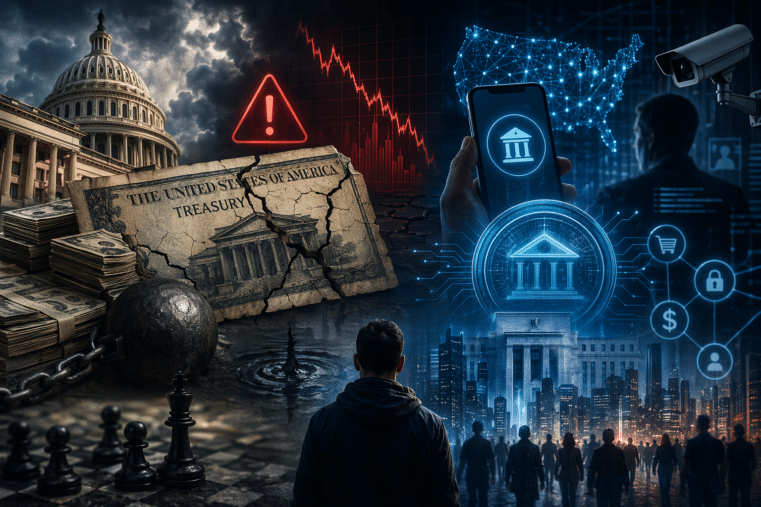
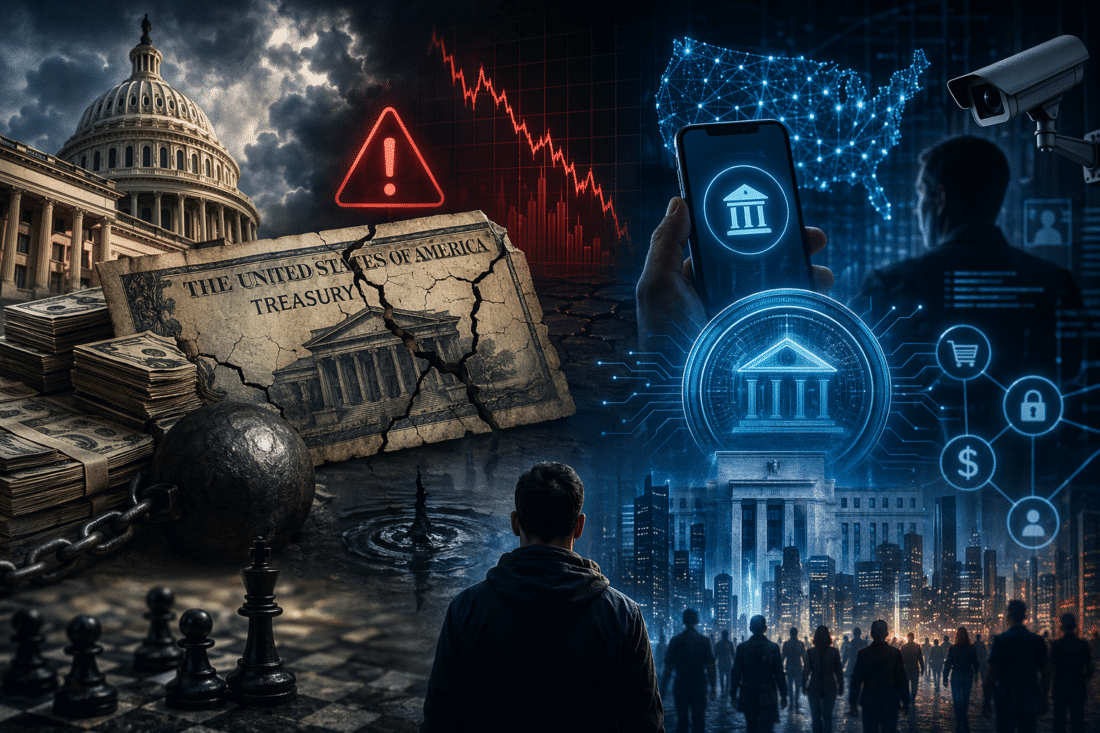
Bill Brocius has been warning about this exact convergence of crises for years. In his Digital Dollar Reset Guide, he breaks down how these global disruptions are being used to justify a transition toward centralized financial control, increased surveillance, and programmable restrictions on how money can be used.
This is not speculation. It is a roadmap.
If you want to understand what comes next—and more importantly, how to protect your financial autonomy.
Because once these systems are fully in place, opting out won’t be so simple.