The AI Backlash Has Begun — And It’s Not Slowing Down

A Warning Shot in the Dark
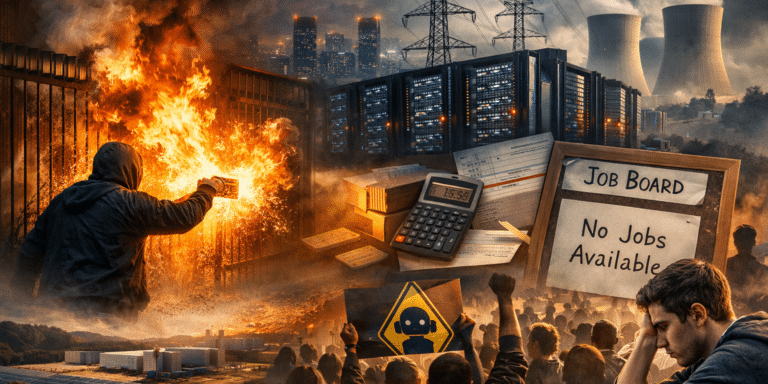
A Molotov cocktail hits a gate in the early morning hours. No one hurt. Fire put out fast. Suspect in custody.
But the message? That lingers.
This wasn’t just a crime story. It was a signal. A flashpoint. A moment that tells you the temperature in this country is rising—fast.

Not because of one man. Not because of one act.
Because pressure is building everywhere.
And pressure always finds a release.
The Reality: AI Isn’t Coming — It’s Already Here
This isn’t theory anymore. It’s not hype. It’s not some distant future.

It’s here.
- Data centers expanding at a historic pace
- Power grids straining under new demand
- Entire job categories shifting overnight
- Entry-level workers getting squeezed out
You can feel it in the job market.
You can see it in your utility bill.
You can hear it in the conversations people are having behind closed doors.
Something big is happening. And it’s happening fast.
The Hidden Cost Nobody Talks About
AI runs on power. Massive power.
And somebody pays for that.
Across the country, communities are starting to push back:
- Rising electricity prices
- Increased water usage
- Land being repurposed for infrastructure
- Minimal local benefit in return
People are asking a simple question:
Who benefits—and who pays?
That question doesn’t come from ideology. It comes from experience. From bills going up while control feels like it’s slipping away.
The Job Market Is Sending a Clear Message
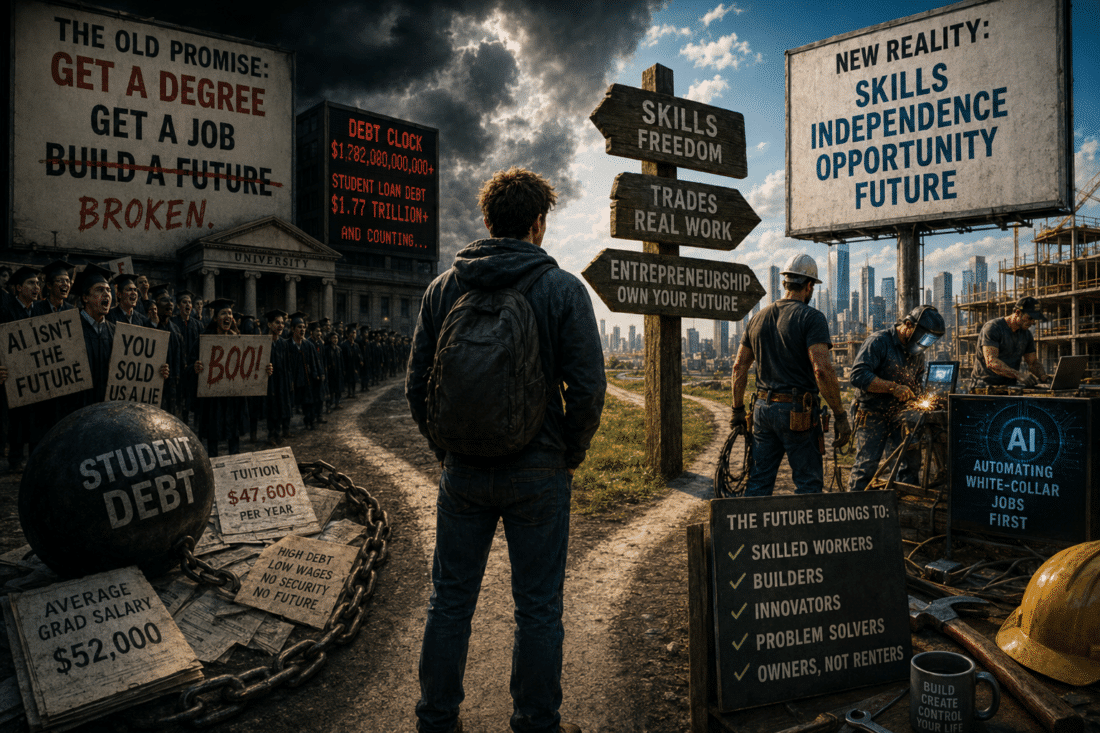
For years, the promise was simple:
Learn to code. Get ahead. Build a future.
Now?
Even top graduates are struggling to land entry-level roles. Not because they’re unqualified—but because the ground is shifting under their feet.
AI is making experienced workers faster. More efficient. More productive.
And that leaves fewer openings at the bottom.
Fewer chances to get started.
Fewer ways to climb the ladder.
More competition for fewer seats.
That creates something dangerous: uncertainty.
Tension Without Direction
Here’s the truth most people don’t want to say out loud:
The fear is real.
Not imagined. Not exaggerated. Real.
People are worried about:
- Losing economic stability
- Falling behind systems they don’t understand
- Watching power concentrate in fewer hands
And when fear builds without clear answers, it doesn’t disappear.
It spreads.
Sometimes into protests.
Sometimes into policy fights.
Sometimes into something darker.
That doesn’t justify anything. But it explains the mood.
Even the Industry Knows the Pressure Is Building
Major tech companies are now stepping in, promising to cover infrastructure costs instead of passing them onto everyday Americans.
That doesn’t happen unless something is wrong.
That doesn’t happen unless the pressure is already visible.
When billion-dollar institutions start adjusting course, it’s not charity.
It’s response.
This Isn’t About Taking Sides — It’s About Facing Reality
You don’t have to be for AI.
You don’t have to be against it.
But you do have to recognize what’s happening.
- The economy is shifting
- The workforce is changing
- Infrastructure is being rewritten in real time
And most people? They’re trying to keep up.
This isn’t a debate anymore. It’s a transition.
The Question That Matters Now
Not “Is this good?”
Not “Is this bad?”
The real question is:
Are you prepared?
Because the system is moving forward either way.
And history is clear about one thing—when systems change this fast, the people who prepare early don’t just survive…
They adapt.
Final Word: Stay Grounded. Stay Aware. Stay Ready.
There’s no need for panic. No need for blind optimism either.
Just clarity.
Understand the shift. Watch the signals. Pay attention to where power is moving—economic, technological, and financial.
Because in times like this, distraction is expensive.
And awareness? That’s leverage.
If you want to stay ahead of what’s coming—and understand the moves before they hit your wallet—then don’t wait on the sidelines.
Get the analysis others won’t connect for you. Stay informed. Stay prepared.