The Federal Reserve Just Quietly Moved America Closer To A Financial Surveillance System

Financial Surveillance Is Expanding Through Digital Payment Systems
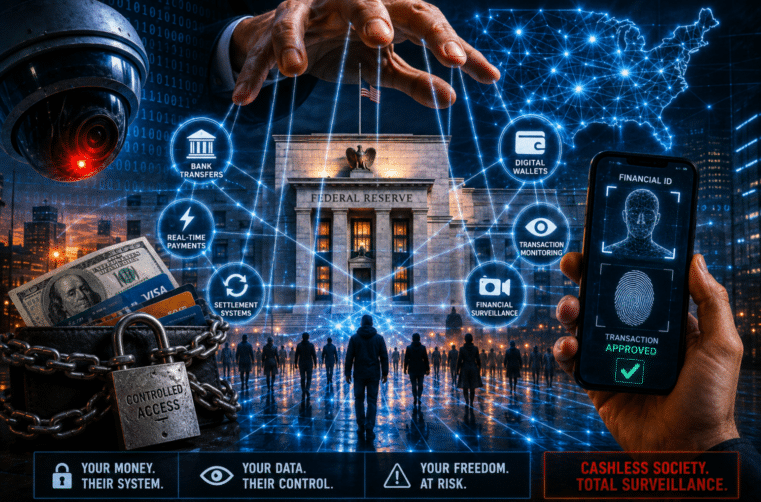
Buried underneath the noise of politics, inflation, AI hype, and market chaos, the Federal Reserve just made a move that could fundamentally reshape the future of the American financial system.
The Fed announced it is considering expanding limited access to its payment infrastructure to fintech firms and non-bank financial institutions.
Most people hear that and think:

“Okay…so what?”
But this isn’t a minor technical update.
This is about who gets access to the core plumbing of the U.S. financial system.
And once you understand what that means, the implications become enormous.
What Are The Federal Reserve’s Payment Rails?
The Federal Reserve’s payment rails are the backbone of how money moves through the American economy.
They handle:
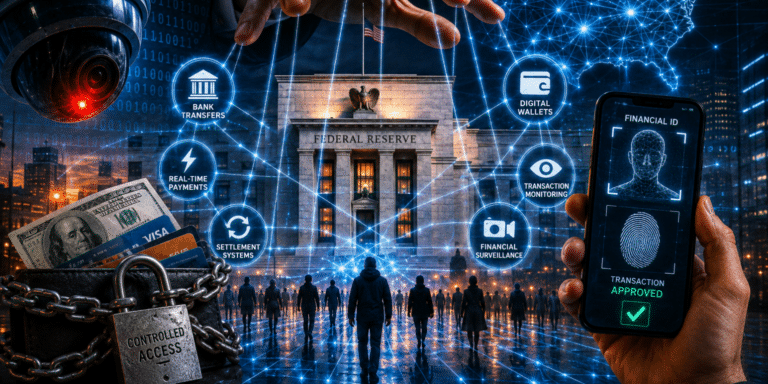
- Bank-to-bank transfers
- Settlement systems
- Interbank payments
- Clearing infrastructure
- Real-time financial transactions
In simple terms:
The Fed controls the pipes.
Every major financial institution ultimately depends on access to these systems to move money efficiently and securely.
Historically, direct access has largely been restricted to regulated banks.
Now the Fed is considering widening that access.
That changes the game completely.
Why This Matters More Than The Media Is Admitting
The mainstream media is presenting this story as:
- fintech modernization,
- competition reform,
- innovation,
- and payment efficiency.
That’s only part of the story.
The real issue is centralization.
Once digital payment systems become fully integrated into centralized real-time infrastructure, the ability to monitor, regulate, freeze, restrict, and control transactions increases dramatically.
And that’s not conspiracy theory.
That’s simply how digital systems work.
Cash allows anonymity.
Digital systems create data trails.
The more centralized the system becomes, the more visibility institutions gain into economic behavior.
That’s why privacy advocates, civil liberties groups, and financial autonomy supporters have been sounding alarms for years.
Because infrastructure always comes before enforcement.
America Is Quietly Moving Toward A Cashless Financial System
Most Americans still imagine financial freedom the old-fashioned way:
- cash in your wallet,
- local banks,
- private purchases,
- independent transactions,
- and personal control over your money.
But the modern financial system is moving rapidly in another direction.
The push toward:
- digital wallets,
- instant settlement,
- app-based payments,
- biometric verification,
- AI fraud detection,
- and centralized payment infrastructure
is accelerating faster than most people realize.
The justification is always the same:
- convenience,
- security,
- anti-fraud measures,
- modernization,
- anti-money-laundering compliance.
But every layer of convenience also creates another layer of visibility.
And once financial activity becomes fully digitized, financial privacy starts disappearing entirely.
The Fed’s Own Officials Are Warning About The Risks
One of the most revealing parts of this entire story came from inside the Federal Reserve itself.
Fed Governor Michael Barr openly warned about granting payment system access to firms the Fed does not directly supervise.
Specifically, he raised concerns about:
- anti-money-laundering enforcement,
- oversight authority,
- and financial system risks.
Read between the lines.
The concern isn’t simply whether transactions move faster.
The concern is:
Who gets monitored?
Who gets flagged?
Who enforces compliance?
Who controls access?
That’s the real issue.
Because once centralized digital infrastructure becomes the norm, the entities controlling the rails gain extraordinary influence over economic activity itself.
Real-Time Payments Mean Real-Time Monitoring
One of the biggest shifts happening underneath the surface is the transition toward real-time financial settlement systems.
Historically:
- banks operated with delays,
- settlements took time,
- cash preserved privacy,
- and decentralized financial friction limited oversight.
But real-time systems change the equation.
Instant settlement means:
- transactions become continuously trackable,
- behavioral data becomes easier to analyze,
- AI compliance systems become more powerful,
- and automated financial restrictions become technically feasible.
Again — this is not theoretical.
The technology already exists.
The infrastructure is already being built.
And once systems are normalized during periods of economic instability or security concerns, governments rarely surrender that visibility voluntarily.
History proves that repeatedly.
Financial Surveillance Always Expands During Crisis Periods
This is one of the oldest patterns in government history.
During periods of:
- terrorism fears,
- financial instability,
- war,
- pandemics,
- cyber threats,
- or economic crises,
governments expand surveillance powers “temporarily.”
Then the temporary measures become permanent infrastructure.
The public is told:
“If you have nothing to hide, you have nothing to fear.”
Until suddenly:
- accounts get frozen,
- transactions get flagged,
- purchases trigger scrutiny,
- dissent becomes risky,
- and financial access itself becomes conditional.
Most people don’t realize financial systems can become instruments of social control until the mechanisms are already operational.
That’s why infrastructure debates matter now — before the system becomes irreversible.
Big Tech, Fintech, And Centralized Finance Are Merging
Another overlooked aspect of this story is how rapidly the lines are blurring between:
- traditional banking,
- fintech firms,
- AI companies,
- payment processors,
- and centralized regulatory systems.
The future financial system isn’t likely to look like old-school banking.
It’s increasingly becoming:
- app-driven,
- data-driven,
- AI-monitored,
- identity-linked,
- and integrated across multiple platforms simultaneously.
That creates enormous efficiency.
But it also creates unprecedented centralized visibility into individual behavior.
And once financial identity becomes interconnected with digital identity, social scoring systems become technically possible whether governments admit it publicly or not.
That’s the direction many critics fear the world is slowly drifting toward.
The War On Cash Is Happening Incrementally
This is important:
Most people expect freedom to disappear dramatically.
In reality, systems change incrementally.
Cash doesn’t vanish overnight.
Instead:
- businesses stop accepting it,
- digital incentives increase,
- compliance regulations expand,
- banking access becomes conditional,
- transaction reporting grows,
- and convenience gradually replaces privacy.
Then one day people wake up realizing they no longer have meaningful anonymous economic activity left.
That’s how financial systems evolve.
Quietly.
Technocratically.
And always in the name of efficiency and security.
Why Americans Should Pay Attention Right Now
The Federal Reserve expanding payment rail access may sound technical and boring.
It isn’t.
This is about the architecture of the future economy.
Who controls the rails eventually influences:
- who gets access,
- who gets monitored,
- who gets restricted,
- and how much financial freedom remains in the system.
And when combined with:
- rising digital ID systems,
- AI surveillance,
- biometric verification,
- fintech consolidation,
- anti-money-laundering expansion,
- and global cashless trends,
the trajectory becomes impossible to ignore.
The danger isn’t one isolated policy.
The danger is the convergence of all these systems together.
That’s when centralized financial control becomes possible at a scale humanity has never experienced before.
Final Thoughts
The financial system is changing faster than most Americans understand.
Not through one giant announcement.
Not through one dramatic law.
But through hundreds of small infrastructure changes happening quietly underneath the surface.
That’s how modern systems are built.
Piece by piece.
Integration by integration.
Compliance layer by compliance layer.
And by the time the average person realizes how much financial privacy has disappeared, the infrastructure may already be too embedded to reverse easily.
The Federal Reserve’s latest move isn’t the end of the story.
It’s another glimpse at where the system appears to be heading.
And people paying attention now may have a much better chance of preparing for what comes next.
Prepare Before The Financial System Changes Permanently
If you want to understand how these systems connect to:
- FedNow,
- central bank digital currencies (CBDCs),
- programmable money,
- financial surveillance,
- transaction monitoring,
- and the accelerating push toward a cashless society,
you need to start researching now — before these systems become normalized.
The Digital Dollar Reset Guide by Bill Brocius breaks down the risks surrounding:
- CBDC infrastructure,
- digital financial control,
- loss of monetary privacy,
- and the future of centralized payment systems.
This isn’t fear porn. It’s preparedness intelligence for people paying attention to where the financial system is heading.