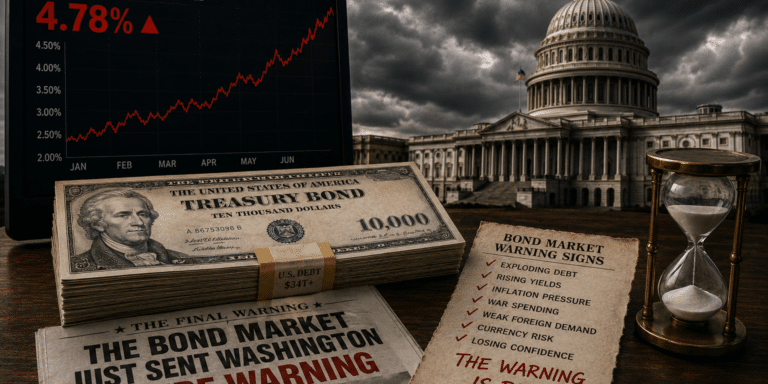
The Bond Market Just Sent Washington A Dire Warning

Why The US Debt Crisis Is Becoming Impossible To Ignore
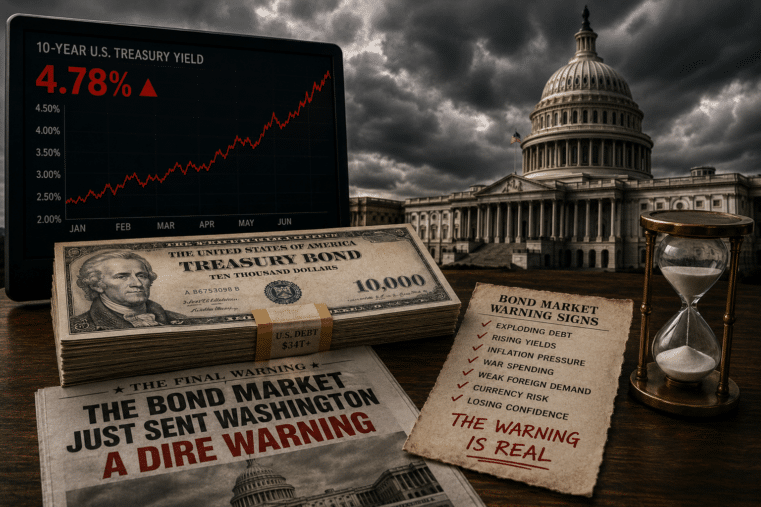
Most Americans never think about the bond market. That’s by design. In reality, the growing US debt crisis is deeply tied to what happens inside the Treasury market, even though most people never hear about it on mainstream financial news.
The financial media would rather keep retail investors hypnotized by meme stocks, AI bubbles, and daily market dopamine hits than explain what actually controls the economy underneath the hood.
But the bond market matters more than the stock market. Period.

The 10-year Treasury yield influences:
- Mortgage rates
- Credit card interest
- Auto loans
- Commercial real estate
- Corporate borrowing
- Government financing
- Equity valuations
- Pension funds
- Banking system stability
When Treasury yields rise too quickly, the entire financial system starts repricing at once.
And that’s exactly what’s happening now.
Washington can spin economic narratives all day long, but bond traders deal in math — not political slogans. The math is getting ugly.
America is now carrying debt levels that only work under artificially suppressed interest rates. The moment yields rise meaningfully, the illusion starts cracking.
That’s the part legacy media keeps avoiding.
America Entered This Crisis Financially Broken
This isn’t 1945.
Back then, the United States had:
- Manufacturing dominance
- Explosive population growth
- Low debt levels
- Cheap energy
- Rising productivity
- A creditor nation balance sheet
Today, America has:
- Trillion-dollar annual deficits
- Crippling debt service costs
- Hollowed-out industry
- Slowing economic growth
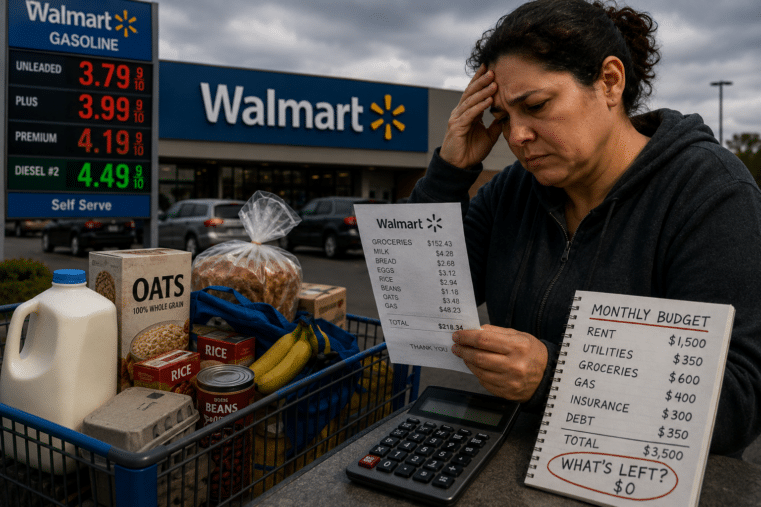
- A heavily leveraged consumer
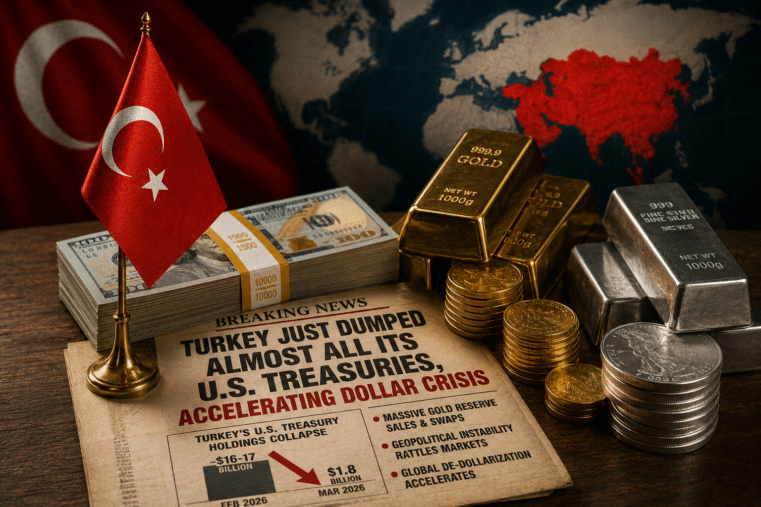
- Weak foreign demand for Treasuries
- A financial system addicted to cheap money
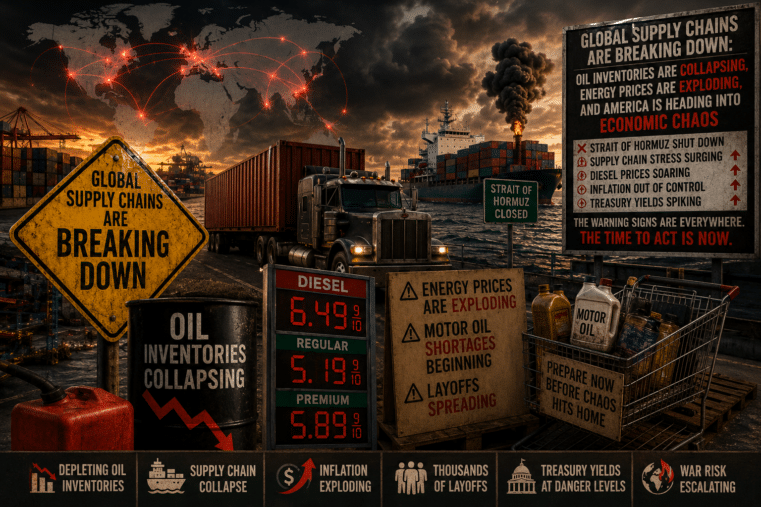
And now policymakers are piling geopolitical instability and military spending on top of an already unstable debt structure.
That changes everything.
The federal government is already spending staggering amounts just to pay interest on existing debt. Every percentage point increase in yields compounds the problem.
The result?
Washington is rapidly approaching a point where the debt itself becomes unmanageable without intervention.
That’s when financial systems historically become dangerous.
The Real Inflation Problem Isn’t Oil — It’s Debt
Most people still think inflation is caused by greedy corporations or temporary supply chain disruptions.
That’s surface-level analysis.
The deeper problem is systemic debt creation.
Wars, deficits, bailouts, and stimulus programs are financed through borrowing. Borrowing at this scale eventually requires monetary intervention from central banks because private markets cannot absorb unlimited debt forever without demanding higher yields.
That creates a vicious cycle:
- Government spending explodes
- Debt issuance accelerates
- Bond markets demand higher yields
- Financing costs surge
- Central banks intervene
- Currency purchasing power deteriorates
This is how fiat systems historically weaken.
Not overnight.
Slowly at first.
Then suddenly.
And the bond market appears to be realizing that reality faster than politicians are willing to admit publicly.
How Rising Treasury Yields Are Worsening The US Debt Crisis
For over a decade, markets operated under one assumption:
Cheap money forever.
That assumption infected everything:
- Tech valuations
- Private equity
- Venture capital
- Real estate
- Corporate debt markets
- Government spending
- Consumer behavior
Near-zero interest rates became the oxygen for the “everything bubble.”
Now that oxygen is disappearing.
As yields rise:
- Housing affordability collapses
- Corporate refinancing gets harder
- Banks face more stress
- Commercial real estate deteriorates
- Consumer debt burdens explode
- Asset valuations compress
- Speculative leverage unwinds
That’s when liquidity crises begin emerging in places most people never see coming.
The danger isn’t one isolated collapse.
The danger is contagion.
Financial systems break when too many leveraged structures fail simultaneously.
And the current system is leveraged everywhere.
Wall Street Always Gets Rescued First
If history tells us anything, it’s this:
The financial elite rarely absorb the full consequences of the disasters they create.
Ordinary Americans do.
Every cycle follows the same script:
- Inflation destroys purchasing power
- Asset bubbles implode
- The middle class gets squeezed
- Policymakers intervene
- Markets get rescued
- Currency value erodes further
The public gets hit twice:
- Through inflation
- Through the monetary response to inflation
Meanwhile, institutional players receive liquidity backstops, emergency facilities, accounting gimmicks, and monetary support disguised as “financial stabilization.”
Watch the language carefully when the next intervention arrives.
They’ll call it:
- Market stabilization
- Liquidity support
- Emergency coordination
- Financial resilience
- Temporary intervention
But underneath the branding, it all means the same thing:
More system support through monetary expansion.
Because the alternative is allowing the debt structure to collapse naturally — and politically, that’s almost impossible.
The Bond Market May Force Washington Into Retreat
One of the most overlooked realities in geopolitics is this:
Governments can survive embarrassment.
They cannot survive collapsing debt markets.
The bond market has historically forced political pivots long before voters ever understood what was happening.
That’s because sovereign debt markets ultimately determine how much power governments actually have.
If borrowing costs spiral higher:
- Deficits become harder to finance
- Military operations become harder to sustain
- Financial institutions weaken
- Recession risks accelerate
- Monetary credibility deteriorates
At some point, preserving financial stability becomes the priority over geopolitical ambition.
That’s where things appear to be heading now.
Not because leaders suddenly become responsible — but because debt math eventually corners everyone.
Precious Metals Are Starting To Matter Again
Whenever confidence in fiat systems weakens, capital starts searching for protection.
Historically, that’s where gold and silver re-enter the conversation.
Not because metals are magical.
Because they sit outside central bank liabilities.
When investors believe governments will eventually prioritize debt monetization over currency stability, hard assets begin attracting attention fast.
That’s especially true during periods of:
- Persistent inflation
- Yield suppression
- Monetary intervention
- Currency debasement fears
- Sovereign debt stress
And right now, every one of those warning signs is flashing simultaneously.
The Bigger Problem Nobody Wants To Admit
The real issue isn’t one war.
It isn’t one administration.
It isn’t one political party.
The problem is that the modern financial system became dependent on permanently cheap debt and constant liquidity injections to survive.
That model is now colliding with inflation realities and unsustainable sovereign debt levels.
And once markets lose confidence in the ability to contain those pressures naturally, policymakers only have a handful of options left:
- Financial repression
- Yield suppression
- Currency dilution
- Monetary intervention
- Increased surveillance over financial activity
History shows governments almost always choose preserving the system over preserving purchasing power.
That’s why people should be paying far closer attention to the bond market than the latest stock market rally.
Because beneath the headlines, the foundation itself is beginning to shake.
Final Thoughts
The average American has been conditioned to believe economic crises arrive suddenly.
They don’t.
They build quietly underneath the surface while the media focuses on distractions.
That’s what makes the current Treasury market situation so important.
The bond market is no longer signaling confidence.
It’s signaling stress.
And once sovereign debt markets begin questioning the long-term sustainability of a system built entirely on borrowing, policymakers lose room to maneuver very quickly.
That’s when extraordinary measures start becoming politically “necessary.”
The frightening part is that most people won’t recognize what’s happening until after the rules of the game have already changed.
Protect Yourself Before The Financial System Changes Overnight
If you think the instability in the bond market ends with inflation and higher interest rates, you’re missing the bigger picture.
Financial crises are often used to justify massive structural changes to the monetary system — including increased financial surveillance, centralized payment infrastructure, programmable money systems, and the accelerated push toward a cashless society.
That’s why more Americans are waking up to the risks surrounding:
- FedNow
- Central bank digital currencies (CBDCs)
- Government financial surveillance
- Digital transaction monitoring
- Programmable money controls
- The erosion of financial autonomy
If you want to understand where this system could be heading before it’s too late, download the Digital Dollar Reset Guide by Bill Brocius.
This isn’t theory anymore. It’s preparedness intelligence for people who recognize the warning signs early.