FED TRAPPED: INFLATION SURGES, JOBS WEAKEN, AND THE U.S. ECONOMY HITS A BREAKING POINT

The Fed Is Out of Room—and Out of Easy Answers
Strip away the polished language, and the reality is simple:
Inflation is still running above target. At the same time, the labor market is losing momentum. Now add a global energy shock into the mix, and you have a central bank facing conflicting signals with no clean solution.

This is the kind of setup that historically precedes policy mistakes.
And policy mistakes at this level don’t stay contained—they ripple through the entire economy.
Inflation Isn’t Done—Not Even Close
Despite years of aggressive rate hikes, inflation is proving stubborn.
Recent data shows core inflation re-accelerating, not cooling the way policymakers hoped. That alone would normally justify keeping interest rates elevated—or even tightening further.
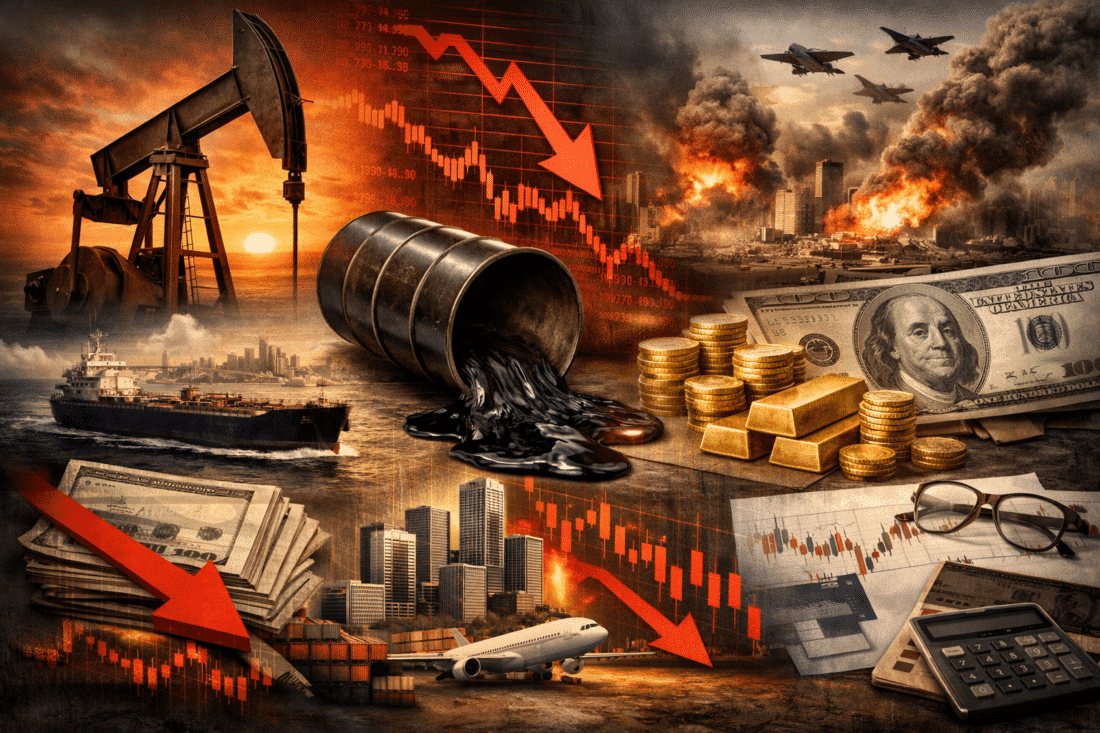
Now factor in rising energy costs tied to global instability:
- Oil shocks feed directly into transportation and production costs
- Those costs get passed on to consumers
- Inflation becomes embedded, not temporary
This is how inflation becomes structural, not cyclical.
And once that happens, it’s far harder to control.
The Labor Market Is Quietly Cracking
At the same time, the labor market is no longer the pillar of strength it once appeared to be.
Beneath the surface:
- Hiring has slowed dramatically
- Job growth is inconsistent
- Signs of job shedding are emerging
What we’re seeing is what economists call a “low-hire, low-fire” environment—but that balance is fragile.
It doesn’t take much to tip it into outright job losses.
And higher energy costs combined with tight financial conditions could be exactly that trigger.
This Is the Fed’s Worst-Case Scenario
Here’s the problem the Fed can’t solve:
- If they cut rates, they risk reigniting inflation
- If they hold or raise rates, they risk pushing the economy into contraction
This is the definition of being boxed in.
It’s not just a “tricky position”—it’s a policy trap.
Historically, this kind of environment leads to one outcome:
The Fed reacts too late to one side of the problem and makes the other worse.
The Energy Shock Changes Everything
Before the latest global tensions, the Fed already had a difficult path.
Now it’s exponentially harder.
Energy shocks act like a tax on the entire economy:
- Businesses face higher operating costs
- Consumers face higher living costs
- Economic activity slows
But unlike demand-driven inflation, this kind of shock doesn’t respond well to interest rate policy.
Which means the Fed is trying to fight a problem it doesn’t fully control.
That’s a dangerous place for any central bank to be.
Why This Moment Is More Serious Than It Looks
Most people hear “the Fed might hold rates steady” and assume stability.
That’s not what’s happening here.
Holding rates in this environment isn’t a sign of confidence—it’s a sign of uncertainty and constraint.
The Fed is effectively waiting:
- Waiting to see if inflation worsens
- Waiting to see if the labor market breaks
- Waiting to see how global shocks play out
But waiting comes at a cost.
Because while they hesitate, pressure builds across the system:
- Households get squeezed
- Businesses pull back
- Markets become more volatile
This is how slow-moving instability turns into sudden economic shifts.
What This Means for Your Financial Reality
This isn’t about abstract policy debates.
It translates directly into your daily life:
- Persistent inflation erodes purchasing power
- Economic slowdown threatens income stability
- Policy uncertainty creates market volatility
And most importantly, it signals something bigger:
The system is becoming harder to manage, even for those in charge of it.
When central planners lose clarity, individuals need to gain it.
Final Warning: When the System Hesitates, You Shouldn’t
Moments like this don’t come with clear headlines or official warnings.
They show up as contradictions:
- Inflation that won’t go away
- Jobs that quietly weaken
- Policies that don’t quite make sense
That’s exactly where we are now.
And historically, these are the moments that precede major financial shifts—when systems are most vulnerable and the public is least prepared.
Bill Brocius has been tracking this convergence for years. In his Digital Dollar Reset Guide, he outlines how economic instability, inflation pressure, and central bank constraints are being used to justify a transition toward centralized financial systems, increased surveillance, and programmable control over money itself.
If you’re starting to see the pattern, don’t ignore it.
Because once the next phase begins, reacting will be too late.