Populism Isn’t the Problem—It’s a Symptom of Institutional Collapse

Yes, the Right Is Fragmented—And for Good Reason
The article opens with a fair observation: the Right is in disarray. The populist revolution that began with Trump has evolved into something far less centralized and far more combustible. Libertarians, nationalists, traditional conservatives, and financial dissidents are no longer loosely allied under one “big tent”—they’re breaking off, building silos, and refusing to compromise.
That’s not just a political problem. It’s a structural rupture, and SchiffGold is right to note it. But they fail to ask why this fracture is happening now.
Spoiler: It’s not just social media algorithms or personality clashes. It’s economic collapse, institutional rot, and widespread betrayal from the very organizations we were told to trust.

The Internet Has Amplified Fragmentation
Another solid point from SchiffGold: social media is polarizing the Right—and not in a healthy way. Algorithms feed people more of what they already believe, giving each faction the illusion of majority support and moral clarity. It breeds absolutism, not strategy.
Fair enough. But let’s be honest—the old gatekeepers earned their irrelevance. Conservative media, legacy think tanks, and D.C. institutions spent decades selling free trade, forever wars, and globalism wrapped in red, white, and blue. The internet didn’t break the Right. It simply revealed how broken it already was.
You can’t blame people for tuning out institutions when those institutions actively ignored the warning signs of banking instability, currency debasement, and elite consolidation.
Where the Article Misses the Mark: Romanticizing the Old Guard
Let’s talk about the nostalgia baked into this article. SchiffGold longs for the days of Reagan-style unity—when libertarians, hawks, and moral traditionalists rallied around shared principles. But here’s the problem: those principles were either co-opted or hollowed out by the very system they were supposed to challenge.
- Free trade? That gave us industrial collapse and dependence on China.
- Strong institutions? Those same institutions stood silent as the Fed printed trillions and bankrupted savers.
- Moral clarity? The culture wars are a distraction while your financial freedom is being digitized, taxed, and monitored into nonexistence.
The idea that we can return to some golden age of conservative unity is not just naïve—it’s dangerous. The “institutions” being praised in this article are the same ones that paved the way to our current economic death spiral.
Populism Is Not the Enemy—it’s the Alarm Bell
SchiffGold paints populism as a kind of ideological cancer—rooted in the whims of the people, lacking in structure, and fundamentally destabilizing. But that’s a gross oversimplification.
Yes, populism can be messy. It can be short-sighted. But it’s not irrational. It’s a reaction to betrayal.
- When the Fed bails out banks and leaves you holding the bag, that’s not a failure of "populist thinking"—that’s a broken system.
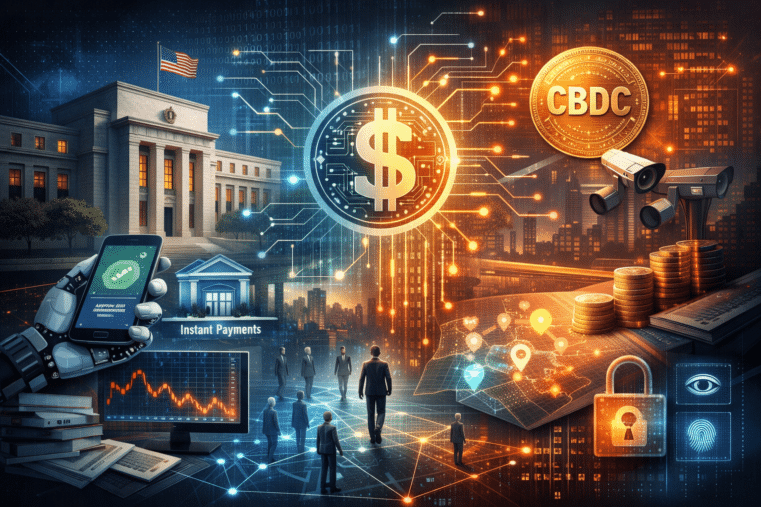
- When elites float CBDCs and "FedNow" systems that can freeze your account with one keystroke, you don’t need to be an economist to know something’s wrong.
- When both parties sign off on trillion-dollar deficits, open-ended wars, and Wall Street protectionism, populism isn’t a bug—it’s the last functioning immune response.
Populism is what happens when institutions abandon the people.
It’s not the threat. It’s the symptom of collapse.
What SchiffGold Completely Misses: The Monetary Breakdown
Here's the elephant in the room: our economic and monetary system is imploding.
This article talks about political division as if it’s an abstract intellectual problem. It’s not. It’s about resources, security, and survival.
- The dollar has lost over 95% of its purchasing power since the Fed was created in 1913.
- We’re witnessing a slow-motion banking crisis in real time—rising insolvency risk, tightening liquidity, and crumbling public trust.
- The solution being floated by elites? A Central Bank Digital Currency (CBDC) that can monitor and restrict your financial life in real time.
And yet the article doesn’t mention a single one of these factors. Not once.
That omission isn’t just academic—it’s fatal. Because you can’t understand the division on the Right without understanding the destruction of economic sovereignty at its root.
Institutions Aren’t Sacred—They’re Tools
One of the article’s biggest fallacies is the idea that institutions must be preserved for their own sake. That’s the wrong framework.
Institutions are only worth defending if they serve the people. When they become tools of control, surveillance, or corruption, they deserve to be dismantled and replaced—not revered.
The Fed is an institution.
So is the IMF.
So is the Department of the Treasury.
And they’ve all played a role in building a financial architecture that’s:
- Unsustainable,
- Unaccountable, and
- Structurally dangerous to the average citizen.
This is why I’ll take imperfect populism over polished institutionalism any day of the week—because one may break the system, but the other is already suffocating you inside it.
Final Thoughts: Let the Institutions Collapse If They Must
The divide on the Right is real. Populism is volatile. Unity won’t come easy. But trying to “restore” Reagan-era coalitions won’t solve anything if the foundations are already compromised.
Instead of idolizing the past, we need to build new structures—ones rooted in sovereignty, decentralization, and personal responsibility.
So yes, the Right is divided. But the answer isn’t a return to broken institutions.
The answer is to build something stronger, before the system we were taught to trust collapses under its own weight.
📘 Take Action Now
This isn’t theory—it’s your financial future at stake.
✅ Download my free guide, “7 Steps to Protect Your Account from Bank Failure”
📕 Read “The End of Banking As You Know It” for a full breakdown of the trap we’re in—and the exit ramp.
🔒 Join my Inner Circle for $19.95/month and get access to exclusive, actionable financial intelligence.
Populism isn’t the threat.
CBDCs, collapsing banks, and centralized power are.
Know the difference—and act accordingly.