The Quiet Tax Revolt: How Punitive State Taxes Are Driving Wealth, Power, and Sanity Out the Door

The Math Politicians Hope You Never Do
Let’s strip this down to something brutally simple: incentives.
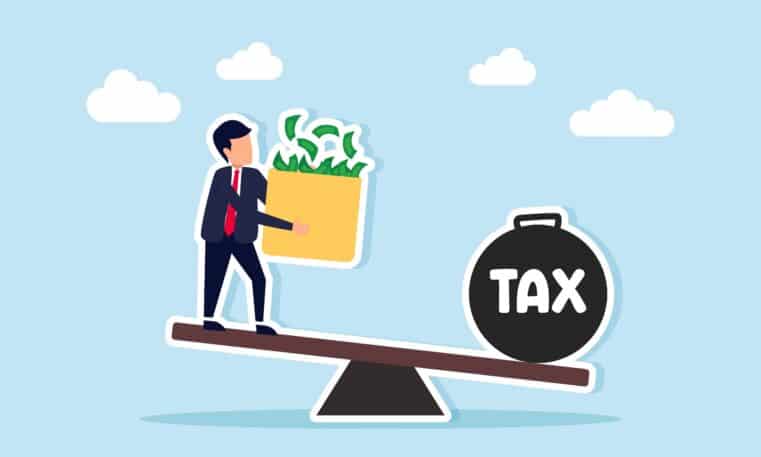
A top-tier taxpayer in New York isn’t just paying “a bit more.” Stack federal, state, city, and hidden taxes together, and you’re staring at marginal rates pushing 60%. That means for every additional dollar earned, the government claims the majority share.
Now flip the scenario.

Move to a no-income-tax state—Texas, Florida, Tennessee—and suddenly that same individual keeps closer to 57% of each additional dollar instead of 40%.
That’s not a marginal improvement. That’s a massive, structural pay raise—on the order of 30–40%.
And here’s the part that should make policymakers uncomfortable:
This isn’t a loophole. It’s legal, rational, and increasingly common behavior.
The Austrian Reality: Humans Respond to Incentives, Not Moral Lectures
From an Austrian economics perspective, none of this is surprising.
Ludwig von Mises made it clear: individuals act purposefully to improve their conditions. When governments impose punitive costs on productivity, people don’t sit still and absorb the hit—they adapt.
They relocate.
They restructure income.
They shift capital.
This isn’t greed. It’s economic law.
The political class loves to frame this as a moral issue—“pay your fair share.” But Austrian economics doesn’t deal in moral abstractions. It deals in human action.
And human action says:
If you penalize productivity, you get less of it—or you lose it entirely.
The Illusion of Control
High-tax jurisdictions operate under a dangerous assumption: that wealth is static.
It’s not.
Capital is fluid. High earners are mobile. Businesses are adaptable. And in a digital, interconnected world, relocation is easier than ever.
This creates a fundamental problem for centralized tax policy—what Friedrich Hayek called the knowledge problem.
Politicians assume they can dial tax rates up without triggering behavioral change. But they don’t possess the localized, individual-level knowledge of millions of economic actors making decisions in real time.
So what happens?
They overshoot.
And when they do, the response isn’t theoretical—it’s immediate and measurable:
- Migration outflows increase
- Tax bases erode
- Revenue projections collapse
- Remaining residents shoulder a heavier burden
When “Tax the Rich” Becomes “Chase Them Out”
Let’s be clear about something most headlines ignore:
The top earners fund a disproportionate share of state revenue.
When they leave, the system doesn’t rebalance—it destabilizes.
This is the paradox at the heart of aggressive tax policy:
- Raise rates to increase revenue
- Trigger an exodus
- Shrink the tax base
- End up with less revenue than before
It’s not just bad policy. It’s self-defeating policy.
California and New York aren’t isolated cases—they’re leading indicators.
What you’re witnessing is a slow-motion demonstration of the Laffer Curve in the real world, not as theory, but as lived experience.
The Global Pattern: This Has Happened Before
This isn’t uniquely American.
History is littered with examples:
- The UK’s 90% tax era driving talent abroad
- France’s wealth taxes pushing millionaires into exile
- Switzerland’s internal tax competition concentrating wealth in low-tax cantons
Every time, the same pattern emerges:
- Governments overreach
- Productive individuals exit
- Revenue suffers
- Policy eventually retreats—too late to reverse the damage
The lesson is consistent and ignored at great cost:
You cannot coerce prosperity into existence.
The Dangerous Feedback Loop
Here’s where things get even more unstable.
When high earners leave, governments don’t typically respond by lowering taxes. Instead, they double down.
Why?
Because politically, it’s easier to target “those who remain” than admit policy failure.
So the cycle continues:
- Higher taxes
- More departures
- Greater fiscal pressure
- Even higher taxes
This is how once-thriving economic centers begin to hollow out from within.
Not overnight—but steadily, predictably, and often irreversibly.
What This Means for You (Even If You’re Not Rich)
It’s easy to dismiss this as a “rich people problem.”
That’s a mistake.
When capital and high earners leave:
- Job creation slows
- Investment declines
- Public services degrade
- Middle-income taxpayers absorb more of the burden
In other words, the consequences cascade downward.
The erosion of a tax base doesn’t stay contained at the top—it spreads.
The Real Takeaway: You Can’t Outsmart Incentives
At its core, this entire situation boils down to a simple truth:
Policy doesn’t operate in a vacuum.
Every tax, regulation, and mandate interacts with human behavior. Ignore that, and you don’t get compliance—you get avoidance, adaptation, and ultimately, exit.
Austrian economics doesn’t predict outcomes with crystal-ball precision—but it does identify immutable principles.
And one of those principles is now playing out in plain sight:
When the cost of staying exceeds the cost of leaving, people leave.
No amount of political rhetoric can override that.
Final Word: Pay Attention to the Direction, Not the Headlines
What we’re seeing isn’t just a debate about tax rates.
It’s a signal.
A signal that systems built on extraction rather than productivity are reaching their limits.
A signal that mobility—of both people and capital—is reshaping the balance of power.
And most importantly:
A signal that those who understand incentives early will be in a far better position than those who ignore them.
Take Action Before the Rules Change Again
If you’re starting to see the pattern—centralized control tightening, financial rules shifting, and policymakers pushing further than they should—then you’re already ahead of most people.
But awareness alone isn’t enough.
The financial system is evolving fast, and the same forces driving tax flight today are tied to a much larger transformation in how money, transactions, and personal autonomy are handled.
If you want a clear, no-nonsense breakdown of what’s coming—and how to position yourself before it’s too late—you need to get your hands on this:
Download the Digital Dollar Reset Guide by Bill Brocius
This isn’t optional reading. It’s critical intelligence for anyone who understands that financial freedom isn’t guaranteed—it’s defended.
Act accordingly.