The Strait That Could Break the Dollar: Why the Iran Crisis Is Testing the Global Financial Order

The Strait That Powers the World
Every empire has its pressure points.
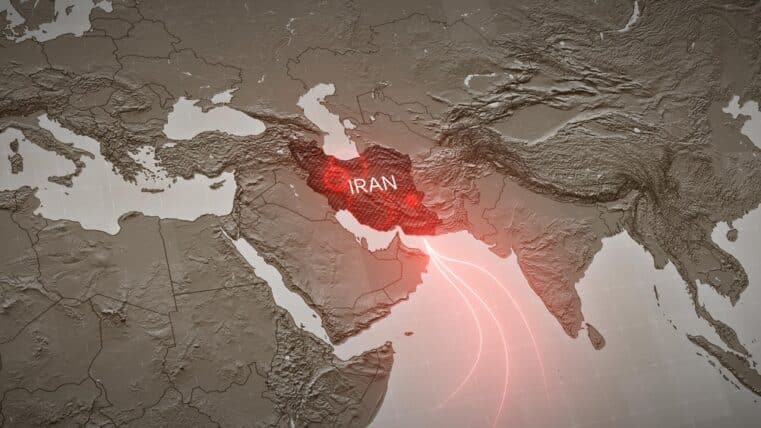
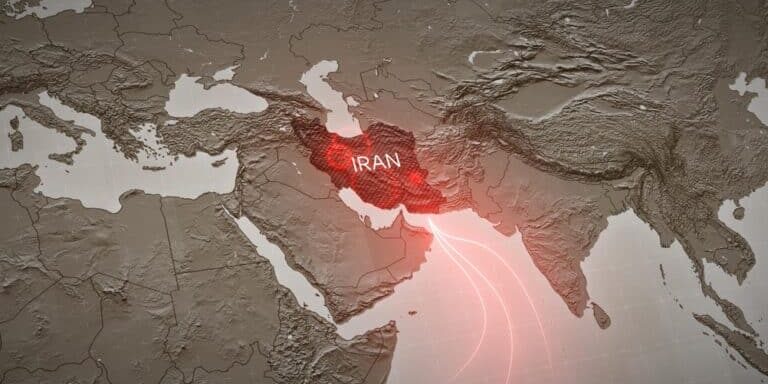
For the modern financial order, one of the most important sits between Iran and Oman—a narrow stretch of water called the Strait of Hormuz.
Roughly one-fifth of the world’s oil supply flows through this corridor. Tankers loaded with crude from Saudi Arabia, Iraq, the UAE, and Kuwait pass through this chokepoint before fueling economies across Europe, Asia, and the Americas.

Now imagine that artery suddenly tightening.
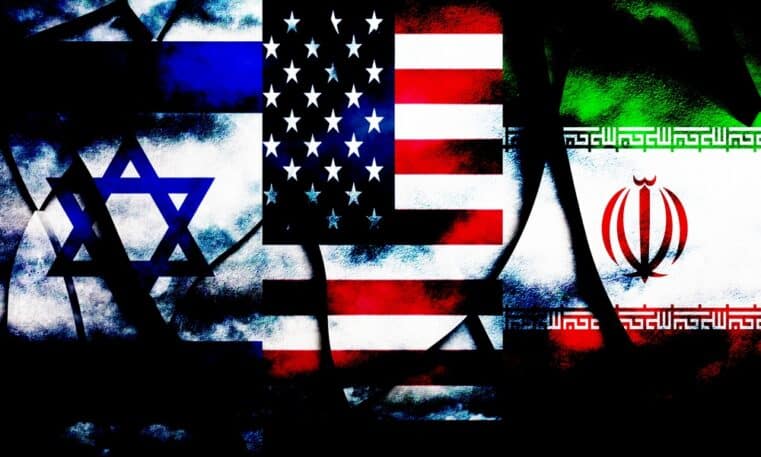
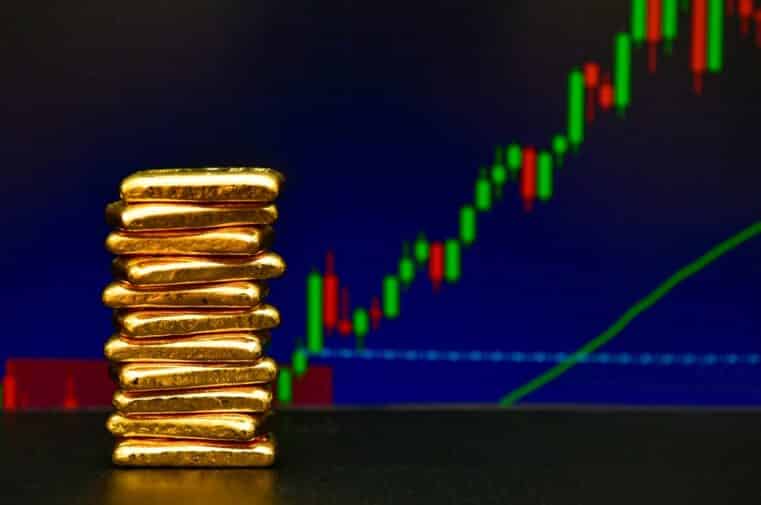
That’s exactly what happened as tensions erupted following a U.S.–Israeli offensive against Iran. The strait effectively closed, tanker traffic stalled, and oil markets reacted instantly. Crude prices surged to their highest levels in nearly two years, while gasoline and diesel prices followed close behind.
On the surface, this looks like a geopolitical crisis.
But if you step back and look at the bigger picture, something far more significant is unfolding.
This is a stress test for the entire global financial system.
Oil: The Hidden Backbone of the Dollar System
To understand why this matters, you have to understand the relationship between oil and the U.S. dollar.
For decades, global oil has largely been priced and settled in dollars—a system often referred to as the petrodollar.
Here’s how it works.
- Countries need oil to power their economies.
- Oil is traded primarily in U.S. dollars.
- Therefore, countries must hold dollars to buy energy.
That simple loop has quietly reinforced the dollar’s role as the world’s dominant reserve currency for nearly half a century.
But what happens when the energy markets themselves become unstable?
What happens when the shipping routes, production hubs, and supply chains behind that system begin to fracture?
That’s when the cracks start to show.
And right now, those cracks are widening.
BRICS and the Energy Chessboard
The BRICS bloc—led by Brazil, Russia, India, China, and South Africa—has spent years discussing ways to reduce dependence on the dollar.
Energy trade is central to that strategy.
Many BRICS members are either major oil producers or massive energy consumers. If these countries begin settling oil trades outside the dollar system, the implications could ripple across global finance.
The current Iran crisis puts this strategy to the test.
Several major oil exporters are now facing disruptions:
- Saudi Arabia has reportedly reduced output as storage capacity fills.
- Infrastructure attacks and drone strikes have disrupted key facilities.
- Tanker traffic through Hormuz has become increasingly risky.
Meanwhile, China—one of the world’s largest energy buyers—has already taken precautionary steps by suspending certain fuel exports to protect domestic supply.
These moves reveal a simple reality:
When energy markets destabilize, currency systems come under pressure too.
A System Already Under Strain
Even before this crisis, the global financial system was facing mounting tensions.
Sanctions on Russian oil forced many countries to experiment with alternative payment mechanisms. Energy shipments were increasingly settled in yuan, rupees, or other local currencies rather than dollars.
Meanwhile, initiatives like BRICS Pay aim to create payment rails that bypass Western financial networks such as SWIFT.
If successful, those systems could dramatically reduce Washington’s ability to enforce sanctions or control global trade flows.
Now add an energy crisis to the equation.
Suddenly, the geopolitical chessboard becomes much more complicated.
The Energy Shock That Changes Everything
Markets hate uncertainty.
And few things generate uncertainty faster than a potential disruption to global oil supply.
Analysts have already warned that if tanker traffic through the Strait of Hormuz were halted for even a few weeks, oil prices could spike dramatically. Risk premiums alone have already pushed prices higher.
But the economic consequences extend far beyond gasoline costs.
Higher energy prices ripple through the entire economy:
- Transportation costs rise
- Manufacturing expenses increase
- Food prices climb
- Inflation accelerates
For central banks already struggling with inflation, this creates an impossible dilemma.
Raise rates and risk recession?
Or tolerate higher inflation?
Either way, the system becomes more fragile.
The Real Battle: Control of the Financial Rails
While most headlines focus on missiles and drones, the deeper battle is about something far more powerful:
Control of the global financial rails.
Who controls the payment systems that move trillions of dollars every day?
Who decides which currencies dominate global trade?
And perhaps most importantly—who has the ability to freeze or restrict financial activity?
These questions are increasingly central to geopolitics.
Western institutions have long dominated global finance. But new systems—digital payment networks, alternative clearing systems, and regional trading blocs—are emerging.
Some promise efficiency and speed.
Others promise independence from traditional financial power centers.
But there’s another side to this story that few people are talking about.
The Rise of Programmable Money
As global finance evolves, many governments are exploring new forms of digital currency.
Central bank digital currencies (CBDCs), stablecoins, and other digital payment systems promise faster transactions and greater transparency.
But they also introduce something new into the financial system:
Programmability.
Imagine money that can be tracked, restricted, or even automatically controlled.
In the wrong hands, such systems could transform finance from a tool of economic exchange into a tool of economic surveillance and control.
That’s why events like the Iran crisis matter far beyond the energy markets.
They accelerate the restructuring of the global monetary system.
A Warning Hidden in the Chaos
History teaches us that major financial transformations rarely happen during calm periods.
They happen during crises.
Wars reshape alliances.
Energy shocks reshape markets.
Financial instability reshapes monetary systems.
The current turmoil in the Middle East may ultimately prove to be more than a regional conflict. It could become another turning point in the long transition away from the post–World War II financial order.
The question is not whether the system will change.
The question is who will control the new one.
The Most Important Step You Can Take Right Now
Moments like this remind us how quickly global systems can shift.
Energy disruptions, geopolitical conflict, and financial experimentation are all colliding at the same time—and the results are unpredictable.
If you want to better understand the forces reshaping the global monetary system—and what they could mean for your financial future—there’s one resource I strongly recommend.
Bill Brocius has put together a powerful guide explaining the risks associated with the coming digital financial transition and the steps individuals can take to prepare.
You can download the Digital Dollar Reset Guide Here
The global financial system is evolving faster than most people realize.
Understanding the changes now may prove invaluable in the years ahead