America’s Economic Engine Is Sputtering — And War Could Push It Into a Full Stall

The Economy Was Already Slowing — Now the Numbers Prove It
For months, the public messaging around the economy was that things were “holding up.”
But the hard data is starting to tell a different story.
U.S. GDP growth has slowed to just 0.7%, a steep drop from the previously reported 1.4% estimate. Just one quarter earlier, the economy was expanding at a much stronger 4.4% pace.

That kind of deceleration isn’t normal noise in the data.
It’s the economic equivalent of a warning light flashing on the dashboard.
When growth drops that quickly, it usually means the underlying engines driving the economy are losing power at the same time.
And that’s exactly what we’re seeing.
Multiple Parts of the Economy Are Losing Steam
This isn’t a single-sector slowdown.
Several pieces of the economy weakened at once.
The slowdown was driven by:
- Weaker exports
- Slower consumer spending
- Reduced government spending
- The economic drag from the government shutdown
The shutdown alone shaved more than one full percentage point off GDP growth.
That tells you something important.
When a single disruption can erase that much growth, it means the economy was already running on thinner margins than many people realized.
Consumer Confidence Is Cracking
Economic slowdowns rarely begin with a dramatic crash.
They start with subtle changes in behavior.
People become cautious. Spending slows. Confidence erodes.
That process appears to be underway.
Consumer sentiment has dropped to 55.5, a level that signals serious pessimism about economic conditions.
A big driver of that shift is rising fuel prices, which are climbing as tensions with Iran rattle global energy markets.
Energy prices hit households fast and hard.
When gasoline costs more, transportation costs more. Food costs more. Shipping costs more.
The entire cost structure of the economy starts creeping upward.
And when people feel that squeeze, they start pulling back.
Oil Prices Could Make Inflation Worse
Here’s where things get dangerous.
Inflation hasn’t disappeared.
The Federal Reserve’s preferred inflation measure—the PCE index—is still running at 2.8% annually, above the central bank’s target.
Now layer on geopolitical risk.
If tensions with Iran disrupt oil supply or trigger wider instability in the region, energy prices could climb significantly.
And when oil rises, inflation tends to follow.
That creates the kind of economic environment policymakers hate: prices rising while growth slows.
Economists have a word for that.
Stagflation.
The Labor Market Is Starting to Show Stress
For a while, the labor market was the strongest pillar holding up the economy.
Now even that support beam is beginning to creak.
Recent data shows:
- 92,000 jobs lost in February
- Unemployment rising to 4.4%
One month doesn’t make a trend.
But labor markets typically weaken after economic momentum starts fading.
Companies rarely begin cutting jobs until they sense the slowdown already underway.
So when layoffs begin appearing in the data, it often means the economy is further along in the cycle than many people think.
The Federal Reserve Is Trapped
All of this leaves the Federal Reserve facing a brutal policy dilemma.
The economy is clearly slowing.
Normally, that would push the Fed toward cutting interest rates to stimulate growth.
But inflation is still running hot enough to make that risky.
Especially if oil prices surge.
So the central bank is stuck between two uncomfortable choices.
Cut Rates
Lower rates could help boost economic activity.
But if inflation starts rising again—particularly because of energy prices—the Fed risks losing control of price stability.
Hold Rates High
Keeping interest rates elevated could help contain inflation.
But tighter monetary policy could also slow the economy further and accelerate job losses.
Either path carries real consequences.
And neither one guarantees a clean outcome.
The Real Risk: Slow Growth and Rising Prices
The biggest concern right now isn’t a traditional recession.
It’s something more complicated.
An economy where growth slows while prices continue rising.
That combination squeezes everyone.
Households face higher living costs while job security weakens.
Businesses struggle with rising expenses and weakening demand.
Policymakers lose their usual tools because the solutions to one problem make the other worse.
It’s a difficult environment to navigate.
And the warning signs are starting to line up.
Final Thoughts
The U.S. economy didn’t suddenly stumble overnight.
The momentum was already fading.
Now add rising energy prices, geopolitical instability, softening job markets, and stubborn inflation—and the picture becomes a lot more fragile than many headlines suggest.
The coming months will reveal whether this slowdown stabilizes…
or whether the economy slips into a far more complicated situation.
History shows that when growth stalls while prices keep climbing, the road back can be long and unpredictable.
And right now, the warning lights are definitely on.
A Critical Step to Stay Ahead of the Financial System Shift
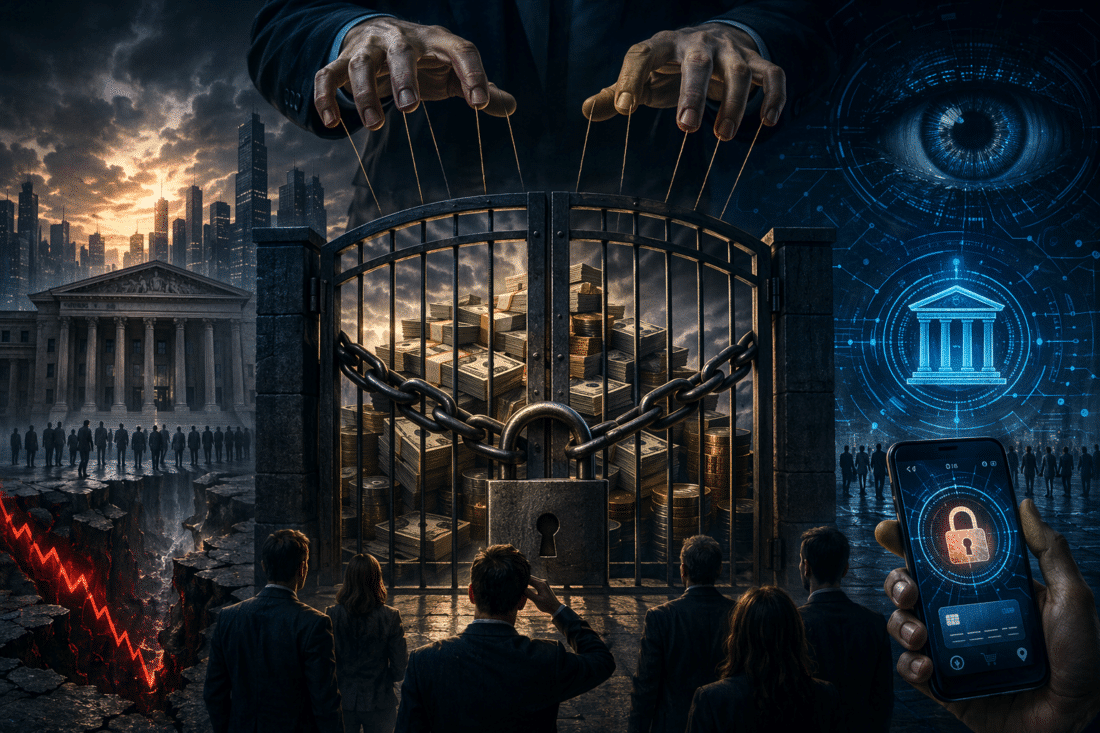
While the economy wrestles with slowing growth and rising costs, another transformation is quietly unfolding inside the financial system.
Governments and central banks are accelerating new digital payment infrastructure tied to CBDCs, the FedNow payment system, and expanded financial monitoring capabilities.
These developments could fundamentally reshape how money moves through the economy—and how financial activity is tracked.
For readers who want to understand the bigger shift taking place, The Digital Dollar Reset Guide by Bill Brocius breaks down what these systems could mean and what steps individuals can take to protect their financial autonomy.
If you’re paying attention to the signals, preparing early isn’t alarmism.
It’s common sense.