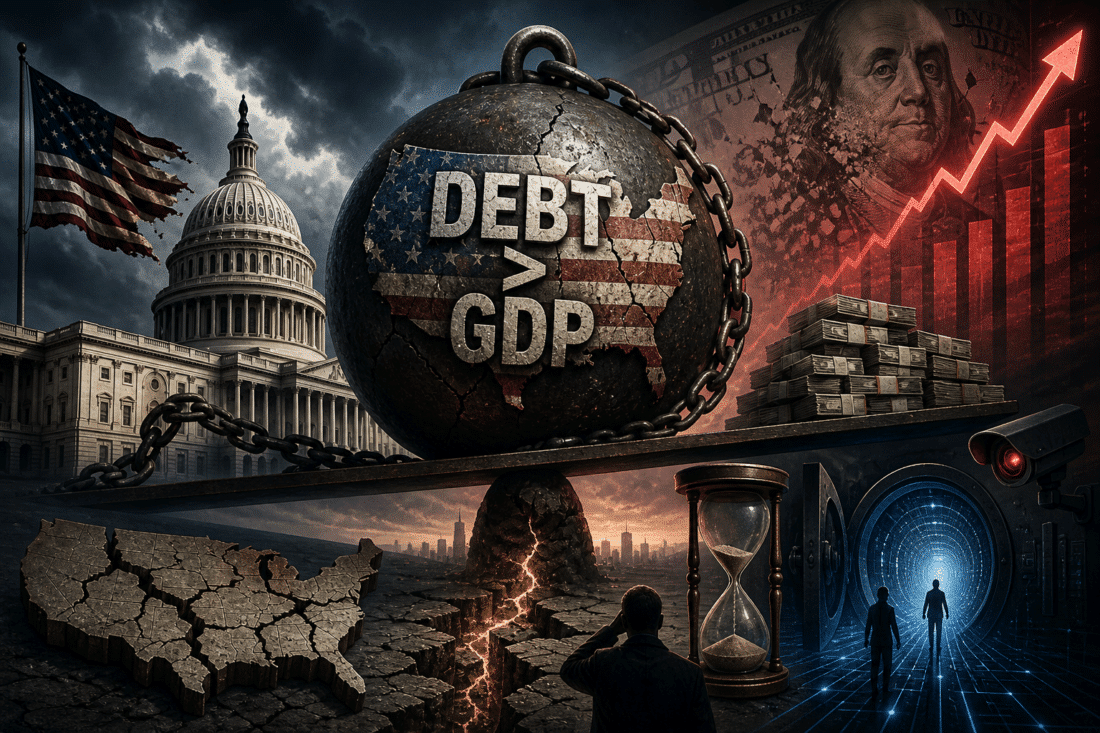
“Ample Reserves” Is Code for Printing Without Limits

“Ample Reserves” Sounds Boring—That’s the Point
When the Federal Reserve says it needs “ample reserves,” it sounds harmless. Technical. Almost dull.
That’s intentional.
Because “ample reserves” is not a neutral description. It is a euphemism—language designed to soften what would otherwise alarm the public. What it really means is this:

The system now requires constant money creation just to function.
We’ve heard this before. Not long ago it was called emergency liquidity. Then it was quantitative easing. Today, it’s ample reserves. Different label. Same outcome.
What “Ample Reserves” Actually Means Inside the System
The old banking model—where banks lent reserves to each other in a relatively tight system—is gone.
Today’s model works very differently. Banks hold enormous piles of reserves at the Federal Reserve itself, earning interest directly from the central bank. This is how the Fed now controls interest rates.
But here’s the catch:
This system only works if reserves are excessive.
If reserves fall anywhere near “scarce,” the machinery breaks down. Interbank rates spike, liquidity stress spreads, and the Fed loses control of the very rates it claims to manage.
So when Powell says reserves must remain “ample,” he is really saying this:
Scarcity is no longer allowed. Tightening is no longer tolerated.
Why “Ample” Quickly Becomes Unlimited
Once a financial system depends on excess liquidity to survive, there is no natural stopping point.
Any sign of stress forces the same response. If reserves tighten, the Fed adds more. If rates drift higher than desired, the Fed intervenes. If Treasury issuance explodes—as it routinely does—the Fed absorbs the shock.
Money creation stops being an emergency tool and becomes routine maintenance.
That’s not discipline.
That’s dependency.
“This Isn’t QE”—A Distinction Without a Difference
Fed officials are quick to insist that current operations are not quantitative easing.
They’ll tell you QE is about stimulus, while today’s purchases are about “plumbing,” “rate control,” or “market functioning.”
But strip away the rhetoric and the mechanics are identical.
The Fed creates new money.
It uses that money to buy government debt.
Its balance sheet expands.
The currency supply increases.
Changing the name does not change the outcome.
How Language Is Used to Normalize the Unthinkable
This is where the danger lies—not just in policy, but in vocabulary.
“Money printing” sounds reckless.
“Quantitative easing” sounds academic.
“Ample reserves” sounds comforting.
Each phrase describes the same action. Only one triggers concern.
Soft language is how extreme policies become permanent.
Inflation Doesn’t Require Chaos—Only Commitment
Inflation doesn’t require recklessness. It only requires persistence.
When the Fed commits—implicitly or explicitly—to never allowing liquidity to tighten in a meaningful way, it commits to permanent balance-sheet expansion.
Over time, the consequences are predictable and unavoidable:
- Purchasing power erodes quietly
- Asset prices outrun wages
- Savers fall behind
- Debt holders are rewarded
This is not an accident.
It is inflation by design.
There Is No Exit Without Pain—And That’s the Problem
To truly leave this system, the Fed would have to do things it has no appetite for:
It would have to shrink reserves aggressively.
It would have to allow rates to rise beyond political tolerance.
It would have to accept market volatility and debt stress.
Those outcomes are exactly what “ample reserves” is designed to avoid.
That’s why the printing continues.
The Bottom Line: This Is a Policy Confession
“Ample reserves” is not a technical necessity.
It is a policy admission.
It tells us the system can no longer function without continuous money creation—and that tightening is no longer a real option.
When official language changes this dramatically, it’s usually because the truth has become too dangerous to say out loud.
If you’re worried about inflation, this isn’t reassurance.
It’s a warning.
And if you understand where this is heading, the next step is not passive concern—it’s preparation.
That’s why I urge you to download The Digital Dollar Reset Guide. It lays out exactly how this transition unfolds and what you can do now to protect yourself as centralized financial control accelerates.
👉 Get the Digital Dollar Reset Guide
Because once “ample reserves” becomes permanent policy, the window to act quietly doesn’t stay open for long.