
ANOTHER GOLD RUSH IS UNDERWAY — AND THIS ONE ISN’T ABOUT GREED, IT’S ABOUT SURVIVAL

Gold Is Climbing Again — But This Time Feels Different
We’re watching it happen in real time.
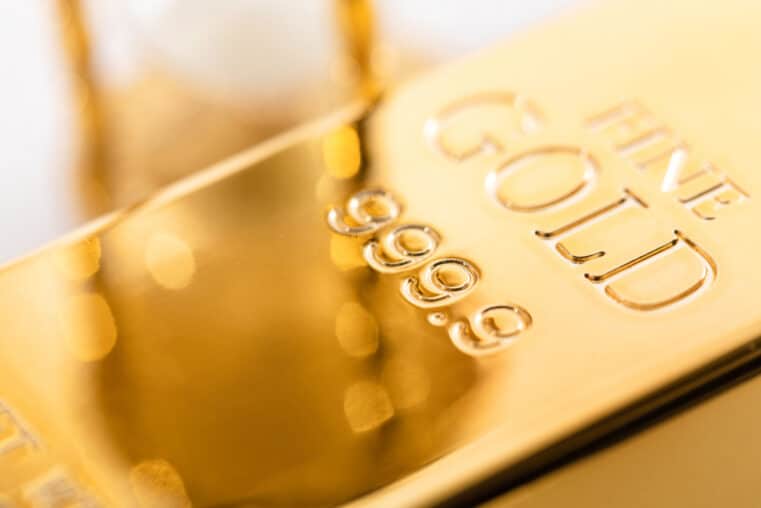
Gold futures dipped briefly… then climbed steadily, pushing toward fresh highs above $5,400. Investors are moving back into precious metals as uncertainty builds across the globe.
Now, I’ve been in this business long enough to know gold doesn’t move like this without a reason.

This isn’t random speculation.
This is capital looking for safety.
What’s Driving This “New Gold Rush”?
The headlines will tell you:
- Rising geopolitical tensions
- Trade uncertainty
- Political brinkmanship
- Inflation concerns
And yes, those matter.
We’ve seen gold surge before during flare-ups — Venezuela tensions, tariff threats, territorial disputes. But what’s happening now fits into something much larger.
Some investors call it the “debasement trade.”
That’s just a technical way of saying this:
People are looking for assets that can’t be printed, inflated, sanctioned, or politically manipulated.
And gold sits at the top of that list.
The Debasement Trade — In Plain English
Let me put this simply.
When governments spend aggressively, expand debt, and rely heavily on currency creation to fund deficits, the long-term purchasing power of money weakens.
It doesn’t collapse overnight.
It erodes.
Think of fiat currency like a car that loses value the second you drive it off the lot. It may run fine for years — but depreciation is built into the system.
Gold doesn’t operate that way.
It doesn’t pay dividends.
It doesn’t generate earnings.
But it also doesn’t depend on political promises.
And when investors sense fiscal strain or geopolitical instability, they rotate toward assets that stand outside the system.
That’s what we’re seeing again.
This Isn’t Just About Tension — It’s About Trust
Gold rallies when trust declines.
Trust in fiscal discipline.
Trust in monetary policy.
Trust in political stability.
Look around:
- Global conflicts are simmering.
- Trade policies shift quickly.
- Inflation pressures remain stubborn in key sectors.
- Debt levels continue expanding.
Even when economic data shows “expansion,” the foundation underneath feels fragile.
Markets are forward-looking. They don’t wait for collapse — they hedge against risk.
That’s what this movement represents.
Why This Matters to Everyday Investors
My readers aren’t hedge funds.
They’re retirees watching grocery bills climb.
They’re business owners dealing with higher input costs.
They’re families wondering if their savings will hold value.
The rise in gold isn’t about chasing momentum.
It’s about protection.
When institutional money quietly reallocates toward hard assets, that’s not noise — that’s a signal.
And historically, when central banks and global investors increase gold exposure, it’s not for a quick trade.
It’s a hedge against systemic strain.
Are We in a Bubble?
That’s the question that always comes up.
After any strong rally, skeptics warn about a peak.
Could gold pull back? Of course. Markets breathe in cycles.
But here’s what I’m watching:
- Central bank accumulation remains elevated.
- Physical demand has not collapsed.
- Fiscal pressures have not improved.
- Geopolitical risks have not resolved.
Those aren’t bubble signals.
Those are structural drivers.
There’s a difference between speculative mania and strategic positioning.
Right now, this feels far more like the latter.
The Bigger Shift Few Are Talking About
We are living through a period where the global financial system is more interconnected — and more leveraged — than at any time in modern history.
Debt is high.
Policy flexibility is constrained.
Political divisions are sharp.
When uncertainty compounds across multiple fronts, capital seeks insulation.
That’s what gold provides.
Not excitement.
Insulation.
And when investors call it a “gold rush,” it’s not because they’re chasing treasure maps.
It’s because they’re hedging against monetary erosion.
My Response to This Moment
If you’re expecting gold to act like a straight-line investment, you’ll be disappointed.
If you’re viewing it as financial insurance during unstable cycles, you’ll understand its role.
Short-term price swings are inevitable.
Long-term monetary realities are harder to ignore.
The “debasement trade” isn’t a conspiracy theory. It’s a recognition that currencies expand, debt compounds, and uncertainty builds.
Gold doesn’t solve those problems.
It simply stands outside of them.
And that’s why it keeps attracting capital when the ground feels shaky.
The Bottom Line
Another gold rush may be underway.
But this one isn’t fueled by greed.
It’s fueled by caution.
It’s fueled by investors quietly acknowledging that the world is becoming more unpredictable — fiscally, politically, and economically.
And when unpredictability rises, so does the appeal of tangible stores of value.
If you want deeper analysis, strategic breakdowns, and guidance on how to navigate this shifting environment with clarity instead of emotion, that’s exactly what we focus on inside Inner Circle.
Join Inner Circle today and position yourself ahead of the next move — not behind it.