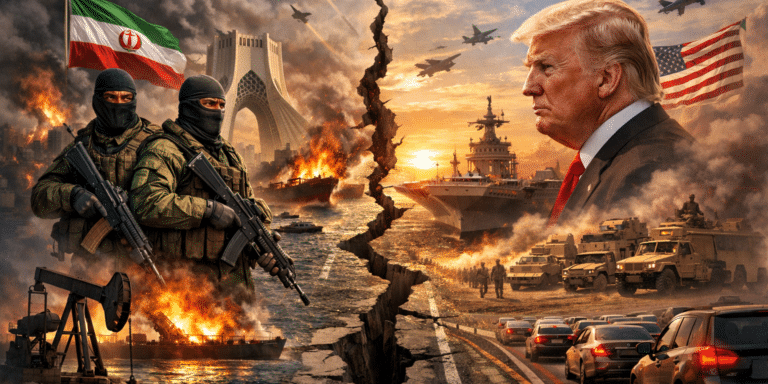
IRAN DIGS IN, TRUMP HOLDS THE LINE — AND AMERICA STANDS AT A CROSSROADS

Iran’s Defiance Is Not Surprising — It’s Strategic
When Iran’s leadership declares “no negotiations,” that isn’t emotion. It’s posture.
Regimes under military pressure project strength. They always do. Public defiance signals internal control. It tells the Revolutionary Guard, “We are not backing down.” It tells the region, “We are still standing.”
But public statements are not the full story. Wars often carry two tracks:

- What leaders say in public.
- What they explore in private.
History shows that even the fiercest enemies sometimes talk behind closed doors. Defiance on social media does not rule out back-channel diplomacy.
Still, one thing is clear: Iran’s leadership is betting on survival.
And survival is their victory condition.
The IRGC Is the Real Center of Gravity
If you want to understand whether a regime stands or falls, you look at who controls the guns.
In Iran, that’s the Islamic Revolutionary Guard Corps.
As long as the IRGC remains unified and controls major cities, regime collapse from airstrikes alone is unlikely. Air campaigns can weaken infrastructure. They can decapitate leadership. They can disrupt command.
But without internal fracture or ground presence, they rarely produce immediate regime change.
That’s not opinion. That’s military history.
This is why talk of “1,000 targets destroyed” doesn’t automatically equal victory.
Power is not just buildings.
Power is cohesion.
And cohesion inside the IRGC may matter more than any bomb dropped from 30,000 feet.
The Oil Weapon: A Dangerous Escalation
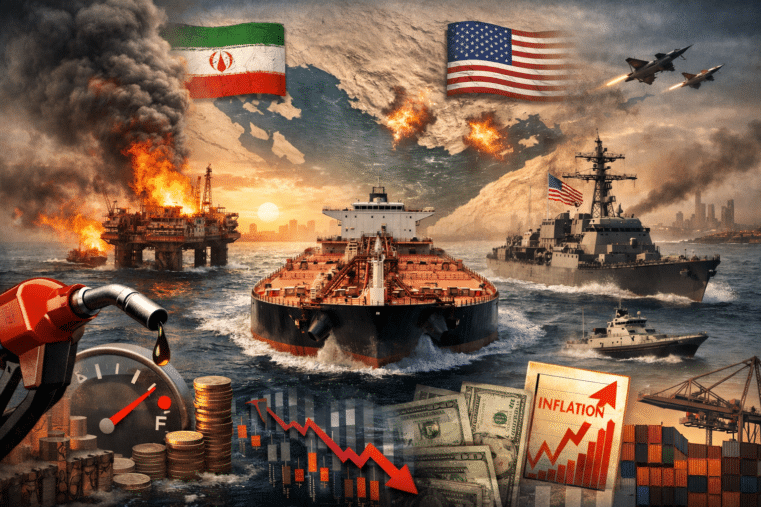
The threat to shut down the Strait of Hormuz is not just rhetoric. It’s economic warfare.
Roughly 20% of global oil flows through that corridor.
If disruption becomes sustained:
- Oil spikes.
- Gas prices jump.
- Food and shipping costs rise.
- Inflation reignites.
Who feels that first?
Not the elites in Washington.
Not the global bankers.
Not the multinational corporations hedged against volatility.
You do.
The American family does.
The truck driver does.
The small business owner does.
The retiree on fixed income does.
This is why this conflict is not “over there.” It lands right here at home.
Boots on the Ground: Strategic Ambiguity
President Trump’s refusal to rule out ground troops is significant.
Not because troops are imminent.
But because ambiguity is leverage.
Presidents often avoid saying “never.” Once you eliminate an option publicly, you eliminate deterrence.
Still, there’s a major distinction between:
- Keeping options open.
- Actively planning deployment.
Ground operations in Iran would be complex. Urban warfare. Regional escalation. Global economic shockwaves.
Anyone telling you this would be quick and simple is not serious.
Even the President’s own statements suggest flexibility. Four to five weeks is a projection — not a guarantee.
And wars rarely follow projections.
Is This a “Final Showdown”?
That framing sells headlines. But reality is more complicated.
Yes, the strikes are extensive.
Yes, leadership targets have been hit.
Yes, infrastructure damage is real.
But the regime is still standing.
The IRGC is still armed.
Retaliation is ongoing.
Oil markets are volatile.
This is not a Hollywood ending. This is an evolving conflict.
The real question isn’t whether bombs fall.
The real question is whether:
- Internal fracture emerges inside Iran.
- International coalitions shift.
- Economic pain forces recalculation on either side.
Wars end when incentives change. Not when rhetoric peaks.
What This Means for America
Let’s bring this home.
A prolonged regional conflict means:
- Higher energy volatility.
- Increased federal military spending.
- Greater executive wartime authority.
- Expanded surveillance and security measures.
- Political polarization ahead of elections.
Every major foreign conflict reshapes domestic politics.
Every war tests constitutional boundaries.
And every escalation challenges the balance between security and liberty.
That’s not fear-mongering. That’s history.
The Media Narrative vs. Strategic Reality
Mainstream media tends to frame events in absolutes:
“Crushing victory.”
“Imminent collapse.”
“World War III.”
But strategic conflicts unfold in gray zones.
Victory is rarely instant.
Defeat is rarely total.
And escalation is rarely linear.
Serious citizens must think beyond headlines.
Ask:
- Who benefits from escalation?
- Who absorbs the economic shock?
- How does this reshape global power structures?
- What happens if oil volatility becomes prolonged?
These are the questions that matter.
Calm Analysis in a Heated Moment
Let’s be clear.
Iran’s defiance was predictable.
Oil leverage was predictable.
Strategic ambiguity from Washington was predictable.
What remains unpredictable is duration.
And duration changes everything.
Short conflict? Contained impact.
Long conflict? Structural consequences.
For markets.
For inflation.
For political stability.
For global alliances.
The American people deserve clarity — not slogans.
The Bottom Line
This conflict is not over.
It is not simple.
And it is not without cost.
Air superiority does not automatically equal regime change.
Economic leverage cuts both ways.
And strategic patience may matter more than emotional rhetoric.
The stakes are high.
Energy. Security. Liberty. Stability.
This is not just a foreign policy story. It is an American future story.
Stay Informed. Stay Prepared.
Moments like this separate passive observers from informed citizens.
If you want deeper analysis on global conflict, economic risk, energy volatility, and how these geopolitical shifts impact your financial security, you need to be inside the conversation — not reacting to it.
Join the Inner Circle today for exclusive insights, early analysis, and strategic briefings you won’t find in mainstream headlines.
Right now, it’s available for just $19.95 per month through this special offer.
Stay alert. Stay informed. And never outsource your understanding of the world to people who don’t share your stake in it.