BRICS in Crisis: Silence, Sovereignty, and the Shifting World Order

The Strike That Shook the System
The reported U.S.–Israeli operation targeting Iran’s Supreme Leader has detonated more than a regional military confrontation.
It has exposed fault lines in the global order.
Iran responded swiftly, launching attacks on Israeli targets and U.S. bases across the Gulf. Markets reacted just as quickly. Oil spiked. Investors ran for safety. Analysts scrambled.

But here’s the part that should raise eyebrows everywhere:
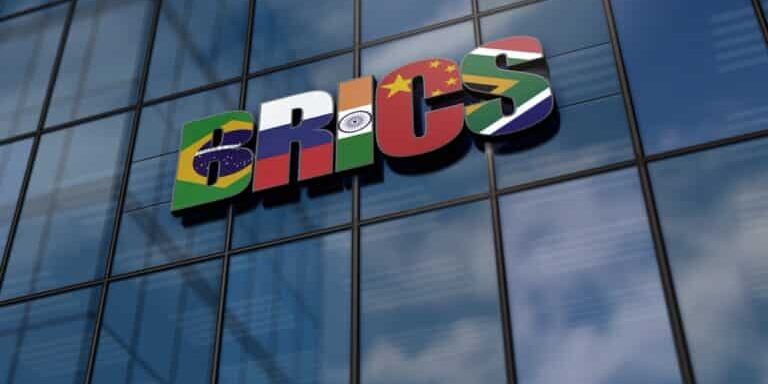
BRICS — the bloc that counts Iran as a full member — stayed largely silent.
No emergency summit.
No unified declaration.
No visible show of solidarity.
Silence.
And in geopolitics, silence speaks volumes.
BRICS: Alternative Power or Paper Tiger?
For years, BRICS has marketed itself as the counterweight to Western dominance. A coalition designed to challenge U.S. financial leverage. A bloc promising a “multipolar world.”
Many Americans watching the weaponization of sanctions and the dominance of the dollar have paid close attention. They’ve asked:
- Is BRICS building a real alternative?
- Could it weaken the dollar’s global grip?
- Is the world shifting away from U.S.-centric finance?
But when one of its own members was struck at the highest level of leadership, the bloc did not act in visible unity.
That raises a hard question:
If BRICS cannot respond collectively in a moment like this, how cohesive is it really?
Alliances are tested in crisis. Not in press conferences.
The Constitutional Question at Home
There is another dimension Americans cannot ignore.
If U.S. military action expands without a formal declaration of war, the constitutional debate becomes unavoidable.
The Founders were explicit.
War powers belong to Congress.
Regardless of where one stands on Iran, Israel, or the broader Middle East, the principle matters. When executive authority expands without clear legislative backing, it shifts the balance of power inside our own republic.
And history shows that emergencies often accelerate executive power.
That’s not partisan.
That’s structural.
Energy Markets: The First Domestic Casualty
When missiles fly in the Gulf, gasoline prices move in Georgia, Alabama, and Texas.
The Strait of Hormuz is one of the most critical arteries in the global energy system. Even the perception of instability there sends oil futures higher.
Higher oil means:
- Higher shipping costs
- Higher grocery bills
- Higher utility bills
- Higher pressure on small businesses
Working Americans already navigating inflation don’t need another shock.
And here’s where things get complicated.
Whenever volatility spikes, policymakers often respond with more intervention, more liquidity, and sometimes more monetary experimentation.
We’ve seen this before.
Crisis.
Stimulus.
Expanded central bank authority.
The long-term consequences of that cycle deserve scrutiny.
Russia, India, and the Fracture Lines
Russia issued strong condemnation. India, reportedly finalizing defense deals with Israel around the same time, has taken a more measured posture.
This reveals what many analysts have quietly acknowledged:
BRICS is not a monolith.
It is a coalition of nations with divergent interests, competing security priorities, and very different relationships with the West.
That doesn’t mean it is irrelevant.
It does mean cohesion is not automatic.
And markets are watching.
The Dollar Question
Every major geopolitical rupture triggers speculation about the future of the dollar.
Will nations accelerate efforts to trade outside the dollar system?
Will sanctions pressure push countries closer together financially?
Will instability reinforce the dollar’s safe-haven status?
In the short term, global capital often flows into U.S. assets during crisis. That strengthens the dollar.
But long term? The repeated use of financial leverage as a geopolitical tool encourages other nations to explore alternatives.
This is the paradox.
Instability can strengthen the dollar today —
while motivating efforts to bypass it tomorrow.
What BRICS’ Silence Really Signals
The absence of a unified BRICS response does not mean the bloc is finished.
But it does signal something important:
BRICS is still an evolving project, not a hardened alliance.
It lacks the institutional depth and rapid-response coordination of NATO or the EU. It remains a coalition of convenience, not a treaty-bound military pact.
For American readers, the takeaway is not cheerleading one side or another.
It’s clarity.
Global power realignments are messy. They are uneven. They do not unfold according to press-release narratives.
The Bigger Picture: Power Concentration in Turbulent Times
Every geopolitical shock concentrates power somewhere.
- Governments expand security authority.
- Markets centralize around “safe” institutions.
- Financial systems tighten.
The danger is not simply foreign escalation.
The danger is what prolonged crisis does to liberty, transparency, and accountability at home.
History shows that wars reshape institutions.
Sometimes permanently.
That’s why vigilance matters.
Final Takeaway
This is not just a Middle East conflict.
It is a stress test of:
- BRICS credibility
- U.S. constitutional processes
- Energy market stability
- The durability of the dollar system
The world order is not collapsing overnight. But it is shifting. Slowly. Unevenly. Under pressure.
And whenever tectonic plates move, ordinary citizens feel the tremors first.
Stay informed.
Stay alert.
Understand the financial dimension behind the headlines.
If you want deeper analysis on global realignment, monetary risk, and how these shifts could affect your financial future, consider joining the Inner Circle for exclusive insights and strategic briefings.