
BRICS Is Hoarding Gold While the Dollar Bleeds Out — And That’s Not an Accident

The Gold Grab No One in the West Wants to Talk About
In the first nine months of 2025 alone, BRICS nations bought 663 metric tonnes of gold, worth roughly $91 billion. That brings their combined reserves to 6,026 tonnes—and the buying hasn’t slowed, even as gold smashed record prices.
Let that sink in.
Central banks don’t chase momentum trades. They position for regime change. And that’s exactly what this looks like.

This isn’t retail FOMO. This is sovereign-level distrust in the existing dollar-based system.
Central Banks Are Acting Like the Dollar Is a Liability
In Q2 2025, global central bank gold purchases jumped 41%. Russia now holds 2,336 tonnes, China 2,298 tonnes, and India 880 tonnes. Even Brazil—absent from the gold market for years—re-entered aggressively.
Why now?
Because the dollar is no longer viewed as politically neutral, economically stable, or strategically safe. It has been weaponized, over-issued, and hollowed out by decades of debt-driven policy.
When reserve managers lose confidence, they don’t issue press releases. They buy gold.
Gold Isn’t “Just a Hedge” Anymore
Over the last five years, gold’s share of BRICS reserves has doubled—from 6.4% to 12.9%. That’s not symbolic. That’s structural.
And markets noticed.
Gold surged past $4,381 per ounce in October, now hovering in the $4,200–$4,300 range. This isn’t inflation panic. It’s a repricing of trust.
Gold is being re-monetized in real time, and the West is pretending it’s just another commodity cycle.
The Dollar’s Decline Is Quiet — and That’s the Most Dangerous Part
The U.S. dollar’s share of global forex reserves has fallen to 56.32%, the lowest level in over 30 years. That didn’t happen overnight, and it won’t reverse easily.
This is how empires unwind now—not with explosions, but with alternatives.
Alternative reserves.
Alternative settlement systems.
Alternative alliances.
The dollar isn’t collapsing tomorrow. It’s being slowly routed around.
This Is the Setup, Not the Endgame
What you’re seeing now is positioning. Stockpiling. Insurance.
The real moves come next—when gold stops being passive storage and starts becoming active monetary infrastructure.
And that’s where tomorrow’s story begins.
Final Warning
When central banks abandon paper promises and rush into hard assets, they’re telling you something—without telling you.
If you’re still trusting the system they’re quietly exiting, you’re already behind.
This isn’t the time for complacency. It’s the time for preparation.
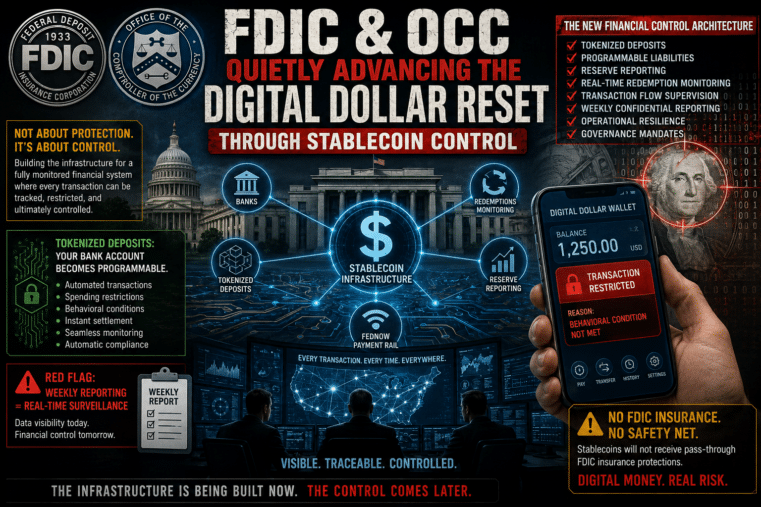
Download the Digital Dollar Reset Guide by Bill Brocius—not as optional reading, but as required intelligence for anyone who refuses to be blindsided by the coming monetary overhaul.