BRICS Just Dumped $28.8 Billion in U.S. Treasuries — Here’s What It Really Means for the Dollar

The Quiet Exit: BRICS Cut $28.8 Billion in October Alone
According to U.S. Treasury data, BRICS nations—China, India, and Brazil—collectively dumped $28.8 billion in U.S. government debt in October 2025. India led the way, cutting $12 billion, followed by China’s $11.8 billion and Brazil’s $5 billion.
This isn’t a one-off event. It's part of a 12-month liquidation trend that saw:
- China offload $71.4 billion in U.S. Treasuries,
- Brazil sell $61.1 billion,
- India dump $50.7 billion.
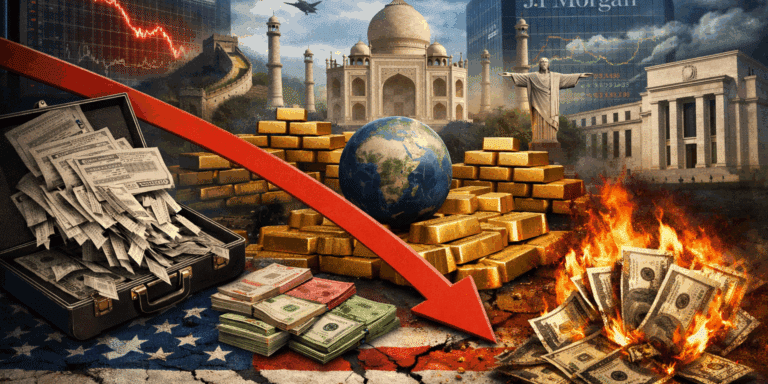
This aggressive unwind in U.S. debt positions isn't just a portfolio adjustment—it’s a strategic pivot away from the dollar-dominated global financial system.

The JPMorgan Warning: A Bearish Outlook for the Greenback
In parallel with the BRICS selloff, JPMorgan has turned net bearish on the U.S. dollar heading into 2026. Their forecast isn’t rooted in politics or geopolitics—it’s grounded in monetary policy differentials.
As the Federal Reserve shifts into rate-cutting mode, while the ECB remains steady and the Bank of Japan considers hikes, global capital flows are expected to favor other currencies like the euro and yen. JPMorgan’s currency projections:
- EUR/USD at 1.20
- GBP/USD at 1.36
- USD/JPY at 164
These are signs of relative dollar weakness. And when major institutional players like JPMorgan start sounding the alarm, it’s a clear indication that the tides are shifting under the surface.
Gold Up, Dollars Down: Reserve Diversification Accelerates
BRICS are not just selling Treasuries—they're restructuring their reserves. The sell-off coincides with a continued build-up of gold holdings by central banks, signaling a deliberate move toward hard assets and currency alternatives.
This pivot is part of a broader de-dollarization blueprint. It’s slow, it’s calculated, and it’s global. The U.S. dollar isn’t collapsing overnight—but its role as the world’s unchallenged reserve currency is steadily being chipped away.
Behind the Curtain: Strategic Motives at Play
Analysts at ING suggest that some of the recent sales, particularly India’s, may be tied to currency defense strategies—selling Treasuries to support the rupee.
But let’s not be naive. The geopolitical undertones are impossible to ignore. This isn’t just about exchange rates or bond yields—it’s about power. Reducing U.S. debt exposure gives BRICS members greater monetary independence and insulation from U.S. leverage.
Every Treasury offloaded is a vote against Washington’s economic hegemony. And while private sector buyers have helped absorb the slack for now, this buffer won’t last forever.
A System Under Pressure: What Comes Next
The implications of this coordinated move are staggering:
- U.S. debt is ballooning, and fewer foreign buyers means more pressure on domestic balance sheets.
- Interest rates may remain higher for longer just to keep U.S. debt attractive.
- And if the private sector’s appetite dries up, the Fed could be forced into more direct debt monetization—fanning the flames of inflation.
For those paying attention, the message is clear: the financial architecture is evolving, and legacy assumptions about the safety and supremacy of the U.S. dollar are unraveling.
Prepare for the Reset
This isn’t about fear. It’s about foresight. If you're holding wealth entirely within the system—whether in dollars, bank accounts, or dollar-denominated assets—you are exposed to the vulnerabilities now playing out in real-time.
The Digital Dollar Reset Guide was written for exactly this moment. Inside, you’ll discover how to:
- Hedge against currency devaluation,
- Move into hard assets with strategic timing,
- And build financial resilience as centralized systems tighten control.
The global shift away from the dollar is already underway. What you do next determines whether you're caught off guard—or one step ahead.
👉 Download the Digital Dollar Reset Guide Now before the next shock hits.