Crypto Fear and the Retail Retreat: A Symptom of a Broken Monetary System

Crypto is Cracking Because the House of Cards Is Shaking
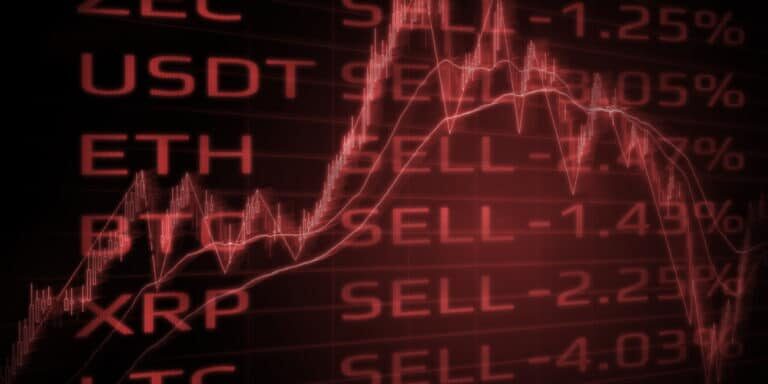
Axios reports that crypto—particularly Bitcoin—is on the verge of its worst monthly performance since 2022. Retail investors, battered by portfolio losses, are no longer “buying the dip” in tech stocks. The culprit? Fear. But not just any fear—fear of systemic fragility. The kind that doesn’t go away with a single Fed rate cut or a pep talk from Wall Street.
The article mentions that volatility indices are flashing red, with both CoinGlass’s crypto fear gauge and CNN’s broader market sentiment index showing “extreme fear.” That’s supposed to spook us. But in a sane system—one with real price discovery, hard money, and organic growth—there wouldn’t be a need for “fear gauges” to tell us how broken everything is.
The Fed Built This Casino—Retail Just Showed Up Late
What really irks me is the condescending tone toward retail investors—as if they're emotional sheep moving from one shiny object to the next. But nobody’s asking why they’re there in the first place.

Let’s be clear: Retail investors didn’t cause this chaos—they're victims of it.
- The Fed suppressed interest rates for over a decade, turning savings accounts into losing propositions.
- Inflation shredded purchasing power, forcing the middle class into riskier and riskier plays just to stay afloat.
- Asset bubbles—first in stocks, then real estate, then crypto—became the only on-ramp to wealth.
So when people flooded into Bitcoin, it wasn’t just FOMO—it was a cry for monetary refuge. They weren’t speculating. They were escaping.
Tech Stocks Are Tied to Crypto Because Central Banks Made It That Way
The article notes that when Bitcoin fell below $90,000, tech stocks followed. Algos trade the correlation, retail traders sell both, and the cycle feeds itself. That’s not natural market behavior—that’s monetary policy-induced asset clustering.
In a free market, unmanipulated by central banks, tech stocks and Bitcoin wouldn’t move in lockstep. But when central banks pump trillions into the system, flooding it with cheap credit, every asset becomes a high-beta play on the same drug: liquidity. Pull the needle out, and the whole thing convulses.
The Strategist’s Central Bank Worship is the Real Red Flag
Perhaps the most revealing line in the article comes from Steve Sosnick of Interactive Brokers, who says, “As an investor, I'd rather hitch my star to what a central bank is doing than what a cryptocurrency is doing.”
That right there is the disease.
We’ve reached a point where “investing” means front-running or second-guessing the whims of unelected central bankers, rather than allocating capital based on fundamentals, innovation, or productivity.
This isn’t capitalism. It’s monetary feudalism.
And Sosnick’s comment isn’t just cowardly—it’s a confession. It’s an admission that markets no longer operate independently of the state. That’s what crypto was created to fight—and that’s why they hate it.
HODL Culture Isn’t Dead—It’s Just Growing Up
The article tries to draw a distinction between today’s crypto investors and the early “HODL” crowd, suggesting that today’s traders are older, more cautious, and more likely to bail when things get rough. Maybe that’s true.
But here’s the thing: Crypto isn’t a playground anymore—it’s a battleground. People aren’t HODLing for memes—they’re doing it to resist monetary decay, financial surveillance, and fiat tyranny.
So yeah, some are cashing out. But others are doubling down—quietly, strategically, and with full awareness that this isn’t just about price—it’s about principle.
The Real Problem: The Monetary System Itself
The article ends with a throwaway question: “What’s the next market fixation?” As if the market is just a bored teenager looking for something new to play with.
No. The market isn’t fixated. It’s reacting to a system that’s crumbling under the weight of its own contradictions:
- A central bank that prints to infinity, then acts surprised when inflation bites.
- A government that punishes savers, rewards debt, and pushes millions toward financial ruin.
- A financial elite that worships policy over productivity, central planning over competition.
Conclusion: Retail Isn’t the Problem—It’s the Canary
If crypto is falling, and retail is retreating, it’s not a sign that investors are “confused”—it’s a sign they’re waking up. They’re starting to realize that the system is rigged, the Fed isn’t their friend, and the only real way out is to reclaim autonomy over their wealth.
Crypto pain is real—but the disease it’s revealing is far more dangerous.
Ready to Exit the Fiat Casino?
Protect yourself before the next wave of central bank gaslighting hits. Download “Seven Steps to Protect Yourself from Bank Failure” by Bill Brocius and learn how to safeguard your assets in a collapsing system.
👉 Download now
Don't play the game. Change the game.