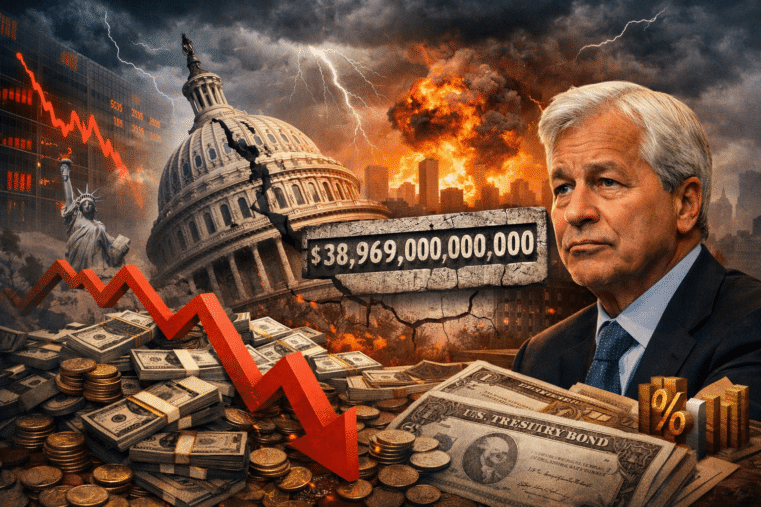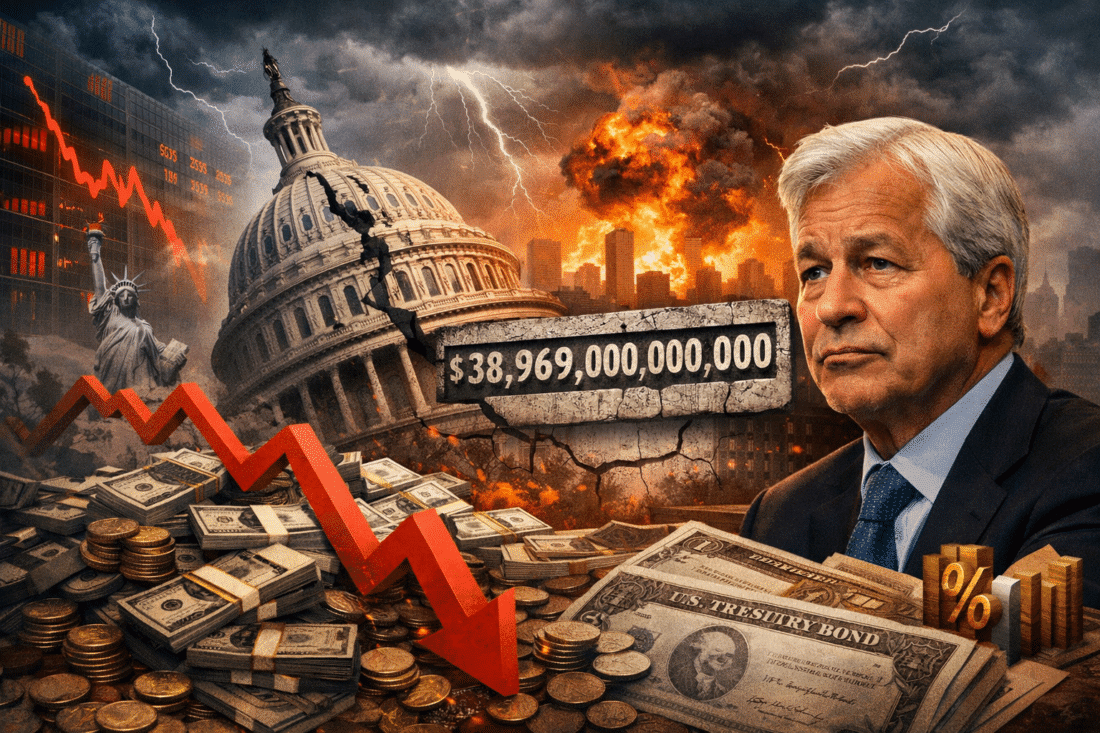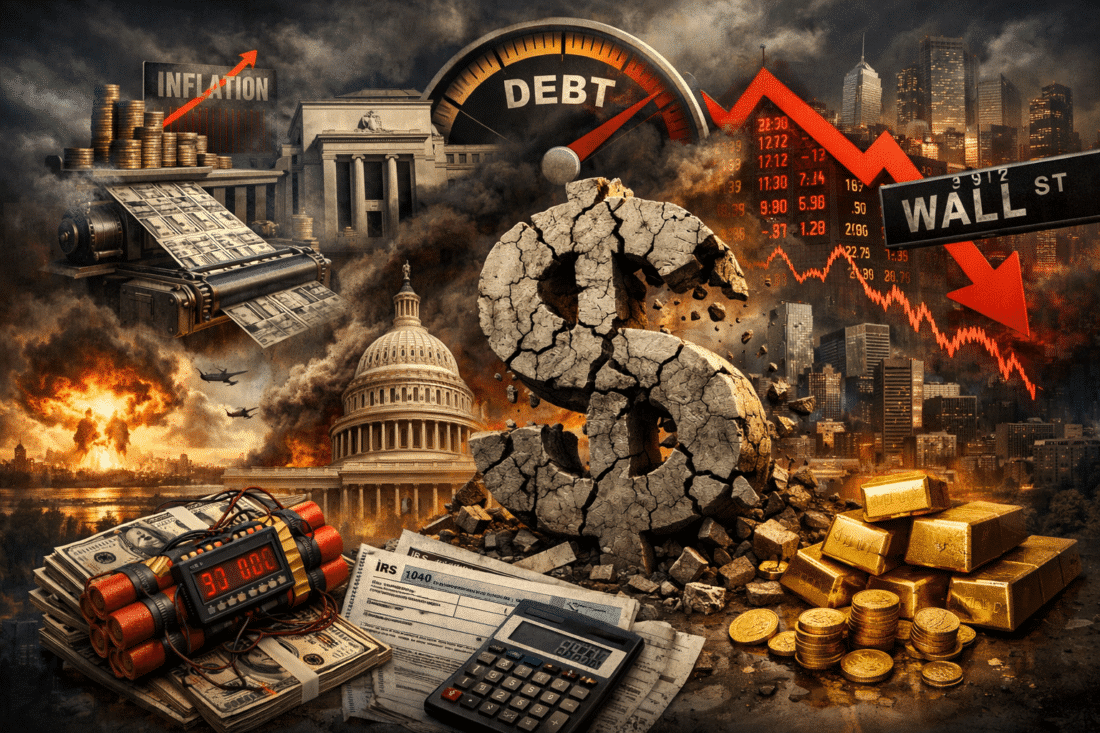
Digital Dollar Reset Warning: Why FedNow, CBDCs, and Higher Rates Signal a System Breaking Point

The Big Lie About Inflation—and Why It Matters Now
You’ve been told inflation is rising prices.
That’s not the full story—and misunderstanding it could cost you.
Inflation, at its core, is the expansion of the money supply. Prices rising at the grocery store, gas pump, or housing market? Those are downstream effects. The real driver is what’s happening behind the scenes: central banks increasing money and credit.

This distinction isn’t academic—it’s everything.
Because if policymakers are targeting price increases instead of money creation, they’re not fixing the problem. They’re reacting to symptoms while the underlying disease spreads.
And right now, that disease is accelerating inside a system already under strain from years of artificially low interest rates, aggressive monetary policy, and expanding digital financial infrastructure.
The Real Damage Was Already Done
For over a decade, central banks held interest rates artificially low.
That wasn’t neutral policy—it was economic manipulation.
Here’s what it caused:
- Massive expansion of debt
- Asset bubbles in housing, stocks, and tech
- Misallocation of capital into unproductive or speculative areas
- A silent transfer of wealth to those closest to newly created money
This is the part most people miss:
Once this distortion happens, it cannot simply be reversed.
The system has already been reshaped. Capital has already flowed into the wrong places. Entire industries have grown dependent on cheap money.
And now? The bill is coming due.
Why Higher Interest Rates Won’t Save the System
The Federal Reserve is now raising rates aggressively, claiming it will “fight inflation.”
But here’s the uncomfortable reality:
Higher rates cannot undo the damage caused by years of artificially low rates.
Instead, they trigger a new phase of consequences:
- Weak businesses begin to fail
- Debt becomes harder to service
- Asset bubbles start to deflate
- Economic activity slows sharply
Yes, rate hikes can suppress price growth—but they also:
- Hit productive sectors of the economy
- Reduce investment
- Increase unemployment risks
In other words:
The same tool being used to “fix” the system is now exposing its fragility.
This is not a clean correction. It’s a pressure release on a system already structurally compromised.
The Dangerous Cycle: Easy Money → Tight Money → System Stress
What we’re witnessing is a predictable cycle:
- Artificially low rates (easy money)
→ distort markets and inflate bubbles - Rising inflation (price symptoms)
→ triggers panic response - Aggressive rate hikes (tight money)
→ destabilize the system further
This creates a trap.
Because tightening policy doesn’t restore balance—it adds another layer of disruption on top of existing distortions.
The result?
- Longer economic slowdowns
- Deeper financial instability
- Increased dependence on centralized intervention
And that’s where the next phase begins.
Enter FedNow, CBDCs, and the Expansion of Financial Surveillance
While the public focuses on interest rates, something far more significant is advancing in parallel:
- The FedNow payment system
- The development of central bank digital currency (CBDC) frameworks
- Expanded capabilities for real-time transaction monitoring
This isn’t coincidence—it’s convergence.
As traditional monetary tools lose effectiveness, central authorities are moving toward direct control mechanisms:
- Instant settlement systems
- Programmable money
- Transaction-level oversight
This is where financial surveillance becomes embedded into the infrastructure itself.
And in a system already strained by monetary instability, the justification becomes simple:
“We need more control to stabilize the economy.”
Programmable Money Changes Everything
CBDCs aren’t just digital dollars—they’re programmable dollars.
That means:
- Restrictions on how money is spent
- Expiration dates on funds
- Automated compliance enforcement
- Direct policy implementation at the individual level
Combine that with:
- Economic instability
- Policy-driven interventions
- Centralized digital infrastructure
And you get a system where:
financial freedom is no longer assumed—it’s conditional.
The Real Risk: Loss of Financial Autonomy
This is the part most people underestimate.
The issue isn’t just inflation. It’s not just interest rates.
It’s the transformation of the financial system itself:
- From decentralized to centralized
- From market-driven to policy-controlled
- From private transactions to monitored activity
The longer instability persists, the stronger the case becomes for:
- Capital controls
- Spending restrictions
- Increased oversight
This is how a cashless society evolves—not overnight, but through crisis and response.
My Response: This Isn’t About Panic—It’s About Positioning
Let’s be clear:
The situation isn’t hopeless—but it does require awareness and action.
Higher interest rates may slow price increases, but they won’t repair the structural damage already embedded in the system.
And as that reality sets in, expect:
- More intervention
- More digital control layers
- More pressure on financial independence
The key is not to react emotionally—but to prepare strategically.
What You Do Next Matters
If you understand that:
- Inflation is rooted in money supply expansion
- Rate hikes won’t undo prior damage
- Digital financial control systems are advancing
Then the question becomes:
What steps are you taking right now to protect your financial autonomy?
Because the shift toward a Digital Dollar Reset isn’t theoretical—it’s unfolding in real time.
Take Action Before the System Resets
This is exactly why I put together a step-by-step breakdown of what’s happening—and what you can do about it.
The Digital Dollar Reset Guide gives you:
- A clear explanation of CBDC risks
- How FedNow fits into the bigger picture
- Practical strategies to protect your assets and financial sovereignty
- What to watch for as the system evolves
If you’re seeing the warning signs, don’t ignore them.
Get the intelligence you need before the next phase locks in.
The window to prepare is still open—but it’s not unlimited.