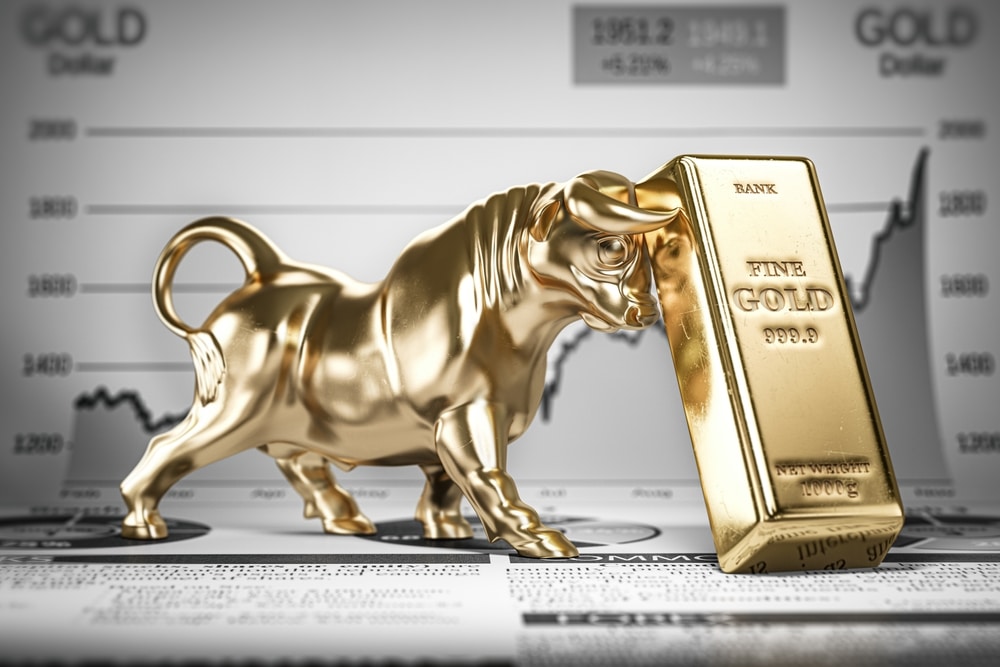
GOLD “BARGAIN BUYING” SURGE: IS THIS YOUR LAST CHANCE BEFORE THE NEXT MONETARY SHOCK?

“Bargain Buying” — Or Something Bigger Brewing?
Kitco is reporting that gold and silver rallied sharply on what traders are calling “bargain hunting” after a recent dip. That’s Wall Street’s polite way of saying: big money stepped back in after a selloff.
Now, let me say this right up front — short-term rebounds happen all the time. Markets pull back. Traders pile in. Prices bounce. That’s normal.
But here’s the part most folks miss…

When gold and silver bounce like this while the Federal Reserve is debating rate cuts, that’s not just technical noise. That’s the market sniffing out monetary instability.
And if you’ve been around as long as I have — if you lived through 2008, watched the COVID stimulus flood the system, and saw inflation chew through grocery budgets — you know this isn’t random.
The Fed’s Next Move Matters More Than the Bounce
The real headline in that article isn’t “bargain buying.”
It’s the Federal Reserve.
Officials are split. Some are talking about holding rates steady. Others are hinting at potential cuts if inflation continues cooling.
Let me translate that into plain English:
If the Fed cuts rates, it usually means something under the surface is cracking.
Rate cuts are a tailwind for commodities because they weaken the dollar and make hard assets more attractive. Gold especially thrives when real interest rates fall.
And here’s the uncomfortable truth…
We are living in the most debt-saturated economy in U.S. history. The federal government is running massive deficits. Corporate debt is elevated. Consumers are stretched.
The system cannot tolerate high rates forever.
So when markets hear “cuts,” they position early.
Are Gold and Silver Still at Bargain Levels?
Now let’s tackle the real question.
If prices are already elevated, are gold and silver still bargains?
That depends on how you measure value.
If you’re measuring against last month’s price? Maybe not.
If you’re measuring against 1999? Obviously not.
But that’s not how wealth protection works.
I grew up in a working-class household. We didn’t look at money like traders. We looked at what it could buy. Groceries. Gas. A mortgage payment. Stability.
And when you measure gold against purchasing power — against what your dollar buys today versus 10 years ago — gold isn’t expensive.
The dollar has steadily lost value over time. That’s not political. That’s math.
Fiat currency is like a used car. The longer you hold it, the more it depreciates.
Gold is like owning the land under the car lot.
So are we at screaming “fire sale” levels? No.
Are we in the early stages of a potential monetary repricing cycle? Possibly.
And that’s where silver gets interesting.
Why Silver Could Be the Quiet Opportunity
Silver tends to lag gold… until it doesn’t.
Historically, silver moves later in the cycle but often more violently. It has both monetary and industrial demand. When investor interest accelerates, silver can play catch-up quickly.
That doesn’t mean it’s risk-free. Silver is volatile. It swings harder in both directions.
But when confidence in fiat systems starts to wobble, silver often becomes the “everyman’s gold.”
And I don’t ignore that pattern.
Why This Is Relevant to Everyday Americans
Most of my readers aren’t hedge fund managers.
You’re worried about:
- Your retirement account
- Bank stability
- Inflation at the grocery store
- The direction of the economy
- The increasing digitization of money
The financial system is evolving quickly. Payment systems are becoming more centralized and digital. Monetary policy is becoming more experimental. Government debt continues to climb.
Gold and silver don’t depend on a server. They don’t depend on a bank. They don’t depend on a policy vote.
They sit outside the system.
That’s why this rally matters.
Not because of a one-day spike.
But because it may signal continued institutional demand in an environment where monetary policy is boxed in.
My Straight Take
Here’s where I land.
This rally alone doesn’t mean we’re at the start of a straight-line move higher.
But it does reinforce a bigger trend: when uncertainty rises, capital flows into hard assets.
I don’t view gold and silver as speculative trades.
I view them as financial insurance.
You don’t buy homeowners insurance hoping your house burns down.
You buy it because if it does, you’re protected.
And right now, between global debt, geopolitical tensions, and a Federal Reserve walking a tightrope, insurance doesn’t look foolish.
It looks prudent.
Don’t Sit on the Sidelines — Join the Inner Circles
Look, you can read headlines all day.
You can watch gold spike… silver dip… the Fed talk in circles…
Or you can get positioned before the next move.
That’s exactly why we created Inner Circles.
This isn’t mainstream media noise. It’s not watered-down financial commentary designed to keep you calm while your purchasing power shrinks. Inner Circles is where we go deeper — where we talk honestly about monetary risk, banking fragility, debt expansion, and how to position yourself using real assets like gold and silver.
If you’re serious about protecting your wealth — not just hoping things work out — you need better information and a smarter strategy.
That’s what Inner Circles is built for.
The system isn’t getting simpler. It’s getting more fragile.
Make sure you’re on the inside — not reacting from the outside.
I’ll see you there.