GOLD JUST TOOK A HIT—BUT HERE’S WHY THAT SHOULD WORRY YOU MORE, NOT LESS

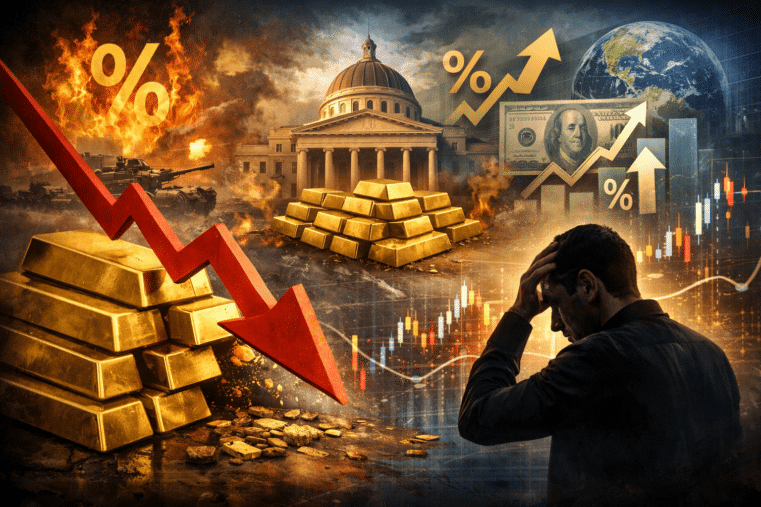
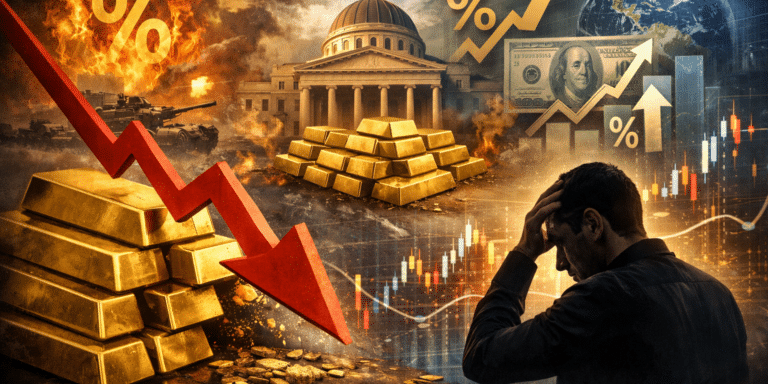
Gold Dropped… When It Was Supposed to Rise
Let me start with what’s bothering a lot of folks right now.
We’ve got war tensions, rising inflation concerns, global uncertainty—and gold drops?
That doesn’t sit right with people.

Because traditionally, gold is supposed to be the thing that goes up when everything else gets shaky.
Instead, we saw it fall about 16% during the recent conflict.
Now Wall Street types are calling this “counterintuitive.”
I call it something else:
Short-term noise masking a long-term signal.
What Actually Caused the Drop
This wasn’t about gold suddenly becoming less important.
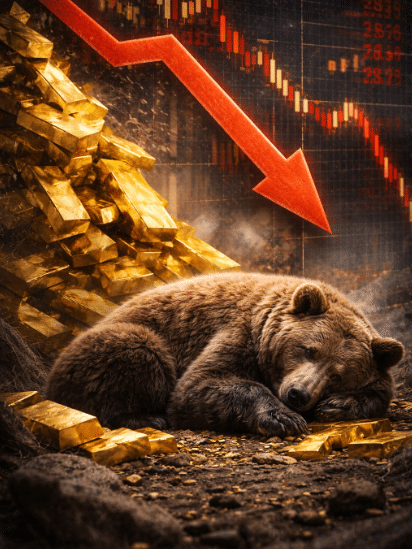
It came down to a few temporary forces:
- Investors taking profits after a massive run
- Rising interest rates making yield-paying assets look more attractive
- A stronger U.S. dollar pulling money toward itself
- Big institutions needing liquidity and selling what they could
In other words—this was positioning, not a collapse in confidence.
Think of it like this:
If gold is a house that just doubled in value… this was people cashing out a few chips, not the neighborhood going bad.
The Fundamentals Haven’t Changed (And That’s the Key)
Here’s the part most people are missing—and it’s the part that matters.
The same forces that pushed gold above $5,000 are still here:
- Massive government debt
- Persistent inflation pressures
- Central banks buying gold like never before
- Growing skepticism about fiat currencies
None of that went away.
Not one bit.
And when those fundamentals stay intact, price drops like this tend to be pauses—not endings.
Why Central Banks Still Matter More Than Headlines
I’ve said this for years, and I’ll keep saying it:
Watch what central banks do—not what the headlines say.
Right now, they’re still:
- Diversifying away from the dollar
- Increasing gold reserves
- Preparing for a more uncertain monetary future
That tells you everything you need to know.
Because these aren’t emotional decisions.
They’re calculated moves made by people who see the system from the inside.
What This Means for Americans
Now let’s bring this home.
If you’re watching gold drop and thinking, “Maybe this isn’t the time”… I’d urge you to think again.
Because what’s really happening is:
- The dollar is getting temporary strength—but long-term pressure is building
- Interest rates are shifting—but not solving the underlying debt problem
- Markets are reacting—but the system itself hasn’t been fixed
And here’s the truth most people don’t want to hear:
Short-term strength in the system often hides long-term weakness.
What It Means for Gold Investors
This is where experience matters.
When I was younger, I made the mistake of chasing price.
Up? I wanted in.
Down? I got nervous.
That’s how people get shaken out of good positions.
Today, I look at it differently.
A pullback like this?
- It resets overheated markets
- It shakes out weak hands
- It creates opportunity for disciplined investors
And most importantly—it doesn’t change why gold matters in the first place.
The Real Risk Isn’t Gold Dropping—It’s Misreading Why
Let me be blunt with you.
If gold were dropping because:
- Inflation was gone
- Governments were debt-free
- Central banks stopped buying
Then yeah, I’d be concerned.
But that’s not what’s happening.
Instead, we’ve got the same structural problems… just temporarily overshadowed by market mechanics.
That’s a very different situation.
Don’t Let Short-Term Moves Fool You
Markets move fast. Narratives change even faster.
But the underlying story?
That changes slowly—and when it does, it matters.
Right now, that story still points to:
- Currency pressure
- Systemic debt
- And a growing need for hard assets
Gold fits into that picture as clearly as it ever has.
Join the Inner Circle Before the Next Move
If you want to understand moves like this before they happen—not after—you need to be plugged into the right information.
That’s exactly what we do inside the Dedollarize Inner Circle.
Get real insights, clear strategy, and updates that cut through the noise.
I’ve lived through enough market cycles to know one thing:
The biggest opportunities rarely feel comfortable when they show up.
The question is—will you recognize this one for what it is?