How NGOs Are Bankrupting America and Undermining Democracy

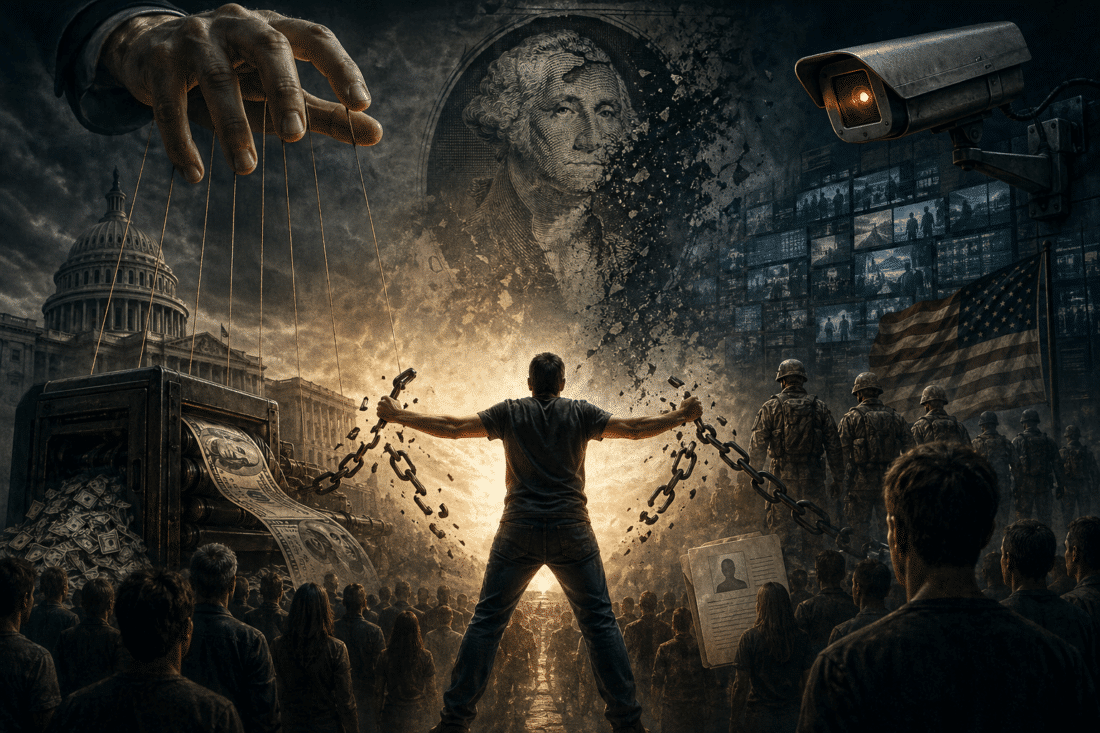
Non-governmental organizations (NGOs) have long masqueraded as benevolent forces of change, but the veneer is starting to crack. Elon Musk and Vivek Ramaswamy, who are set to spearhead the newly-formed Department of Government Efficiency (DOGE), are shining a spotlight on the disturbing reality: billions of taxpayer dollars funneled into NGOs to carry out shadowy agendas that often bypass constitutional limits.
This isn’t mere inefficiency—it’s a systemic abuse of public funds that demands accountability.
NGOs: Agents of Chaos in Disguise?
A week ago, Ramaswamy sounded the alarm on X (formerly Twitter):

"We need to scrutinize U.S. government funding of 'non-government organizations.' It's an oxymoron that represents a waste of taxpayer dollars, but the real problem runs deeper: Americans deserve transparency on opaque foreign aid & nonprofit groups abetting our own border crisis."
Ramaswamy’s post quoted evidence of NGOs, championed by officials like Victoria Nuland, engaging in murky activities in regions like Georgia, Ukraine, and Syria. Musk’s response was succinct but powerful:
"Absolutely."
The problem is clear: NGOs often act as proxies for government agendas, shielding officials from legal and political accountability. Whether it’s spreading ideologically charged narratives, facilitating foreign conflicts, or exacerbating the U.S. border crisis, these organizations have grown too powerful and too unaccountable.
A Bloated Industry Fueled by Taxpayer Dollars
On Tuesday, Musk reiterated his stance:
"We should unwind this IMO."
This was in response to a shocking revelation on X about the exponential growth of NGO assets over the past two decades. Their budgets now rival those of small nations, yet they operate with minimal transparency.
Marc Andreessen, billionaire investor and co-founder of Andreessen Horowitz, echoed these sentiments during a recent interview with Joe Rogan. He pointed out that:
"The government outsources to these NGOs the things it's not legally allowed to do ... such as censorship."
Censorship, border manipulation, and unchecked influence in foreign conflicts—NGOs have become the ideal loophole for a government constrained by constitutional limitations.
The Time for Reform Is Now
Musk and Ramaswamy’s efforts to dismantle this tangled web could be transformative. DOGE is poised to bring accountability to an industry that has operated in the shadows for far too long. But this fight won’t be easy—the entrenched interests funding and protecting NGOs won’t go quietly.
If history has taught us anything, it’s that concentrated power, whether in government or in these so-called “non-governmental” entities, inevitably corrupts. Americans must demand a full accounting of where their hard-earned dollars are going and take steps to shield themselves from the economic fallout of this corrupt system.
Take Action
Want to protect your wealth and understand how government overreach impacts your financial freedom? Download Bill Brocius’ guide, “7 Steps to Protect Your Account from Bank Failure,” here: https://offers.dedollarizenews.com?utm_source=7steps_ebook&utm_medium=website&utm_campaign=Good_Solid_Info&utm_term=static&utm_content=Eric_Blair.
For exclusive insights into the political and economic changes shaping our world, subscribe to Bill’s Inner Circle newsletter for just $19.95 a month.
It’s time to take control of your money and your future. Don’t let the NGOs—or the government—dictate your financial fate.