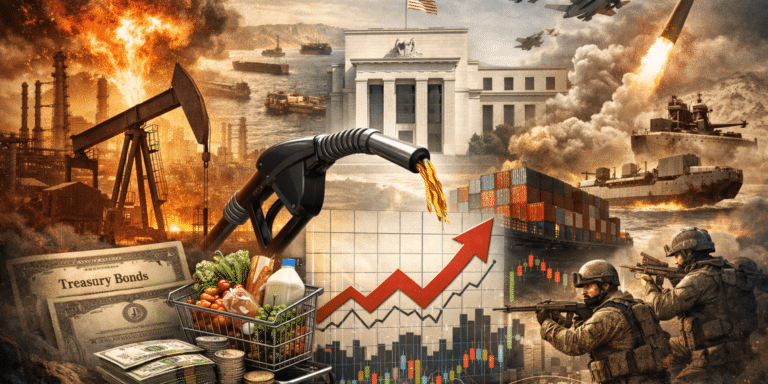
Iran Shockwave: Why This Middle East Conflict Could Supercharge Inflation and Reshape the U.S. Economy Before It’s Too Late

The Old Playbook Is Dead
For decades, the formula was simple: conflict in the Middle East led to an oil shock, which triggered a recession and broad economic pain. That pattern defined the 1973 oil embargo, the Iranian Revolution, and the oil price spike surrounding Iraq’s invasion of Kuwait in 1990. America was deeply dependent on foreign energy, and when supply tightened, the entire economy buckled.
But that was a different era.
The shale revolution fundamentally changed the equation. The United States is now one of the world’s largest oil producers and has operated as a net exporter of oil in recent years. That structural shift matters. When crude prices rise today, American consumers still feel it at the pump, but domestic producers benefit from higher revenues. Oil-producing regions gain income, energy companies expand margins, and capital flows into drilling, transport, and refining. The national impact is no longer purely negative.

Energy also represents a smaller share of total personal consumption than it did in the 1970s. The modern U.S. economy is more diversified and less energy-intensive. That doesn’t mean higher oil prices are harmless—it means the shock transmits differently.
So the assumption that this Iran conflict automatically guarantees a recession is outdated. The more immediate and plausible risk is inflation.
The Real Threat: Inflation That Won’t Fade
Oil prices have already moved higher, and gasoline futures have followed. More telling, Treasury yields have risen rather than fallen. In a classic geopolitical panic, investors rush into bonds, yields decline, and growth fears dominate. That is not what markets are signaling right now.
Instead, bond traders appear more concerned that higher energy prices will complicate the inflation picture and keep the Federal Reserve cautious about cutting rates. And that concern is not irrational.
We are entering this episode after five consecutive years of inflation running above the Fed’s 2% target. The central bank has repeatedly described certain inflation drivers as “transitory,” yet consumers have experienced persistent price increases across essentials—from food to housing to services. Layering another energy shock on top of that fragile backdrop is not trivial.
Energy costs ripple through the economy in ways that go well beyond gasoline purchases. Shipping expenses rise, airlines face higher jet fuel costs, agriculture absorbs increases in diesel and fertilizer inputs, and manufacturers contend with more expensive petrochemical components. Even a moderate and sustained increase in crude prices can squeeze corporate margins and filter through to broader consumer prices.
Inflation is not merely an arithmetic phenomenon; it is psychological. If households come to believe that prices will continue climbing indefinitely, wage demands adjust upward and businesses preemptively raise prices to protect margins. Expectations become embedded, and once that happens, restoring price stability becomes far more difficult.
Why Growth May Hold—At Least for Now
The argument that this conflict is more inflationary than recessionary has merit. Because the U.S. produces so much of its own energy, higher oil prices redistribute income rather than simply destroying it. Energy-producing states stand to benefit even as consumers elsewhere feel pressure. Corporate investment in the energy sector can offset weakness in more energy-sensitive industries.
That redistribution effect is fundamentally different from the stagflationary shocks of the past. Instead of a synchronized national downturn, we are more likely to see uneven impacts across sectors and regions. Certain industries may tighten margins, while others expand.
However, this is not a free pass. Sustained energy increases can still dampen consumer sentiment and slow discretionary spending. Corporate profit compression can lead to cautious hiring. The point is not that growth is immune, but that the immediate macro profile looks more like inflation persistence than outright contraction—assuming the conflict does not escalate dramatically.
The Federal Reserve’s Dilemma
The Federal Reserve now faces a narrow path. Markets had begun anticipating possible rate cuts this year as inflation showed signs of cooling. A renewed rise in energy prices complicates that outlook.
Central banks often try to “look through” energy-driven inflation, treating it as a one-time supply shock. But policymakers are operating in an environment already strained by pandemic-era supply disruptions, aggressive fiscal stimulus, trade tensions, and years of above-target inflation. Repeated “one-off” shocks risk undermining confidence in long-term price stability.
If inflation expectations begin to drift higher again, the Fed may feel compelled to maintain restrictive policy longer than investors expect. That means tighter financial conditions, higher borrowing costs, and additional pressure on rate-sensitive sectors such as housing and commercial real estate.
In that sense, even without triggering a recession, sustained inflation can quietly reshape the economic landscape.
The Debt Dimension Few Want to Discuss
There is also a structural issue hovering in the background: federal debt. The United States is running historically large deficits. Higher inflation and higher yields translate into higher borrowing costs for the Treasury. If rate cuts are delayed, interest expenses remain elevated, compounding fiscal strain.
This dynamic doesn’t produce immediate headlines the way a stock market crash does. Instead, it works gradually, increasing the government’s financing burden and reducing fiscal flexibility. Persistent inflation also erodes household purchasing power, functioning as a hidden tax that disproportionately affects those with limited wage bargaining power.
You don’t need a dramatic downturn to feel poorer. You simply need prices to keep rising faster than incomes.
What Could Change the Equation
The relatively contained inflation thesis depends on several assumptions: that oil production continues uninterrupted, that major transit routes remain open, and that the conflict does not widen to the point of materially disrupting global supply chains. If those assumptions fail—particularly if critical chokepoints are affected—the calculus could shift quickly from inflation pressure to genuine growth risk.
For now, markets appear to be pricing in elevated volatility and higher inflation risk rather than systemic collapse. That distinction is important. It suggests a slow-burn adjustment rather than an immediate crisis.
The Bigger Picture
Most Americans still associate Middle East turmoil with recession because history trained them to. But structural shifts in U.S. energy production have altered the transmission mechanism. The more likely near-term consequence of this Iran escalation is renewed inflation pressure, not an automatic downturn.
That doesn’t make the situation benign. Persistent inflation, delayed rate relief, and mounting debt costs can reshape economic conditions just as powerfully as a recession—only more gradually and with less public alarm.
The shockwave this time may not be explosive. It may be cumulative.
Understanding that difference is critical.
Don’t Ignore the Direction the System Is Moving
If you’re watching persistent inflation, rising debt costs, tightening monetary conditions, and the steady modernization of the financial system, you already know something bigger is unfolding beneath the headlines.
Periods like this—where inflation lingers and policymakers face limited options—are often when structural monetary changes accelerate. Conversations around the digital dollar, the FedNow payment system, central bank digital currency (CBDC) frameworks, and programmable money are no longer fringe policy discussions. They’re increasingly part of the broader financial evolution.
If you want to understand where this is heading—and how to prepare—download the Digital Dollar Reset Guide by Bill Brocius.
This isn’t casual reading. It’s strategic intelligence.
The guide breaks down:
- How the digital dollar framework is developing
- What FedNow and CBDC infrastructure could mean for the future of money
- The implications of programmable currency
- Practical steps you can take now to preserve financial autonomy
If inflation pressure continues and monetary tools evolve alongside it, waiting is not a strategy.
Download the Digital Dollar Reset Guide Here
Preparation isn’t paranoia.
It’s positioning yourself before the next phase locks in.