
Labor Market Doldrums Reveal a Much Deeper Crisis on Main Street

The Numbers Don’t Lie—But the Narrative Does
ADP’s latest report confirms what many of us in the real world already knew: the so-called “soft landing” narrative is wearing thin. After a weak October bounce, the private sector shed 32,000 jobs in November. That’s not just a statistic—it’s a symptom of economic decay setting in right where it hurts most: Main Street.
ADP’s chief economist frames this as a product of “uncertainty” and “consumer caution.” But that’s a polite way of saying confidence is collapsing—and not because people are irrational or panicked, but because the signals from the financial and political establishment are loud and clear: you're on your own.
Small Businesses Are Getting Annihilated—Again
Here’s the real story: small businesses accounted for all net job losses in November. They cut a staggering 120,000 jobs, the worst since May 2020, during the depths of pandemic-era shutdowns. Midsize and large firms added jobs—51,000 and 39,000 respectively. That should tell you everything you need to know.

Small businesses—the lifeblood of innovation, employment, and community wealth—are being systematically starved. They don’t have access to cheap capital. They don’t have political protection. They can’t lobby Congress or strike sweetheart deals with central banks. And now, they can’t even survive in an economy tilted entirely in favor of monopolies and financial giants.
Fed Policy: A Sledgehammer in a Surgical Crisis
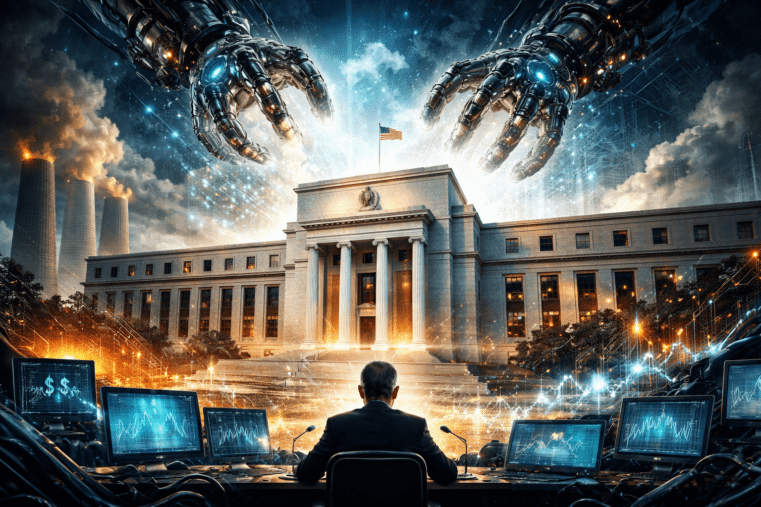
Let’s call it what it is: the Fed’s rate policy is economic malpractice. After printing trillions to backstop Wall Street, they’ve slammed on the brakes with rapid rate hikes, choking off access to capital for small business owners who need it most.
This wasn't a gentle tightening—it was a deliberate gut-punch to every local diner, repair shop, and independent manufacturer in America. Credit card interest is hovering above 20%. Small business loans, if you can even get them, are prohibitively expensive. Meanwhile, the same Fed keeps feeding institutional investors with repo liquidity behind closed doors.
You can’t "cool" inflation by crushing the productive class and calling it progress.
Where’s the Official Data? Delayed—Conveniently
Another red flag: the official November jobs report is delayed until December 16 due to a government shutdown. That makes the ADP data the only major labor snapshot the Fed has before it decides on interest rates again.
How convenient.
The timing here isn’t accidental. Kicking the can down the road on public jobs data buys time for policymakers to craft the right spin. It also leaves markets and voters in the dark. We’ve seen this pattern before: delay, dilute, distract.
It’s Not “Uncertainty”—It’s Policy Sabotage
The media keeps telling us this is about “uncertainty” or “consumer behavior.” That’s nonsense. This is about bad policy—from the top down.
- Excessive regulation is killing entrepreneurial agility.
- Persistent inflation is eating into real wages and consumer spending.
- Weaponized banking practices are driving politically disfavored businesses out of the financial system.
- ESG mandates and progressive tax threats are turning profit into a four-letter word.
Small businesses are dying because they are being out-regulated, out-financed, and out-surveilled.
Wall Street Wins Again
Meanwhile, large corporations are still hiring. Why? Because they’ve got lines of credit, bailouts, and leverage that small firms never will. They’ll survive this downturn like they did the last—by absorbing weakened competitors and consolidating their grip on the market.
This isn’t capitalism. It’s corporate feudalism, enabled by central banks, government overreach, and media deflection.
Don’t Wait for Help—Protect Yourself Now
If you're waiting for Washington to fix this, stop. The cavalry isn’t coming. The next phase of this crisis will be worse—especially when more regional banks fail and access to credit tightens further.
Start preparing now:
- Read Bill Brocius’ book, End of Banking As You Know It—a roadmap to financial self-defense.
- Download Bill’s free ebook, 7 Steps to Protect Your Account from Bank Failure
- Join Bill’s Inner Circle Newsletter for $19.95/month to stay ahead of the game with uncensored, real-time insights.
The bottom line? The war on small business is real. Don’t be collateral damage. Take back control of your money, your business, and your future—before the next wave hits.