Liquidity, Lies, and the Looming Trap: Why 2026 Isn’t What Wall Street Thinks

The Liquidity Engine Is Roaring — But Don’t Mistake It for Stability
Yes, the Federal Reserve just flipped the monetary switch. QT is over. Liquidity is back. And markets, like junkies, responded instantly.
But here’s the catch: they had to do this because the system is cracking, not because everything’s fine. Rate cuts and repo injections are not signs of strength — they are signs of desperation. Wall Street cheers it anyway, because they only speak one language: free money.
Roberts is correct that this kind of liquidity surge often precedes short-term rallies, especially into year-end. But let’s not pretend the underlying mechanics aren’t deeply broken. You don’t inject $13.5 billion in overnight repos because the system’s humming. You do it because something’s off the rails — quietly, behind the curtain.

Private Credit Is the New Subprime — And It’s Already Leaking
Where Roberts really earns his keep is in his early warnings on private credit. Shadow banking — all those off-book loans being made by hedge funds and non-bank entities — has ballooned into a parallel financial universe with no transparency and almost zero regulation.
Investors are already pulling money from funds exposed to this junk. That’s not a “trend.” That’s a stampede waiting to start. And just like in 2008, the big red flags start with liquidity drying up in niche corners of the market no one watches until it’s too late.
Breadth Is Improving, But the Core Is Still Rotten
Roberts notes that some rotation is finally happening — out of overblown tech into energy, financials, and healthcare. That’s a good sign technically, but structurally? Not so fast.
The market is still entirely dependent on a small group of mega-cap AI-driven stocks. The moment those stocks stumble — whether due to earnings, regulatory backlash, or just sentiment fatigue — this entire rally becomes a house of cards.
You cannot build a stable market on seven companies while pretending diversification has returned just because a few value names caught a bid last week.
Overextended Valuations? That’s Putting It Lightly
Let’s get real: a 76.7% gain over three years on the S&P 500 — excluding dividends — is unsustainable, full stop.
Roberts nods to “mean reversion,” but the situation is worse than that. We’re not just overdue for a pullback. We’re sitting on a massively overvalued market that’s been levitated by a mix of Fed policy, corporate buybacks, and outright investor delusion.
And the higher you climb on false hopes, the harder you fall when reality reasserts itself.
The Consumer Is Cracking — No Matter What the Data Says
Roberts tries to reassure readers that household debt is “still serviceable” and that delinquencies are “not yet widespread.” That’s how every debt collapse starts — in the margins.
Credit card and student loan delinquencies are the canaries in the coal mine. They always lead mortgage defaults, not the other way around. So yes, while the consumer hasn’t collapsed yet, all the signs say it’s coming.
The real fragility shows up not in averages, but in stress at the edges — and that stress is building fast.
AI Optimism Is a Bubble with a Countdown Clock
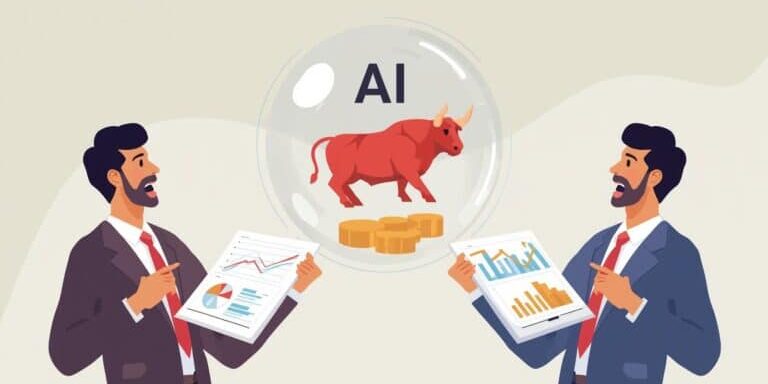
There’s a dangerous undercurrent in the “bull case” Roberts lays out: that AI investment and corporate capex will drive another leg of the tech rally.
Let’s be clear — that’s bubble talk. When trillions get priced into stocks based on technology that’s still experimental, what you’ve got isn’t innovation — it’s speculation. The crash won’t need a grand macro event. Just a little doubt, a weak earnings report, or one unexpected regulation could pop this inflated narrative.
What Comes Next: A Trap, Not a Rally
Roberts ends with a sensible conclusion: that we might see a bullish first half of 2026, followed by rising risk as fundamentals catch up. That’s the part I agree with most.
Liquidity can mask rot. It can delay collapse. But it can’t reverse gravity.
What we’re seeing now is the final phase of the sugar high. The Fed has thrown the market a lifeline, but at what cost? More debt. More mispricing. More blind optimism.
There’s no scenario where this ends cleanly — because no one is cleaning up the mess. They’re just pumping it with more cash and praying it holds. But it won’t.
Final Thought: Stay Frosty, Stay Free
Don’t chase the rally. Don’t believe the headlines. And don’t think for a second that the Fed’s pivot is a sign of strength. It’s not. It’s the signal flare of a system in trouble.
Get your assets diversified. Protect your cash. And for the love of liberty, don’t bet your future on a market built on lies and liquidity.
Call to Action
You need to be ahead of the crash, not under it. Download “Seven Steps to Protect Yourself from Bank Failure” by Bill Brocius and learn how to shield your savings before the next wave hits.
👉 Download Here