Oil Shock WARNING: $200 Crude, FedNow Expansion, and the Digital Dollar Endgame Are Colliding Faster Than You Think

The $200 Oil Scenario Isn’t “Unlikely”—It’s Uncomfortable
Let’s cut through the noise.
When U.S. Energy Secretary Chris Wright says $200 oil is “unlikely,” while simultaneously preparing emergency responses and war contingencies, what you’re seeing isn’t reassurance—it’s risk management.
Behind the scenes, officials and major energy players are reportedly in what one insider called “all hands on deck mode.” That’s not the language of stability. That’s the language of a system bracing for impact.

At the same time, geopolitical tensions in the Middle East—particularly involving Iran and threats tied to the Strait of Hormuz—are creating a choke point for global energy supply. Historically, disruptions in that region don’t just nudge prices—they detonate them.
And here’s the reality: oil doesn’t need to hit $200 to break the economy. It just needs to get close enough, fast enough.
Inflation Is Already Reigniting—And Energy Is the Match
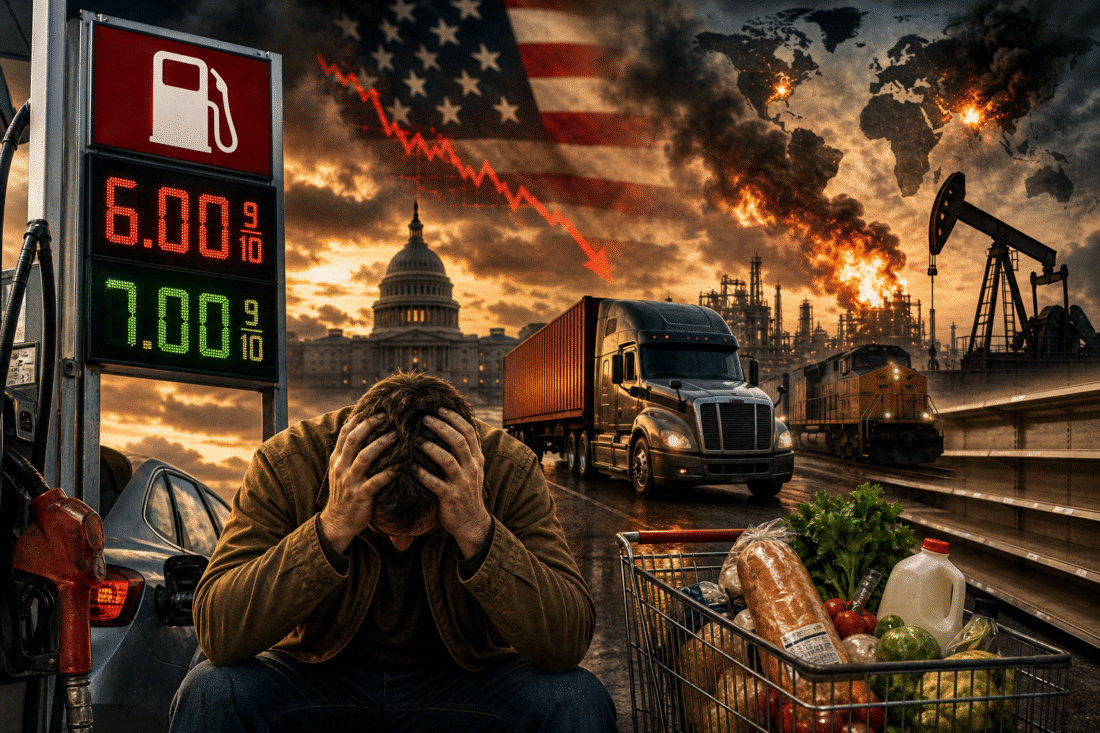
Since the conflict began, U.S. gasoline prices have jumped by roughly $1 per gallon. Diesel? Up even more.
That’s not just an inconvenience. That’s a warning shot.
Energy is the foundation of the entire economy:
- Transportation costs rise
- Food prices surge
- Manufacturing slows
- Supply chains tighten
We’ve seen this movie before. In the 1970s oil crisis, energy shocks triggered stagflation—crippling growth combined with runaway inflation. Central banks lost control, and ordinary people paid the price.
Now ask yourself: are today’s policymakers more disciplined than they were then—or more reckless?
With years of aggressive money printing, ballooning debt, and persistent inflationary pressure, the system is far more fragile today.
A spike toward $200 oil wouldn’t just hurt—it could snap the backbone of consumer stability.
War, Energy, and the Quiet Push Toward Financial Control
Here’s where things get more serious—and where most mainstream coverage stops short.
When crises escalate—war, inflation, supply shocks—governments don’t just respond with policy. They respond with control mechanisms.
Enter:
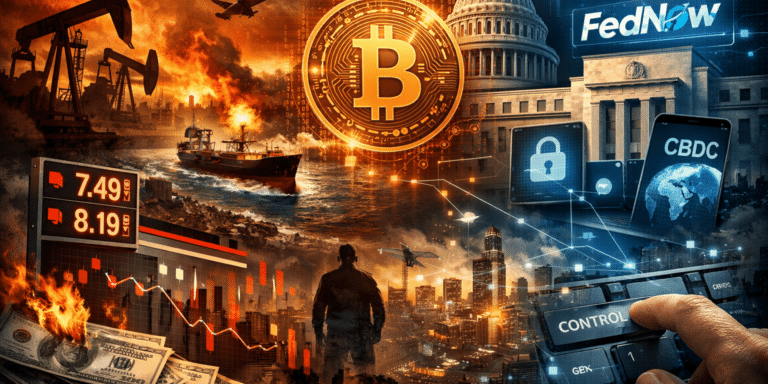
- FedNow, the real-time payment infrastructure
- Central Bank Digital Currency (CBDC) pilots
- Expanding financial surveillance frameworks
These systems are being positioned as solutions:
- Faster payments
- Greater efficiency
- Financial inclusion
But in a high-inflation, crisis-driven environment, they serve another purpose: control over money itself.
Programmable money allows:
- Spending restrictions
- Transaction monitoring
- Instant policy enforcement
If oil shocks trigger economic instability, don’t be surprised when the solution offered is tighter financial oversight—packaged as stability.
The Strait of Hormuz: A Single Point of Failure for the Global Economy
Roughly 20% of the world’s oil flows through the Strait of Hormuz.
Now consider:
- Iran has already hinted at disrupting this corridor
- Shipping risks are rising
- Alternative payment systems (including crypto and yuan) are being floated
This isn’t just about oil prices—it’s about the restructuring of global trade and currency systems.
If oil begins trading outside the U.S. dollar at scale, it accelerates:
- De-dollarization
- Currency fragmentation
- Loss of U.S. monetary dominance
That’s not theoretical. That’s already in motion.
And when dollar demand weakens, what follows?
More money printing. More inflation. More justification for a Digital Dollar Reset.
The Real Threat: Financial Repression Disguised as Stability
Let’s be clear: governments don’t lose control quietly.
When faced with:
- Surging inflation
- Market instability
- Currency pressure
They implement measures to retain authority:
- Capital controls
- Banking restrictions
- Increased transaction oversight
A cashless society—powered by CBDCs and systems like FedNow—makes these controls seamless.
No bank runs. No cash withdrawals. No opting out.
Just programmable compliance.
What Comes Next: The Collision Phase
We are entering a convergence:
- Energy shock risk (oil toward $200)
- Persistent inflation
- Geopolitical instability
- Digital financial infrastructure rollout
Each of these alone is manageable.
Together? They form a perfect storm.
And historically, moments like this don’t expand freedom—they restrict it.
How to Prepare Before the Window Closes
You don’t need to predict the exact price of oil to understand the direction of risk.
What matters is positioning:
- Reducing reliance on centralized financial systems
- Holding tangible, non-digital assets
- Diversifying outside traditional banking exposure
Because when systems shift, they don’t send invitations. They flip switches.
Final Word: This Isn’t About Oil—It’s About Control
The headlines will focus on gasoline prices and war developments.
But the deeper story is about what comes after the shock.
Every crisis creates an opportunity for structural change. And right now, that change is pointing toward:
- Digital currency control
- Expanded surveillance
- Reduced financial autonomy
If you’re waiting for official confirmation, you’ll be too late.
Take Action While You Still Can
Bill Brocius has been tracking these developments for years—and more importantly, outlining what comes next.
His Digital Dollar Reset Guide breaks down exactly how this transition unfolds—and what you can do to protect your wealth before the system locks you in.
This isn’t theory. It’s a roadmap for navigating what’s already underway.